How to Use Storytelling and Brand Narrative to Differentiate Your Restaurant
Complete restaurant storytelling guide • Step-by-step strategies
Restaurant Storytelling Fundamentals:
Show Storytelling SimulatorRestaurant storytelling is the art of crafting compelling narratives that connect your establishment to customers on an emotional level. It goes beyond simply serving food—it's about creating memorable experiences that resonate with your audience and set you apart from competitors.
A strong brand narrative encompasses your restaurant's origin story, mission, values, unique ingredients, cooking methods, cultural heritage, and the emotional journey you want customers to experience. This creates lasting connections that drive loyalty and word-of-mouth marketing.
Key storytelling elements:
- Origin Story: The founding tale and inspiration behind your restaurant
- Authenticity: Genuine elements that reflect your true identity
- Emotional Connection: Feelings and memories you evoke in customers
- Differentiation: Unique aspects that set you apart from competitors
Effective restaurant storytelling transforms transactions into experiences, customers into advocates, and ordinary meals into memorable journeys. It builds emotional bonds that transcend price competition and create lasting brand loyalty.
Storytelling Parameters
Engagement Options
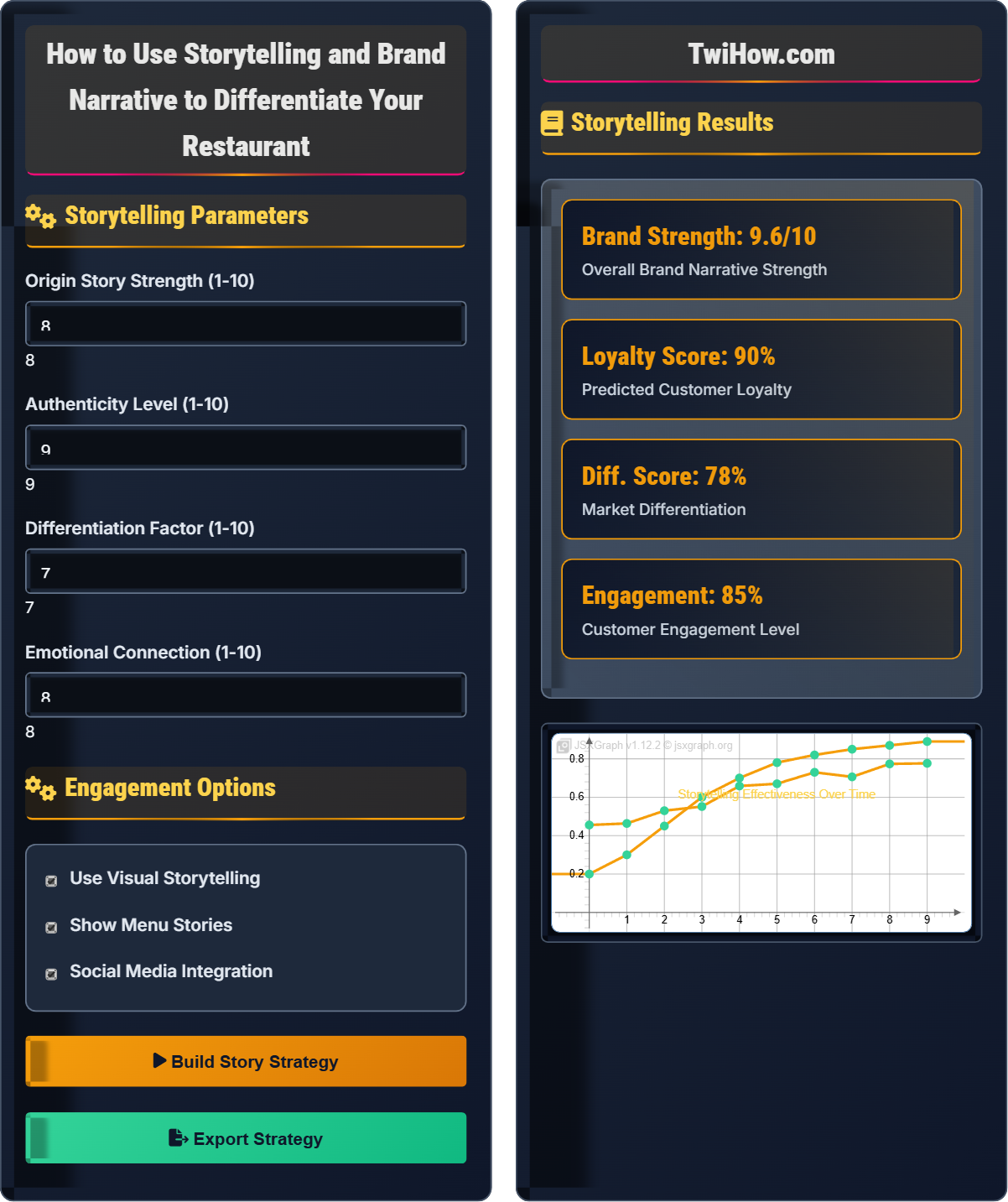
Storytelling Results
| Element | Score | Impact | Recommendation |
|---|---|---|---|
| Origin Story | 8/10 | High | Share founding journey |
| Authenticity | 9/10 | Very High | Highlight genuine elements |
| Differentiation | 7/10 | Medium | Strengthen unique aspects |
| Emotion | 8/10 | High | Create emotional moments |
How Restaurant Storytelling Works
Restaurant storytelling is the strategic use of narrative to connect your establishment with customers on an emotional level. It transforms your restaurant from a place that serves food into a destination with meaning, purpose, and personality. Effective storytelling encompasses your restaurant's origin story, culinary philosophy, ingredient sourcing, cultural heritage, and the emotional journey you want customers to experience.
A successful restaurant narrative follows a structured approach that connects various elements:
Where:
- Origin Story: The founding tale and inspiration behind your restaurant
- Values: Core beliefs and principles that guide your operations
- Experience: The sensory and emotional journey customers encounter
- Emotional Connection: The feelings and memories you evoke
Key areas where storytelling impacts your restaurant:
- Menu Design: Dish names and descriptions that tell stories
- Interior Design: Decor that reflects your narrative
- Staff Training: Employees as storytellers
- Social Media: Content that shares your journey
- Marketing: Campaigns that emphasize your story
- Customer Experience: Every interaction reinforces your brand
- Heritage Stories: Family recipes and cultural traditions
- Founder Stories: Personal journey and inspiration
- Ingredient Stories: Sourcing and preparation methods
- Community Stories: Local connections and involvement
- Experience Stories: Unique dining experiences offered
- Values Stories: Sustainability, ethics, and social impact
Storytelling Fundamentals
Origin story, authenticity, emotional connection, differentiation, brand values, customer experience.
Brand Narrative = Origin Story + Values + Experience + Emotional Connection
Where Brand Narrative = customer perception, Origin Story = founding tale, Values = core beliefs.
- Authenticity drives trust and loyalty
- Stories should connect emotionally
- Consistency across all touchpoints
Applications
Menu storytelling, interior design, staff training, social media content, marketing campaigns, customer experience design.
- Craft compelling origin story
- Integrate story into menu design
- Train staff as storytellers
- Create visual storytelling elements
- Consistency across all channels
- Genuine authenticity required
- Measurable impact tracking
- Employee engagement crucial
Restaurant Storytelling Quiz
Which of the following is NOT a fundamental element of effective restaurant storytelling?
Effective restaurant storytelling focuses on creating emotional connections through authentic narratives. The key elements include origin story, authenticity, emotional connection, differentiation, and consistent experience. Price competition is a tactical business strategy, not a storytelling element.
The answer is D) Price Competition.
Restaurant storytelling is fundamentally about creating emotional bonds with customers that transcend transactional relationships. While price is important for business, storytelling differentiates you through meaning, experience, and connection. The most memorable restaurants aren't necessarily the cheapest—they're the ones that create lasting emotional impressions through compelling narratives.
Origin Story: The founding tale that gives context to your restaurant
Authenticity: Genuine elements that reflect your true identity
Emotional Connection: Feelings and memories evoked in customers
• Stories must be genuine and authentic
• Emotional connection drives loyalty
• Consistency across all touchpoints
• Start with your personal story
• Focus on what makes you unique
• Make every detail reinforce your narrative
• Creating stories that aren't authentic
Explain how to craft a compelling origin story for a restaurant and why it's important for differentiation. Provide specific examples of how the origin story should be integrated throughout the restaurant experience.
Crafting an Origin Story: A compelling origin story should be authentic, meaningful, and directly connected to your cuisine and values. It might involve family recipes passed down through generations, a chef's journey to discover authentic flavors, or a passion for sustainable farming.
Integration Examples:
• Menu Descriptions: Include brief stories about dish origins
• Interior Design: Decor elements that reflect your story
• Staff Training: Employees who can share your story
• Social Media: Regular posts about your journey
Importance: An origin story differentiates you by providing context, authenticity, and emotional connection that competitors cannot replicate.
The origin story serves as the foundation of your entire brand narrative. It provides authenticity that cannot be copied by competitors and gives customers a reason to care about your restaurant beyond just the food. When customers connect with your story, they become invested in your success and are more likely to return and recommend you to others.
Origin Story: The founding tale that gives context to your restaurant
Integration: Consistently incorporating story elements across all touchpoints
Differentiation: Unique aspects that set you apart from competitors
• Story must be genuine and verifiable
• Should connect to your cuisine and values
• Must be consistently communicated
• Keep it concise but meaningful
• Focus on what drove you to open
• Connect to customer emotions
• Creating fictional stories
• Not connecting story to cuisine
• Inconsistent storytelling across channels
You own a small Italian restaurant that has been struggling to compete with larger chain establishments in your area. You want to use storytelling to differentiate your business. Describe a comprehensive storytelling strategy that would help you stand out, including specific tactics for menu design, interior decor, staff training, and marketing communications.
Origin Story: Focus on family recipes brought from Italy, emphasizing authenticity and tradition.
Menu Design: Include stories about each recipe's origin, perhaps naming dishes after family members or Italian regions.
Interior Decor: Use vintage photos, Italian artifacts, and warm lighting to create an authentic atmosphere.
Staff Training: Teach employees to share stories about dishes and ingredients, making them brand ambassadors.
Marketing: Emphasize authenticity, family tradition, and personal service in all communications.
Strategy: Position yourself as the authentic, personal alternative to impersonal chains, emphasizing the human connection and traditional methods.
Small independent restaurants often have advantages that chains cannot replicate—authenticity, personal service, and unique stories. By leveraging these strengths through storytelling, you can create a competitive advantage that larger establishments cannot easily match. The key is to emphasize what makes you different and why that matters to customers.
Authenticity: Genuine, real elements that reflect true identity
Brand Ambassador: Employees who actively promote and share your storyCompetitive Advantage: Unique strengths that set you apart from competitors
• Leverage unique advantages
• Maintain authenticity
• Consistent messaging across channels
• Focus on personal connections
• Emphasize quality over quantity
• Use local connections
• Trying to compete on price alone
• Not leveraging unique advantages
• Inconsistent brand messaging
A restaurant owner wants to create emotional connections with customers through storytelling but is concerned about appearing fake or manipulative. Explain how to create genuine emotional connections while maintaining authenticity, and provide three specific techniques that ensure the emotional appeal feels natural rather than contrived.
Genuine Connection: Focus on real experiences, values, and emotions that you genuinely feel. Share actual challenges, victories, and meaningful moments related to your restaurant.
Techniques:
1. Personal Stories: Share real moments of inspiration, challenges overcome, or meaningful customer interactions
2. Community Involvement: Highlight genuine local connections and community contributions
3. Ingredient Stories: Share real sourcing stories about farmers, producers, and special ingredients
Always ensure that emotional appeals are rooted in truth and reflect your actual values and experiences.
Customers are skilled at detecting inauthentic emotional manipulation. The most effective emotional connections come from genuine experiences and values that you actually hold. When storytelling feels forced or manipulative, it backfires and damages trust. Authenticity in storytelling means sharing real experiences, values, and emotions that you genuinely feel and live by.
Genuine Connection: Authentic emotional bond based on real experiences
Manipulation: Artificial emotional appeal without authentic basis
Authenticity: Genuine, truthful representation of identity and values
• Stories must be based on truth
• Emotions must be genuine
• Consistency with actual practices
• Share real challenges and victories
• Focus on actual values
• Let emotions emerge naturally
• Fabricating emotional stories
• Disconnecting stories from reality
• Focusing on manipulation over authenticity
Which of the following best represents the primary benefit of effective restaurant storytelling?
Effective restaurant storytelling primarily creates enhanced customer loyalty by forming emotional connections that transcend the transactional nature of dining. When customers connect with your story, they become invested in your success, return more frequently, and recommend you to others. While storytelling can support other business goals, loyalty is the fundamental outcome that drives long-term success.
The answer is B) Enhanced customer loyalty.
Loyalty is the cornerstone of sustainable restaurant success. While one-time customers contribute to revenue, loyal customers provide predictable income, positive word-of-mouth, and resilience during challenging periods. Storytelling creates the emotional bonds that transform customers from price-conscious buyers into brand advocates who value the experience beyond just the food.
Customer Loyalty: Emotional commitment to repeatedly choose your restaurant
Emotional Connection: Psychological bond formed through shared experiences
Brand Advocacy: Customers who actively promote your restaurant
• Loyalty drives long-term success
• Emotional bonds matter most
• Stories create lasting impressions
• Focus on emotional impact
• Build long-term relationships
• Measure loyalty metrics
• Focusing only on immediate sales
• Neglecting customer relationships
• Underestimating emotional factors
FAQ
Q: How can I tell if my restaurant story is resonating with customers?
A: You can measure story resonance through several indicators:
1. Customer Feedback: Listen for mentions of your story in reviews and comments
2. Repeat Business: Increased frequency of returning customers
3. Word-of-Mouth: Customers sharing your story with others
4. Social Media: Engagement with story-related content
5. Emotional Responses: Customers expressing feelings connected to your story
When customers remember and share your story, it indicates successful emotional connection and brand differentiation.
Q: What's the difference between restaurant storytelling and regular marketing?
A: Restaurant storytelling and regular marketing differ in approach and objective:
Regular Marketing: Focuses on features, promotions, and transactional benefits. Messages tend to be product-centric and emphasize price, convenience, or immediate value.
Storytelling: Focuses on emotional connections, values, and experiences. Messages are people-centric and emphasize meaning, authenticity, and long-term relationships.
While marketing tells customers what you offer, storytelling tells them why you matter and why they should care. Both approaches serve important roles, but storytelling creates deeper, more lasting connections that drive loyalty and advocacy.