How to Protect Your Business from Liability Lawsuits
Complete liability protection guide • Risk management
Business Liability Protection:
Risk AssessmentProtecting your business from liability lawsuits requires a comprehensive approach including proper business structure, adequate insurance, risk management strategies, and legal compliance. Without proper protection, business owners can face personal financial ruin from lawsuits.
Key protection strategies include:
- Business Structure: LLC, corporation, or partnership for asset protection
- Insurance Coverage: General liability, professional liability, and other policies
- Legal Compliance: Following industry regulations and safety standards
- Risk Management: Policies, procedures, and training to minimize risks
Implementing these protections early can save your business from devastating financial consequences.
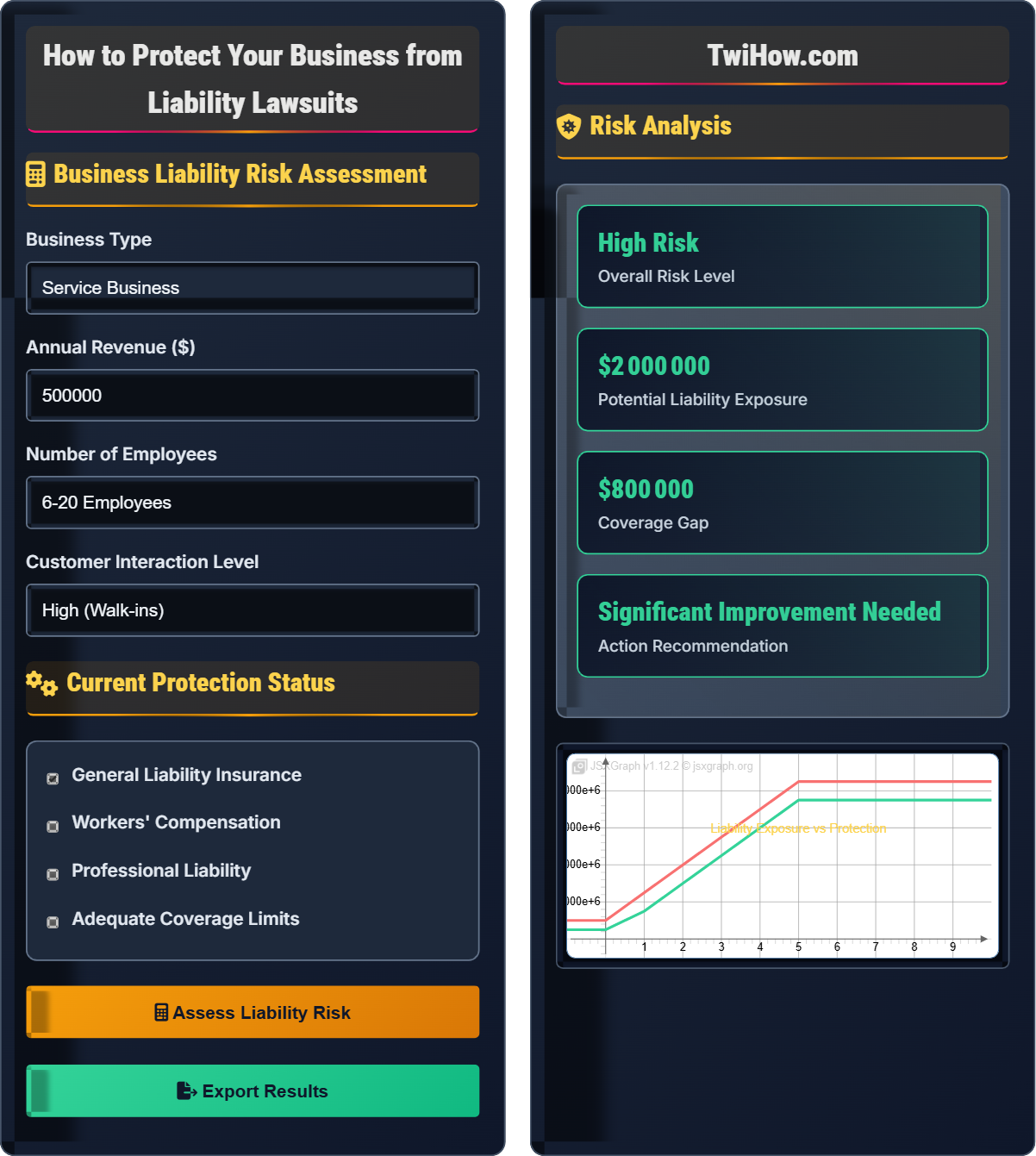
Business Liability Risk Assessment
Current Protection Status
Risk Analysis
| Risk Factor | Level | Exposure | Recommendation |
|---|---|---|---|
| Business Type | High | $1,000,000 | Specialized Coverage |
| Revenue Size | Medium | $500,000 | Standard Coverage |
| Employee Count | Medium | $750,000 | Workers' Comp Required |
| Customer Interaction | High | $1,250,000 | Enhanced Liability |
Understanding Business Liability Protection
Business liability refers to legal responsibility for harm caused to customers, employees, or other parties during business operations. Without proper protection, business owners can be personally liable for damages, potentially losing personal assets and facing financial ruin.
Common types of business liability include:
- General Liability: Bodily injury, property damage, and personal injury
- Professional Liability: Errors, omissions, and negligence in professional services
- Product Liability: Defective products causing harm to consumers
- Employment Practices Liability: Discrimination, harassment, wrongful termination
- Cyber Liability: Data breaches and cyber security incidents
- Workers' Compensation: Job-related injuries and illnesses
Forming an LLC or corporation creates a legal barrier between personal and business assets. This shields personal assets from business debts and lawsuits.
Comprehensive insurance policies provide financial protection against various liability claims. Coverage should match business risks and size.
Implementing safety protocols, training programs, and quality control measures reduces the likelihood of incidents that could lead to lawsuits.
Following industry regulations, safety standards, and best practices helps prevent violations that could result in liability claims.
Form an LLC or corporation to separate personal and business assets. Consider your business type, size, and risk level when selecting the appropriate structure.
Purchase general liability, professional liability, and other necessary policies. Ensure coverage limits match potential exposure and business value.
Develop safety protocols, employee training programs, and quality control measures. Regularly review and update procedures.
Stay current with industry regulations, licensing requirements, and safety standards. Regular legal reviews help identify potential issues.
Annually review insurance coverage, business structure, and risk management practices. Adjust as the business grows and changes.
Covers bodily injury, property damage, and advertising injury. Essential for most businesses with customer interaction.
Protects against claims of professional errors, omissions, or negligence. Critical for service-based businesses.
Covers data breaches, cyber attacks, and privacy violations. Increasingly important for all businesses.
Provides excess liability coverage above underlying policies. Offers additional protection for major claims.
Businesses face various liability risks:
- Slip and Fall: Customer injuries on business premises
- Product Defects: Harm caused by faulty products
- Professional Negligence: Errors in professional services
- Employee Actions: Misconduct by staff members
- Data Breaches: Unauthorized access to customer information
- Contract Disputes: Failure to fulfill contractual obligations
Liability Risk by Business Type
| Business Type | Primary Risks | Typical Exposure | Essential Coverage |
|---|---|---|---|
| Restaurants | Food poisoning, slip and fall, liquor liability | $1M - $5M | General Liability, Liquor Liability |
| Professional Services | Professional errors, cyber liability | $2M - $10M | Professional Liability, Cyber Liability |
| Construction | Job site injuries, property damage | $2M - $20M | General Liability, Workers' Comp, Builder's Risk |
| Healthcare | Medical malpractice, patient privacy | $5M - $25M | Professional Liability, Cyber Liability |
| Retail Stores | Slip and fall, product liability | $1M - $3M | General Liability, Product Liability |
| Technology | Cyber attacks, professional errors | $2M - $15M | Cyber Liability, Professional Liability |
Calculate your business's liability exposure based on key factors:
Business Liability Timeline
Real-World Liability Scenarios
A restaurant owner failed to maintain proper insurance coverage and was sued after a customer suffered food poisoning from contaminated ingredients. The lawsuit resulted in a $2.5 million settlement, forcing the business to close.
Best Practices: Regular food safety training, proper insurance coverage, and documented safety protocols.
A software company faced a $5 million lawsuit after a data breach exposed customer information. Their cyber liability insurance covered legal costs and settlement, protecting the business from closure.
Best Practices: Regular security assessments, employee training, and comprehensive cyber coverage.
A consulting firm was sued for professional negligence after providing incorrect advice that cost a client $1 million. Their professional liability insurance covered the claim and legal defense costs.
Best Practices: Clear contracts, documentation of services, and appropriate insurance coverage.
Business Liability Protection Quiz
Which business structure provides the strongest protection against personal liability for business debts and lawsuits?
Both LLCs and Corporations provide strong liability protection by creating a legal separation between business and personal assets. However, LLCs offer more flexibility in management and taxation while providing similar liability protection. Corporations also provide excellent protection but have more formal requirements.
The answer is C) Limited Liability Company (LLC) or D) Corporation.
The key concept is asset protection through legal separation. In sole proprietorships and partnerships, personal and business assets are commingled, making personal assets vulnerable to business creditors. LLCs and corporations create a legal wall that generally protects personal assets from business liabilities.
LLC: Limited Liability Company - hybrid business structure
Corporate Veil: Legal protection separating business and personal assets
Piercing the Veil: Exception where personal liability can attach to business acts
• Maintain separation between business and personal finances
• Follow corporate formalities to preserve protection
• Personal guarantees can void liability protection
• Keep separate business bank accounts
• Document business decisions properly
• Avoid commingling personal and business funds
• Using personal accounts for business expenses
• Not maintaining corporate formalities
• Signing personal guarantees unnecessarily
Explain the different types of business insurance that protect against liability claims. Which types are essential for most businesses?
General Liability Insurance: Covers bodily injury, property damage, and personal injury to third parties. Essential for almost all businesses with customer interaction.
Professional Liability Insurance: Protects against claims of professional errors, omissions, or negligence. Critical for service-based businesses.
Workers' Compensation: Required in most states for businesses with employees. Covers job-related injuries and illnesses.
Product Liability Insurance: Protects manufacturers and sellers against claims of defective products causing harm.
Cyber Liability Insurance: Covers data breaches, cyber attacks, and privacy violations. Increasingly important for all businesses.
Umbrella Insurance: Provides excess liability coverage above underlying policies.
Essential Coverage: General liability and workers' compensation are typically required for most businesses. Professional liability is essential for service providers.
Insurance acts as a financial safety net, transferring risk from the business to the insurer. The types of coverage needed depend on the business's specific risks, size, and industry. A layered approach with multiple policies often provides the most comprehensive protection.
Premium: Amount paid for insurance coverage
Deductible: Amount paid before insurance coverage kicks in
Coverage Limits: Maximum amount insurer will pay for a claim
• Coverage should match potential exposure
• Regular policy reviews are necessary
• State laws may mandate certain coverage
• Shop around for competitive rates
• Bundle policies for discounts
• Consider higher deductibles to lower premiums
• Underinsuring business assets
• Not reviewing coverage annually
• Choosing cheapest policy over adequate coverage
A consulting firm with $2 million in annual revenue and 15 employees provides professional services to clients. They have general liability insurance with $1 million coverage but no professional liability insurance. Calculate their potential exposure and recommend appropriate coverage.
Potential Exposure:
• Professional services exposure: $2M - $5M (based on revenue and service nature)
• General liability exposure: $1M - $2M (for client interactions)
• Employee-related exposure: $500K - $1M (for 15 employees)
Total Estimated Exposure: $3.5M - $8M
Current Coverage Gap: $2.5M - $7M (professional liability coverage missing)
Recommendations:
1. Professional liability insurance: $2M - $5M coverage
2. Increase general liability to $2M
3. Ensure adequate workers' compensation
4. Consider cyber liability for data protection
Estimated Annual Premium: $15,000 - $35,000 for comprehensive coverage.
Service-based businesses face significant professional liability exposure because their work directly impacts clients' operations and finances. The potential damages from professional errors can far exceed general liability risks. Coverage should be proportional to potential exposure and business value.
Professional Liability: Coverage for service-related errors and omissions
Exposure: Potential financial loss from liability claims
Coverage Gap: Difference between exposure and insurance limits
• Coverage should match potential exposure
• Service businesses need professional liability
• Regular exposure assessments are important
• Consider claims-made vs. occurrence policies
• Include defense costs in coverage limits
• Negotiate policy terms carefully
• Assuming general liability covers professional errors
• Not matching coverage to business risks
• Failing to update coverage as business grows
A retail store owner wants to implement risk management strategies to reduce liability exposure. Describe a comprehensive risk management plan and explain how it complements insurance coverage.
Comprehensive Risk Management Plan:
Physical Safety Measures:
• Regular floor inspections and cleaning schedules
• Adequate lighting in all areas
• Clear signage for hazards
• Proper storage of merchandise
Employee Training:
• Customer service protocols
• Safety procedures
• Incident reporting
• Conflict resolution
Documentation:
• Daily safety checklists
• Incident reports
• Maintenance logs
• Training records
Complementary Role: Risk management reduces the likelihood of incidents that could lead to claims, while insurance provides financial protection when incidents occur. Together, they create a comprehensive protection strategy.
Risk management and insurance work together as part of a layered protection strategy. Risk management focuses on prevention (reducing the frequency and severity of incidents), while insurance provides financial protection when prevention fails. Both are necessary for comprehensive protection.
Risk Management: Process of identifying, assessing, and mitigating risks
Loss Prevention: Strategies to reduce likelihood of claims
Risk Transfer: Using insurance to shift financial risk
• Prevention is more cost-effective than remediation
• Both risk management and insurance are necessary
• Regular risk assessments help identify new exposures
• Conduct regular safety audits
• Train employees consistently
• Document all safety measures
• Relying solely on insurance without risk management
• Inconsistent safety practices
• Poor documentation of safety measures
Which of the following is NOT typically covered by cyber liability insurance?
Cyber liability insurance specifically covers technology-related risks such as data breaches, cyber attacks, and privacy violations. Property damage from natural disasters (such as floods, earthquakes, or fires) is covered by property insurance, not cyber liability insurance. Cyber policies typically cover costs related to data incidents, not physical property damage.
The answer is C) Property damage from natural disasters.
It's important to understand the specific scope of coverage for different insurance types. Cyber liability insurance addresses digital risks and data-related incidents, while traditional property insurance covers physical damage. Businesses need to identify their specific risks and ensure appropriate coverage for each category of exposure.
Cyber Liability: Insurance for technology-related risks
Data Breach: Unauthorized access to sensitive information
Property Insurance: Coverage for physical asset damage
• Different insurance types cover different risks
• Cyber risks are increasingly common for all businesses
• Coverage gaps can result in significant losses
• Assess digital risks regularly
• Consider cyber coverage for any data handling
• Review all policy exclusions carefully
• Confusing different types of coverage
• Underestimating cyber risks
• Not reading policy exclusions
Frequently Asked Questions
Expert Q&A
Q: I run a small consulting firm with 3 employees. What are the essential liability protections I need?
A: For your consulting firm, essential liability protections include:
Professional Liability Insurance: This is critical for your business as it covers claims of professional errors, omissions, or negligent advice that could harm clients. Consider coverage of $1-3 million depending on your client contracts and potential exposure.
General Liability Insurance: Protects against third-party claims of bodily injury or property damage that might occur in your office or during client visits.
Workers' Compensation: Required in most states for businesses with employees, covering job-related injuries and illnesses.
Business Structure: Ensure you're properly structured as an LLC or corporation to maintain personal asset protection.
Additional Considerations: Cyber liability insurance if you handle client data, and consider an umbrella policy for additional protection above your primary policies.
Q: I own a restaurant and am concerned about food poisoning lawsuits. How can I protect myself?
A: Food poisoning protection requires a multi-layered approach:
Insurance Coverage:
• General liability with food contamination coverage
• Product liability insurance
• Consider food contamination-specific endorsements
Risk Management:
• Implement HACCP (Hazard Analysis Critical Control Points) protocols
• Regular food safety training for all staff
• Maintain proper temperature logs and documentation
• Regular health department inspections and compliance
Operational Practices:
• Source food from reputable suppliers
• Maintain detailed records of food sources and preparation
• Respond immediately and transparently to any food safety concerns
Staff Training: Ensure all employees understand food safety protocols and are certified in food handling. Proper training and documentation can be crucial in defending against claims.