Food Allergies & Dietary Restrictions While Traveling
Travel guide • Step-by-step safety planning
Food Safety:
Food Safety PlanManaging food allergies and dietary restrictions while traveling requires careful planning and preparation. This comprehensive guide provides strategies for safe eating, communication tools, and emergency preparedness to ensure worry-free travel experiences.
Key aspects of food safety while traveling:
- Pre-trip Planning: Research destination food customs and allergen practices
- Communication: Learn key phrases and carry translation cards
- Documentation: Medical letters, emergency contacts, and medication
- Emergency Preparedness: Medications, emergency plans, and local medical resources
- Food Source Management: Safe dining options and food preparation
With proper preparation, travelers with food allergies and dietary restrictions can enjoy safe and satisfying travel experiences.
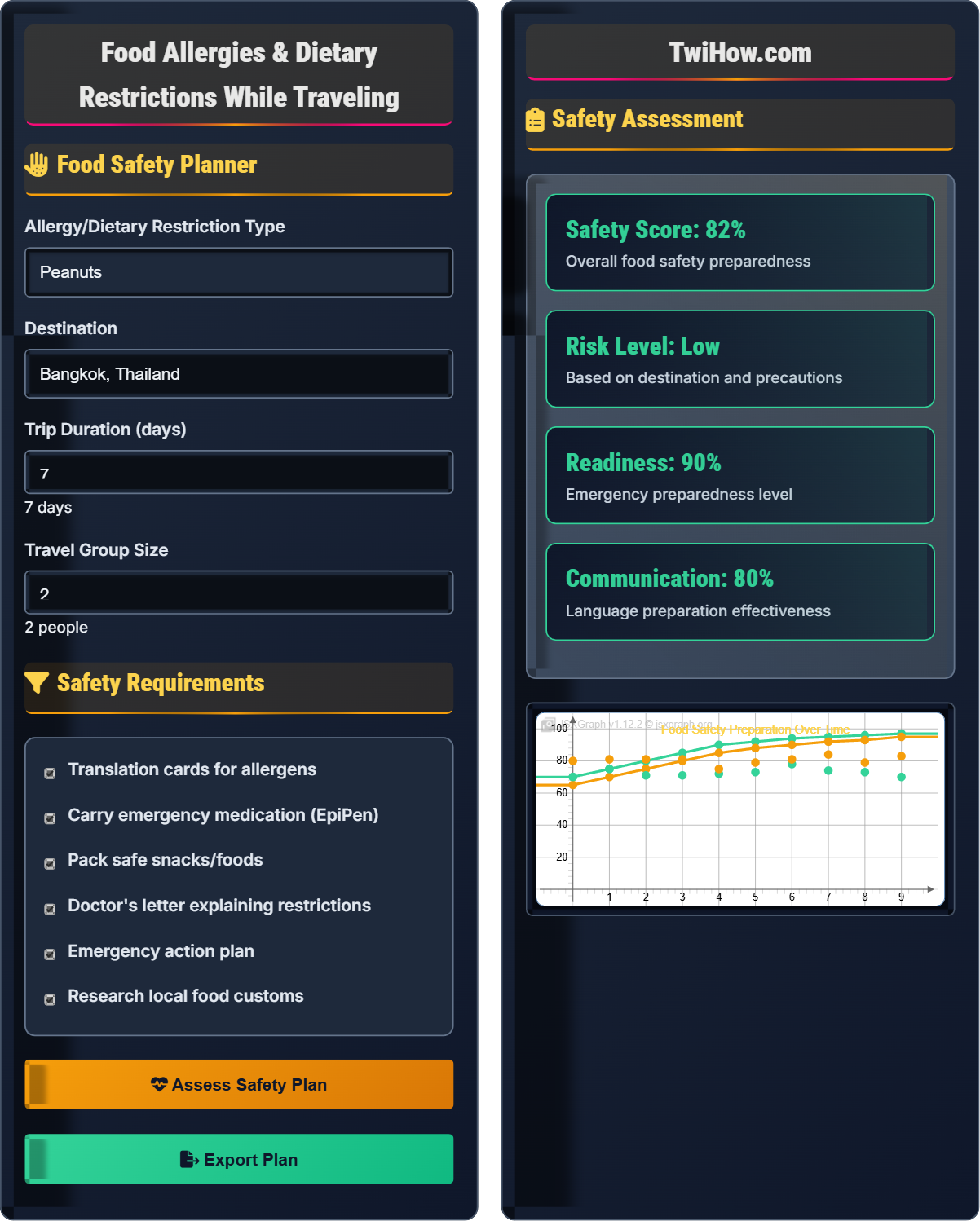
Food Safety Planner
Safety Requirements
Safety Assessment
| Category | Requirement | Status | Priority |
|---|---|---|---|
| Medication | Carry EpiPen/Antihistamines | ✓ Completed | High |
| Documentation | Doctor's letter | ✓ Completed | High |
| Communication | Translation cards | ✓ Completed | Medium |
| Food Sources | Safe dining options | Partially | High |
| Emergency | Local medical info | ✓ Completed | High |
Recommended Apps
Food Allergy: Find Me Gluten Free, AllergyEats
Translation: Google Translate, Allergy Translation Cards
Medication: MySymptoms, Allergy Alert
Emergency Contacts
Local Hospital: Bangkok International Hospital
Embassy: US Embassy in Thailand
Emergency Number: 1669 (Ambulance)
How to Handle Food Allergies & Dietary Restrictions While Traveling
Managing food allergies and dietary restrictions while traveling requires careful planning and preparation. Different countries have varying food preparation practices, ingredient labeling standards, and awareness of dietary restrictions. Success depends on thorough preparation, clear communication, and emergency preparedness.
The overall food safety score can be calculated as:
Where:
- Preparation: Research, packing, and planning activities
- Communication: Language tools and clear communication methods
- Emergency Readiness: Medications, contacts, and action plans
Carry all necessary medications in original containers
Doctor's letter explaining restrictions and treatment
Carry translated allergy cards in local language
Pack safe snacks and emergency food supplies
- Food Allergy Organizations: FARE, Allergy UK, local allergy associations
- Mobile Apps: Find Me Gluten Free, AllergyEats, Allergy Translation Cards
- Travel Insurance: Coverage for medical emergencies and food reactions
- Medical Resources: Local hospitals, clinics, and emergency services
- Embassy Information: Consular services and emergency assistance
- Support Groups: Online communities and travel forums
Food Safety Planning
Food allergies, dietary restrictions, cross-contamination, emergency preparedness, translation cards, food safety.
Safety Score = (Preparation + Communication + Emergency Readiness) / 3 × 100%
Where higher scores indicate better preparedness.
- Never assume food safety in unfamiliar kitchens
- Always carry emergency medication
- Have backup plans for food emergencies
Practical Applications
Restaurant dining, hotel accommodations, airline travel, street food, local markets, cooking.
- Assess specific dietary needs and restrictions
- Research destination food culture and practices
- Prepare communication tools and documentation
- Identify safe food sources and dining options
- Plan emergency responses and medical resources
- Local food preparation practices vary widely
- Cross-contamination risks in commercial kitchens
- Language barriers affecting communication
- Availability of safe food options
Food Safety Quiz
What is the most effective way to communicate food allergies to restaurant staff in a foreign country?
Professionally printed translation cards are the most effective method because they provide accurate, clear, and consistent information in the local language. These cards often include medical terminology and severity information that casual translation apps might miss. They're also readily available and don't depend on technology or internet connectivity.
The answer is B) Carry professionally printed translation cards with allergen information.
Effective communication of food allergies requires precision and clarity. Translation cards eliminate misunderstandings that can occur with machine translation or informal language attempts. They provide a standardized way to convey critical medical information regardless of the staff member's English proficiency.
Translation Cards: Professionally translated documents with allergen information
Cross-Contamination: Transfer of allergens from one food to another
Severity Information: Details about reaction severity and symptoms
• Always carry translation cards in local language
• Include severity and emergency information
• Have multiple copies available
• Order translation cards in multiple languages
• Keep cards with you at all times
• Show cards to kitchen staff when possible
• Relying solely on translation apps
• Not carrying physical cards
• Assuming staff understand basic English
Explain the essential components of an emergency action plan for food allergies while traveling.
Essential Emergency Action Plan Components:
1. Medication: Carry prescribed epinephrine auto-injectors (EpiPens) in original containers, antihistamines, and any other prescribed medications. Keep them easily accessible and never pack in checked luggage.
2. Documentation: Doctor's letter explaining allergies, symptoms, and treatment protocols. Include emergency contact information and insurance details.
3. Local Medical Resources: Research hospitals, clinics, and emergency services at your destination. Obtain addresses and phone numbers in local language.
4. Emergency Contacts: List local emergency numbers, embassy contact information, and family emergency contacts. Include both international and local numbers.
5. Symptom Recognition: Know early warning signs of allergic reactions and have a clear plan for escalating responses.
6. Communication Plan: Inform travel companions of your plan and ensure they know how to assist in an emergency.
A comprehensive emergency plan can mean the difference between a minor incident and a life-threatening situation.
Emergency preparedness for food allergies is critical because reactions can occur rapidly and unexpectedly. The plan must be comprehensive, accessible, and understood by all travel companions. The key is to prepare for the worst while hoping for the best.
Epinephrine Auto-Injector: Emergency medication for severe allergic reactions
Emergency Action Plan: Pre-planned response to allergic reactions
Cross-Contamination: Transfer of allergens from one food to another
• Always carry emergency medication
• Know local emergency procedures
• Inform travel companions of plan
• Keep medications in carry-on luggage
• Carry digital copies of medical documents
• Research local hospital locations
• Packing medications in checked luggage
• Not researching local medical resources
• Assuming standard medical practices apply
You have a severe peanut allergy and are traveling to India for 10 days. Indian cuisine commonly uses nuts and nut oils. Calculate your risk level and recommend specific precautions for this destination.
Risk Assessment:
India presents a HIGH risk for peanut allergies due to widespread use of nuts and nut oils in traditional cuisine, potential cross-contamination in kitchens, and varying awareness of food allergies among local populations.
Specific Precautions:
1. Pre-trip Research: Identify international-standard restaurants in major cities that cater to Western dietary restrictions.
2. Communication Tools: Obtain Hindi and English translation cards specifically mentioning peanuts and tree nuts.
3. Medication: Carry double the normal amount of epinephrine auto-injectors and antihistamines.
4. Safe Food Sources: Locate international grocery stores for safe food purchases.
5. Accommodation: Book hotels with kitchenettes to prepare safe meals.
6. Medical Preparedness: Research hospitals with international-standard emergency care in each city.
7. Local Contacts: Connect with local support groups or embassies for additional guidance.
Given the high risk, consider bringing a portable food steamer or cooking apparatus for safe meal preparation.
Risk assessment involves evaluating the destination's food culture, preparation methods, and awareness of food allergies. The key is to match preparation intensity to the assessed risk level, with higher-risk destinations requiring more comprehensive precautions.
Risk Assessment: Evaluation of potential hazards in destination
Cross-Contamination: Transfer of allergens in cooking environments
Food Culture: Traditional preparation methods and ingredients
• Match preparation to risk level
• Research destination food practices
• Have multiple backup plans
• Connect with local allergy support groups
• Book accommodations with kitchen facilities
• Identify safe restaurant chains in destination
• Underestimating risks in certain destinations
• Not researching local food preparation methods
• Assuming standard allergy awareness applies globally
You have celiac disease and are flying to Europe. How do you ensure your safety regarding gluten-free meals and potential exposure during the flight?
Airline Meal Preparations:
1. Order Special Meals: Request gluten-free meals at least 24-48 hours before departure. Note that airline GF meals may not meet all standards.
2. Bring Your Own Food: Pack safe snacks and meals as backup since airline special meals aren't always reliable.
3. Flight Attendant Communication: Upon boarding, speak with flight attendants about your celiac disease and request they verify your meal.
4. Be Aware of Cross-Contamination: Even GF meals may be prepared in facilities with gluten. Be cautious with served items.
Onboard Precautions:
• Wipe down tray tables and armrests with sanitizing wipes
• Bring your own utensils if concerned about cleanliness
• Avoid alcohol served in plastic cups that may have been washed with gluten-containing items
• Request sealed beverages when possible
Emergency Preparation: Pack medications for accidental ingestion and inform travel companions of symptoms to watch for.
Remember that international flights may have different standards for special meal preparation.
Air travel presents unique challenges for those with dietary restrictions because of limited food control and potential cross-contamination. The key is to have multiple layers of protection, including airline accommodations and personal food supplies.
Celiac Disease: Autoimmune disorder triggered by gluten consumption
Cross-Contamination: Exposure to gluten through shared equipment or surfaces
Special Meals: Airline meals prepared for dietary restrictions
• Order special meals well in advance
• Always bring backup food
• Verify meals before consuming
• Bring sanitizing wipes for surfaces
• Pack your own utensils if needed
• Research airline special meal policies
• Relying solely on airline special meals
• Not ordering meals in advance
• Assuming all airline GF meals are safe
Which technology tool is most valuable for someone with multiple food allergies while traveling?
A food allergy management app with restaurant ratings is most valuable because it combines multiple essential features: restaurant safety ratings, user reviews from fellow diners with allergies, menu information, and often includes translation features. Apps like Find Me Gluten Free or AllergyEats provide crowd-sourced information about restaurant safety for people with food allergies.
The answer is B) A food allergy management app with restaurant ratings.
The most effective technology tools for food allergies combine multiple functions that address different aspects of the challenge. Restaurant rating systems that include allergen-specific reviews provide valuable real-world information that can supplement formal safety measures.
Food Allergy Management App: Application with restaurant safety ratings and allergen information
Crowd-Sourced Information: Data contributed by users with similar experiences
Restaurant Safety Ratings: Evaluations of allergen management practices
• Combine technology with personal vigilance
• Verify restaurant safety independently
• Use multiple information sources
• Read reviews from verified allergy users
• Contact restaurants directly for confirmation
• Use apps as supplements, not sole sources
• Relying solely on app ratings without verification
• Not reading detailed reviews about allergen practices
• Assuming all restaurant staff follow protocols
FAQ
Q: My child has multiple food allergies. How can I ensure their safety when traveling internationally?
A: For children with multiple food allergies, extra preparation is essential:
Documentation:
• Obtain a detailed medical letter from your pediatric allergist with your child's complete allergen list
• Create laminated allergy cards in the destination language with photos of your child
• Carry a recent photo of your child with their name and allergies clearly displayed
Medications:
• Pack double the amount of prescribed medications
• Keep medications in carry-on bags with original prescription labels
• Train travel companions on how to use emergency medications
Communication:
• Teach your child age-appropriate ways to communicate their allergies
• Contact schools or camps at destination if visiting educational facilities
• Arrange for medical interpreter services if needed
Food Planning:
• Research and pre-arrange safe dining options
• Pack familiar safe foods and snacks
• Consider booking accommodations with kitchen facilities
Emergency Preparation:
• Identify nearest pediatric emergency facilities
• Ensure travel insurance covers pediatric allergy emergencies
• Carry a detailed emergency action plan with step-by-step instructions
Q: How do I navigate food restrictions when traveling to countries where plant-based options are limited?
A: Navigating plant-based diets in restrictive regions requires strategic planning:
Research:
• Use apps like HappyCow to find vegan-friendly restaurants before arrival
• Research local dishes that are traditionally plant-based
• Learn key phrases to communicate dietary needs in local language
Communication:
• Prepare translation cards specifying "no meat, fish, dairy, eggs, honey"
• Explain that you need dishes prepared separately to avoid cross-contamination
• Be aware that "vegetarian" doesn't always mean "vegan" in all cultures
Food Sources:
• Locate grocery stores with fresh produce and plant-based products
• Book accommodations with kitchen access when possible
• Pack shelf-stable plant-based protein sources
Regional Considerations:
• In Middle Eastern countries, focus on mezze dishes and grain bowls
• In Asian countries, look for Buddhist temple meals and vegetable stir-fries
• In Mediterranean regions, emphasize salads, legumes, and vegetable dishes
Tips:
• Connect with local vegan communities online for recommendations
• Consider hiring local guides who understand plant-based dining
• Be flexible and open to creative adaptations of local dishes