Preparing for Climate & Weather Variations When Packing
Travel guide • Step-by-step weather preparation
Weather Packing:
Create Weather PlanSuccessfully preparing for climate and weather variations requires strategic planning and versatile clothing choices. This guide provides comprehensive strategies for packing efficiently while ensuring you're prepared for unexpected weather changes.
Key aspects of weather preparation:
- Layering Strategy: Building outfits that adapt to temperature changes
- Material Selection: Choosing fabrics that handle moisture and temperature variations
- Seasonal Research: Understanding destination climate patterns and forecasts
- Equipment Prioritization: Selecting essential gear for various conditions
- Space Optimization: Packing maximum utility in minimum space
With proper preparation, you can confidently handle weather variations while keeping your luggage manageable and efficient.
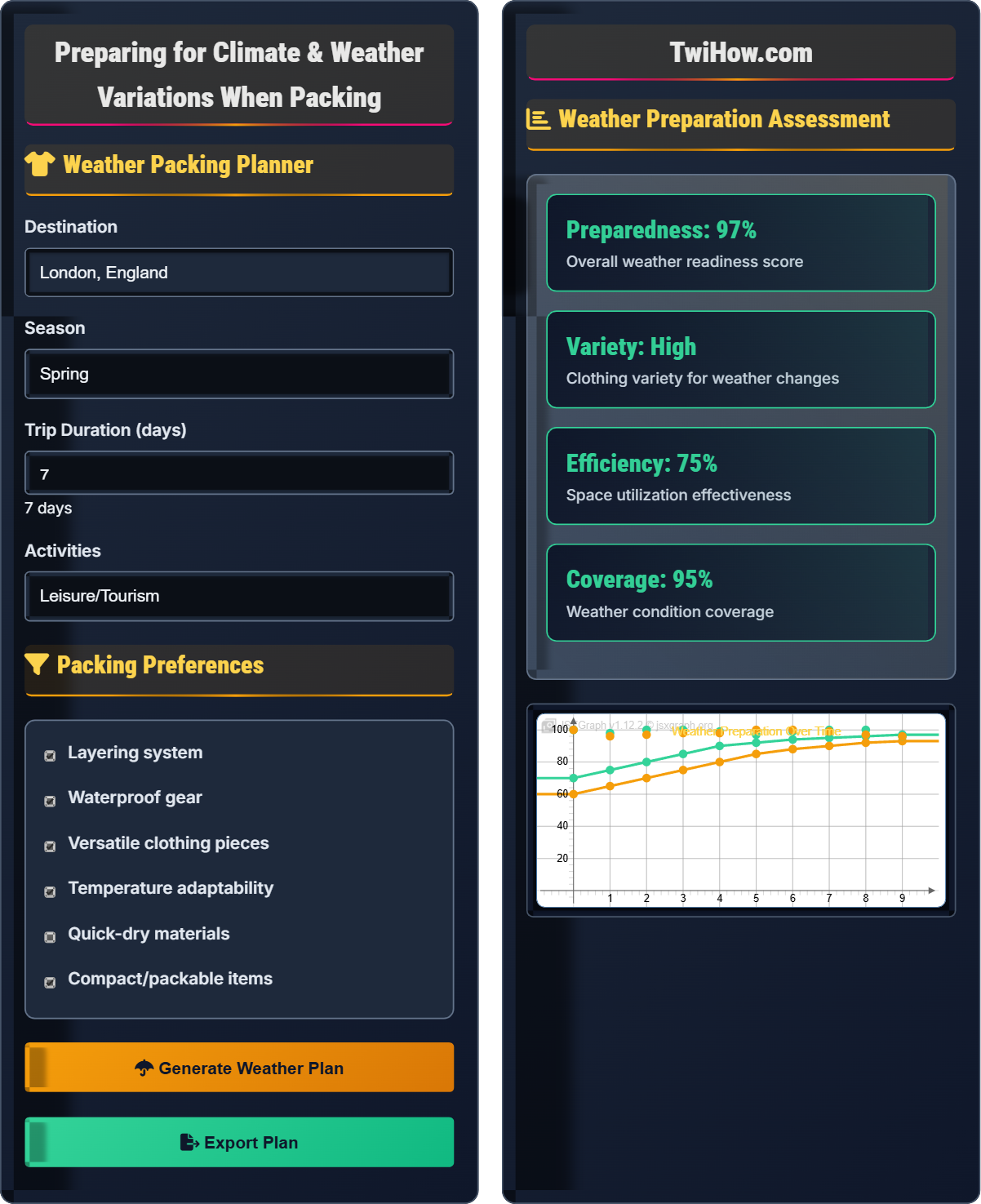
Weather Packing Planner
Packing Preferences
Weather Preparation Assessment
| Item | Quantity | Weather Conditions | Priority |
|---|---|---|---|
| Base Layers | 3-4 | All Seasons | High |
| Insulating Layers | 2-3 | Cold Weather | High |
| Outer Shell | 1-2 | Rain/Wind | High |
| Footwear | 2 pairs | All Conditions | High |
| Accessories | Multiple | Temperature | Medium |
Layering System
Base Layer: Moisture-wicking synthetic or merino wool
Mid Layer: Insulating fleece or down jacket
Outer Layer: Waterproof/breathable shell
Weather-Specific Items
Rain Gear: Packable rain jacket and pants
Cold Protection: Thermal underwear and insulated accessories
Heat Management: Light, breathable fabrics and sun protection
How to Prepare for Climate and Weather Variations When Packing
Preparing for climate and weather variations when packing involves strategic planning to handle unpredictable conditions while maintaining efficient luggage use. This requires understanding destination climate patterns, selecting versatile clothing, and organizing items for maximum adaptability. The goal is to pack for a range of conditions without overburdening yourself with excessive gear.
The optimal weather preparation score can be calculated as:
Where:
- Coverage: Percentage of expected weather conditions addressed
- Versatility: Ability of items to serve multiple functions
- Bulk Factor: Space and weight efficiency of packed items
Build adaptable outfits for temperature changes
Protect against rain and moisture
Handle hot and cold conditions
Maximize space and minimize bulk
- Base Layer System: Moisture-wicking materials for comfort
- Insulation Options: Packable mid-layers for warmth
- Shell Protection: Waterproof outer layers
- Versatile Pieces: Items that work for multiple occasions
- Quick-Dry Materials: Reduce need for multiple items
- Accessories: Hats, scarves, gloves for temperature regulation
Weather Preparation
Weather preparation, climate adaptation, seasonal packing, layering system, versatile clothing, weather-resistant gear.
Preparedness Score = (Coverage × Versatility) / Bulk Factor × 100%
Where higher scores indicate better weather preparation.
- Research destination weather patterns
- Prioritize versatile, multi-use items
- Implement layering system
Practical Applications
Travel packing, outdoor adventures, seasonal clothing, climate adaptation, emergency preparedness.
- Research destination climate
- Select versatile clothing items
- Implement layering strategy
- Choose weather-resistant materials
- Organize for space efficiency
- Balance preparation with mobility
- Consider laundry access
- Account for activity level
- Factor in elevation and microclimates
Weather Packing Quiz
What is the correct order for a weather-adaptive layering system?
The correct layering order is: base layer closest to skin for moisture management, insulating layer for warmth, and outer shell for weather protection. This system allows for temperature regulation by adding or removing layers as conditions change. The base layer manages moisture, the middle layer provides insulation, and the outer layer protects against wind and water.
The answer is B) Base layer, insulating layer, outer shell.
Layering systems work by creating microclimates around the body. Each layer serves a specific function: the base layer manages moisture, the middle layer retains heat, and the outer layer shields from environmental conditions. Understanding this sequence is crucial for effective weather protection.
Base Layer: Moisture-wicking fabric closest to skin
Insulating Layer: Heat-retaining middle layer
Outer Shell: Weather protection outermost layer
• Base layer next to skin for moisture management
• Insulating layer for temperature regulation
• Outer shell for weather protection
• Choose merino wool for base layers
• Pack lightweight fleece for insulation
• Select packable waterproof shells
• Incorrect layering sequence
• Not considering breathability
Explain the differences between synthetic and natural materials for weather preparation, and when to use each.
Synthetic Materials:
• Moisture Management: Excellent wicking and quick drying
• Performance: Consistent in wet conditions
• Durability: Strong and abrasion-resistant
• Insulation: Synthetic fill maintains warmth when wet
Natural Materials:
• Comfort: Soft and comfortable against skin
• Odor Resistance: Natural antimicrobial properties
• Temperature Regulation: Breathes well in various conditions
• Environment: Biodegradable options
When to Use Each:
• Synthetics: High-intensity activities, wet environments, base layers
• Naturals: Extended wear, odor-sensitive situations, sleepwear
• Hybrid: Combine both for optimal performance
The choice depends on activity level, climate, and personal comfort preferences.
Material selection significantly impacts comfort and safety during weather variations. Each material type has advantages and disadvantages that make it suitable for specific conditions. Understanding these properties allows for strategic packing decisions.
Synthetic Materials: Man-made fibers engineered for performance
Natural Materials: Animal or plant-based fibers
Moisture Wicking: Drawing moisture away from skin
• Avoid cotton for base layers
• Choose synthetic for wet conditions
• Consider natural materials for comfort
• Merino wool for base layers
• Polyester for moisture management
• Down for lightweight insulation
• Using cotton in wet conditions
• Not considering activity level
• Ignoring personal comfort preferences
You're traveling to a destination where temperatures can fluctuate 20°F between day and night. How should you pack to handle these variations efficiently?
Layering Strategy:
• Base Layer: Moisture-wicking synthetic or merino wool (1-2 pieces)
• Mid Layer: Lightweight fleece or down jacket (1 piece)
• Outer Layer: Packable wind/rain shell (1 piece)
Accessories:
• Head: Warm hat and sun hat (2 pieces)
• Hands: Lightweight gloves and warm gloves (2 pairs)
• Feet: Mid-weight socks and thick socks (2-3 pairs)
Strategic Packing:
• Wear heaviest item during travel to save space
• Pack items that compress well (down, synthetic fill)
• Choose pieces that work for multiple temperature ranges
Management Techniques:
• Layer up at night, strip down during day
• Use base layers for cool mornings, remove as temperatures rise
• Keep outer shell accessible for sudden weather changes
This approach provides maximum temperature adaptability while minimizing bulk.
Temperature fluctuations require a flexible approach that allows for quick adjustments. The key is to pack items that can be easily added or removed to match changing conditions. This strategy maximizes comfort while minimizing the need to carry multiple sets of clothes.
Temperature Fluctuation: Significant daily temperature changes
Layering Strategy: Building outfits for adaptability
Compressibility: Ability to pack compactly
• Pack for temperature range, not just average
• Choose easily adjustable layers
• Consider time of day temperature changes
• Use zip-off sleeves for temperature control
• Pack versatile pieces that work in multiple conditions
• Choose items that can serve dual purposes
• Packing for average temperature only
• Not considering elevation changes
• Forgetting accessories for temperature changes
You're traveling during a rainy season in a tropical destination. How do you prepare for constant moisture while maintaining comfort and preventing equipment damage?
Clothing Strategy:
1. Waterproof Outer Layer: Packable rain jacket and pants
2. Quick-Dry Materials: Synthetic fabrics that dry rapidly
3. Moisture-Wicking Base: Prevents prolonged dampness against skin
Equipment Protection:
• Waterproof Bags: Dry sacks for electronics and documents
• Shoe Covers: Protect footwear from constant moisture
• Plastic Bags: Backup protection for critical items
Hygiene Management:
• Extra Socks: Change frequently to prevent blisters
• Antifungal Powder: Prevent moisture-related skin issues
• Microfiber Towels: Quick-drying and lightweight
Practical Tips:
• Wear Rain Gear Early: Before getting caught in downpour
• Seek Shelter Strategically: Plan routes with covered areas
• Dry Items Overnight: Use hotel hair dryer or fan
• Protect Electronics: Waterproof cases and bags
Footwear: Water-resistant shoes with good drainage
Preparation focuses on staying dry, preventing equipment damage, and maintaining hygiene.
Rainy season travel requires a proactive approach to moisture management. The goal is to prevent water from reaching your skin and belongings while maintaining comfort during extended wet conditions. This requires specialized gear and techniques that differ from occasional rain protection.
Waterproof Rating: Fabric's ability to resist water penetration
Breathability: Allowing moisture vapor to escape
Hydrophobic: Water-repelling properties
• Prioritize waterproofing over breathability in heavy rain
• Pack extra quick-dry items
• Protect electronics proactively
• Use trash bags as emergency rain protection
• Pack clothes in waterproof bags
• Wear rain gear before it starts raining
• Underestimating rain intensity
• Not protecting electronics adequately
• Forgetting to change out of wet clothes
Which strategy is most effective for maximizing weather preparation while minimizing luggage space?
Choosing lightweight, packable items with multiple functions maximizes weather preparation while minimizing space. This approach prioritizes versatility over bulk, allowing you to handle various conditions without carrying excessive weight. Multi-functional items like convertible pants, packable jackets, and quick-dry fabrics provide maximum utility in minimal space.
The answer is B) Choose lightweight, packable items with multiple functions.
Effective weather preparation relies on strategic selection rather than quantity. The key is to identify items that serve multiple purposes and can adapt to various conditions. This approach requires careful planning but results in more efficient and practical packing.
Multi-Functional: Serving multiple purposes or conditions
Compressibility: Ability to pack compactly
Versatility: Working effectively in various conditions
• Prioritize versatility over quantity
• Choose compressible materials
• Select multi-purpose items
• Roll clothes instead of folding
• Use packing cubes for organization
• Choose items that work for multiple seasons
• Overpacking for every possible condition
• Not considering item versatility
• Failing to compress items properly
FAQ
Q: I'm planning a multi-day hiking trip with unpredictable mountain weather. What's the most important piece of gear for weather variations?
A: The most important piece of gear for unpredictable mountain weather is a high-quality, breathable waterproof shell. Mountain weather can change rapidly, and hypothermia from wet conditions is a serious risk. A good shell will protect against wind and rain while allowing moisture to escape, preventing the dangerous combination of being wet and cold.
Key Features:
• Waterproof Rating: Minimum 10,000mm
• Breathability: 10,000g/m²/24hr minimum
• Fit: Allows layering underneath
• Features: Adjustable hood, pit zips, storm flaps
Additional Considerations:
• Pack extra layers in waterproof stuff sacks
• Bring gaiters for snow/mud protection
• Ensure boots are compatible with shell pants
• Test your shell in controlled conditions before the trip
Remember: In mountains, weather protection often means life or death.
Q: How do I pack for weather variations when traveling with young children?
A: Packing for children requires special consideration of their unique needs:
Layering for Kids:
• Use same layering principles but choose child-sized items
• Children lose heat faster than adults, so prioritize warmth
• Bright colors for visibility in adverse conditions
Essential Items:
• Rain Gear: Full rain suits for all children
• Warm Layers: Fleece or wool sweaters
• Accessories: Hats and gloves for all seasons
• Footwear: Waterproof shoes with good traction
Practical Considerations:
• Pack extra clothes (children get dirty/wet quickly)
• Include comfort items that work in various conditions
• Ensure children can easily put on/take off layers
• Teach them about weather-appropriate clothing
Space Management:
• Use compression bags for children's clothes
• Pack clothes in kids' own small backpacks
• Coordinate colors/styles to maximize mix-and-match
Safety Focus:
• Prioritize weather protection over fashion
• Ensure visibility in poor weather conditions
• Pack extra items for unexpected delays
Remember: Children's comfort directly affects the entire family's experience.