Accessible Travel Guide for Mobility and Other Needs
Travel resources • Step-by-step accessibility planning
Accessible Travel:
Plan Your Accessible TripAccessible travel ensures that everyone, regardless of mobility or other needs, can explore the world comfortably and safely. This comprehensive guide covers everything from transportation to accommodation, helping you plan barrier-free journeys.
Key aspects of accessible travel:
- Transportation: Wheelchair-accessible vehicles, airports, and public transit
- Accommodation: Accessible rooms, bathroom facilities, and amenities
- Destinations: Accessible attractions, paths, and activities
- Communication: Sign language interpreters, visual aids, and assistive technologies
- Documentation: Medical letters, insurance, and emergency contacts
With proper planning and resources, travel can be enjoyed by everyone, creating meaningful experiences and memories.
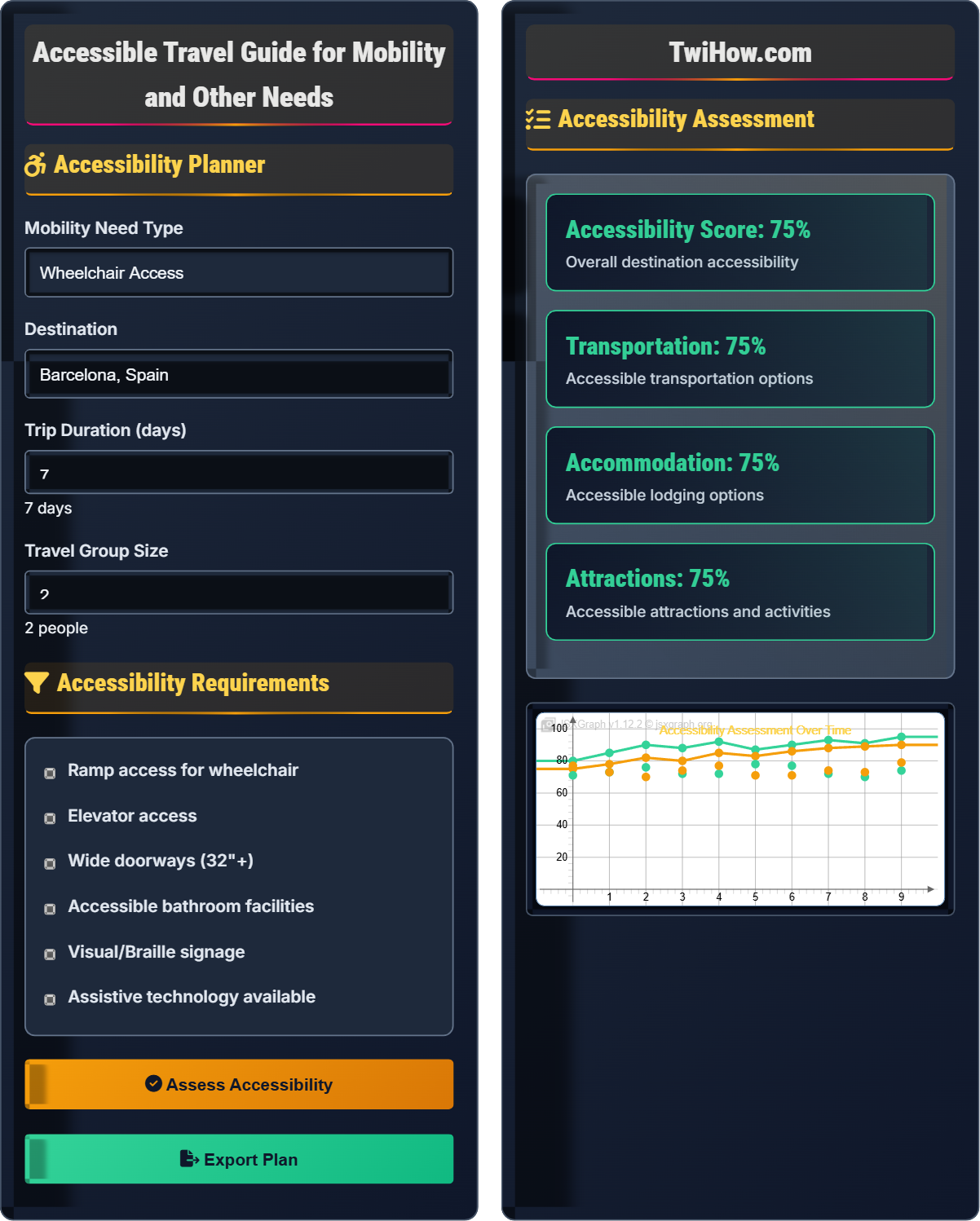
Accessibility Planner
Accessibility Requirements
Accessibility Assessment
| Category | Requirement | Availability | Notes |
|---|---|---|---|
| Transportation | Wheelchair accessible | Excellent | Many accessible buses, metro stations |
| Accommodation | Wheelchair rooms | Good | Several certified accessible hotels |
| Attractions | Ramp access | Good | Major museums have ramps |
| Restaurants | Wheelchair access | Good | Most restaurants have accessible entrances |
| Public Spaces | Accessible pathways | Fair | Some cobblestone streets challenging |
Recommended Accommodations
Hotel Example: Accessible rooms with roll-in shower, grab bars, and wide doorways
Location: Near accessible public transportation
Transportation Tips
Subway: Check accessibility maps before travel
Taxis: Book accessible vehicles in advance
Airport: Request wheelchair assistance 48 hours ahead
How to Travel Accessibly with Mobility and Other Needs
Accessible travel is about ensuring that everyone can explore the world regardless of physical, sensory, or cognitive differences. It involves planning for specific needs and understanding what accommodations are available at destinations. This approach creates inclusive travel experiences that are safe, comfortable, and enjoyable for all travelers.
The accessibility score can be calculated as:
Where:
- Available Accommodations: Facilities and services that meet accessibility needs
- Required Accommodations: Specific needs identified by the traveler
Ramps, elevators, accessible restrooms, and pathways
Audio descriptions, tactile paths, and Braille signage
Sign language interpreters, captioning, and hearing loops
Quiet spaces, clear signage, and simplified instructions
- Disability Rights Advocates: Organizations providing travel resources
- Accessible Travel Agencies: Specialized tour operators
- Online Communities: Forums and reviews from travelers with disabilities
- Government Resources: Accessibility guidelines and regulations
- Mobile Apps: Accessibility maps and services
- Medical Documentation: Prescriptions and doctor's letters
Accessibility Planning
Accessible travel, universal design, accommodation requirements, barrier-free access, inclusive tourism.
Accessibility Score = (Available Accommodations / Required Accommodations) × 100%
Where higher scores indicate better accessibility match.
- Plan ahead for all accessibility needs
- Communicate requirements clearly
- Verify accessibility details independently
Practical Applications
Travel planning, accommodation booking, transportation arrangements, activity selection, emergency preparedness.
- Identify specific accessibility needs
- Research destination accessibility
- Book accessible accommodations
- Arrange transportation accommodations
- Plan accessible activities
- Legal protections under disability rights
- Advance notice requirements
- Backup plans for accessibility issues
- Emergency medical needs
Accessible Travel Quiz
What is the most important step when planning accessible transportation for air travel?
Most airlines require advance notice (typically 48 hours) to arrange wheelchair assistance and other accessibility services. This ensures staff availability and proper equipment. Airlines are legally obligated to provide these services when properly notified in advance.
The answer is B) Requesting wheelchair assistance 48 hours in advance.
Advance planning is crucial for accessible travel because services and equipment need to be arranged ahead of time. Airlines must provide wheelchair assistance but only if they receive proper advance notice. This demonstrates the importance of understanding service requirements and deadlines.
Advance Notice: Required time frame to request special services
Wheelchair Assistance: Service provided by airline staff for passengers with mobility needs
Legal Obligation: Requirements under disability rights legislation
• Airlines require 48 hours advance notice for assistance
• Document all requests in writing
• Confirm services before travel
• Call the airline directly to confirm services
• Bring backup documentation
• Know your rights as a passenger with disabilities
• Not requesting services in advance
• Assuming services are automatically provided
• Not confirming arrangements before travel
Explain the key features to look for when researching accessible hotel accommodations and why each is important.
Essential Accessible Hotel Features:
Room Specifications: Wide doorways (32 inches minimum), adequate turning space (30"x48"), accessible bathroom with grab bars and roll-in shower.
Facility Access: Elevator access to all floors, accessible parking spaces close to entrance, accessible pathways throughout property.
Service Amenities: Accessible fitness facilities, restaurants, and pool areas, TTY/relay services for phone communications.
Staff Training: Knowledgeable staff who understand accessibility needs and can provide appropriate assistance.
Each feature is important because accessibility is about creating an environment where individuals with disabilities can navigate and use facilities independently and safely.
Accessible accommodations require comprehensive planning that addresses multiple aspects of the travel experience. Universal design principles ensure that spaces accommodate the widest range of users. This holistic approach prevents partial accessibility that might still create barriers.
Universal Design: Designing for all users regardless of ability
Accessible Parking: Designated spaces near entrances with appropriate dimensions
Turning Space: Adequate room for wheelchair maneuvering
• Verify specifications match your exact needs
• Check photos and reviews from other accessible travelers
• Contact hotel directly to confirm features
• Use specialized accessible travel websites
• Ask for photos of specific rooms
• Check accessibility certifications
• Assuming "accessible" means fully accessible
• Not verifying specific requirements
• Relying only on marketing materials
You're traveling with a mobility aid and need to prepare for potential emergencies. What documentation and emergency plans should you have, and how do you ensure accessibility during unexpected situations?
Essential Documentation:
1. Medical Letters: Doctor's letter describing your condition and mobility aid requirements
2. Prescription Lists: Current medications with generic names
3. Insurance Information: Travel insurance details with accessibility coverage
4. Emergency Contacts: Local and international emergency contacts
Emergency Plans:
• Research accessible hospitals and medical facilities at destination
• Carry backup equipment or know where to obtain replacements
• Inform travel companions of specific needs and procedures
• Have contact information for local disability organizations
Accessibility During Emergencies: Identify evacuation procedures for your specific needs, know locations of accessible exits, and ensure communication methods are available for your needs.
Emergency preparedness for travelers with disabilities requires proactive planning that considers how standard procedures might not accommodate specific needs. This preparation helps ensure safety while maintaining independence and dignity during challenging situations.
Medical Letter: Official document from physician describing needs
Evacuation Procedures: Planned exit strategies during emergencies
Emergency Preparedness: Advance planning for unexpected situations
• Prepare documentation before departure
• Research local medical resources
• Share plans with travel companions
• Store digital copies in cloud storage
• Carry physical copies in waterproof containers
• Know location of nearest embassy/consulate
• Not preparing documentation in advance
• Assuming all hospitals are accessible
• Not informing travel companions of needs
You want to visit a famous museum that claims to be accessible, but online research shows mixed reviews regarding accessibility. How do you verify the accessibility and plan your visit accordingly?
Verification Steps:
1. Contact Directly: Call the museum's accessibility services department
2. Ask Specific Questions: Inquire about elevator access, restroom accessibility, exhibit accessibility, and guided tours
3. Request Details: Get information about pathway widths, door widths, and specific accommodations
4. Consult Reviews: Look for reviews from travelers with similar needs
5. Plan Timing: Consider visiting during less crowded times for easier navigation
Planning Considerations: Arrange for possible assistance, know the location of accessible restrooms and rest areas, and have a backup plan if accessibility falls short of expectations.
Always verify accessibility claims directly with the institution rather than relying solely on general marketing information.
Accessibility verification requires direct communication and specific questioning. General accessibility statements may not address individual needs. This approach ensures accurate information and demonstrates the importance of advocating for specific requirements.
Accessibility Services: Department responsible for accommodations
Direct Verification: Confirming information through official channels
Advocacy: Asserting specific accessibility needs
• Always verify accessibility directly
• Ask specific questions about your needs
• Document communications for reference
• Call during business hours when staff are available
• Take notes during conversations
• Ask for written confirmation of accommodations
• Accepting general accessibility claims without verification
• Not asking specific questions about individual needs
• Failing to document accessibility arrangements
Which of the following is the most important aspect of legal protections for travelers with disabilities?
The fundamental principle of disability rights legislation worldwide is equal access and non-discrimination. This means travelers with disabilities have the right to the same level of service and access as travelers without disabilities, with reasonable accommodations provided when needed. This principle underlies all other protections and services.
The answer is B) The right to equal access and non-discrimination.
Legal protections for travelers with disabilities are rooted in the principle of equality. This means equal access to services, equal treatment, and equal opportunity to participate in travel experiences. Understanding this foundational principle helps travelers advocate effectively for their rights.
Equal Access: Same level of service and access as other travelers
Non-Discrimination: Prohibition of unequal treatment
Reasonable Accommodation: Modifications that do not cause undue burden
• Equal access is the fundamental principle
• Reasonable accommodations must be provided
• Discrimination is prohibited
• Know your rights under local laws
• Document any discrimination incidents
• Contact advocacy organizations if needed
• Not understanding fundamental rights
• Accepting substandard service without complaint
• Not documenting discrimination incidents
FAQ
Q: What should I do if I arrive at a destination and find that the accessibility accommodations promised by the hotel or airline were not provided?
A: If accessibility accommodations aren't provided:
Immediate Steps:
1. Document Everything: Take photos, note staff names, record conversations
2. Request Alternative Solutions: Ask for immediate alternative arrangements
3. Contact Supervisor: Speak with a manager or supervisor immediately
Legal Actions:
• File complaints with relevant agencies (DOT for airlines, local disability rights offices)
• Contact your travel insurance provider
• Reach out to disability advocacy organizations
Future Prevention:
• Always confirm reservations in writing
• Bring backup documentation
• Research local advocacy resources before travel
Remember: You have legal rights to accessible services, and providers are legally obligated to fulfill their commitments.
Q: How can families with children who have special needs find accessible attractions and activities?
A: Finding accessible attractions for children requires targeted research:
Resources:
• Disability-Specific Websites: Sites like DisabledGo or AccessNow
• Theme Parks: Most major theme parks have comprehensive accessibility guides
• Local Tourism Boards: Many provide accessibility information
• Online Communities: Facebook groups and forums for families with special needs
What to Look For:
• Quiet rooms for sensory breaks
• Flexible entry policies for special needs
• Trained staff who understand various conditions
• Modified programs or private sessions
Tips:
• Contact attractions directly to discuss your child's specific needs
• Ask about early entry or reduced sensory experiences
• Plan for extra time and break opportunities
• Pack comfort items and familiar objects for your child