Volunteering & Skill-Sharing While Traveling
Travel guide • Step-by-step community engagement
Community Impact:
Calculate Impact PlanVolunteering and skill-sharing while traveling creates mutually beneficial experiences that enrich both travelers and host communities. This guide provides comprehensive strategies for meaningful engagement that respects local needs while maximizing personal growth and cultural exchange.
Key aspects of volunteer travel:
- Community-Centered: Addressing actual local needs rather than perceived wants
- Skill-Based: Leveraging personal expertise for meaningful contributions
- Sustainable Impact: Creating lasting positive change
- Cultural Exchange: Bidirectional learning and relationship building
- Responsible Engagement: Ensuring ethical and respectful participation
Successful volunteer travel requires careful planning, cultural sensitivity, and commitment to genuine community partnership rather than short-term intervention.
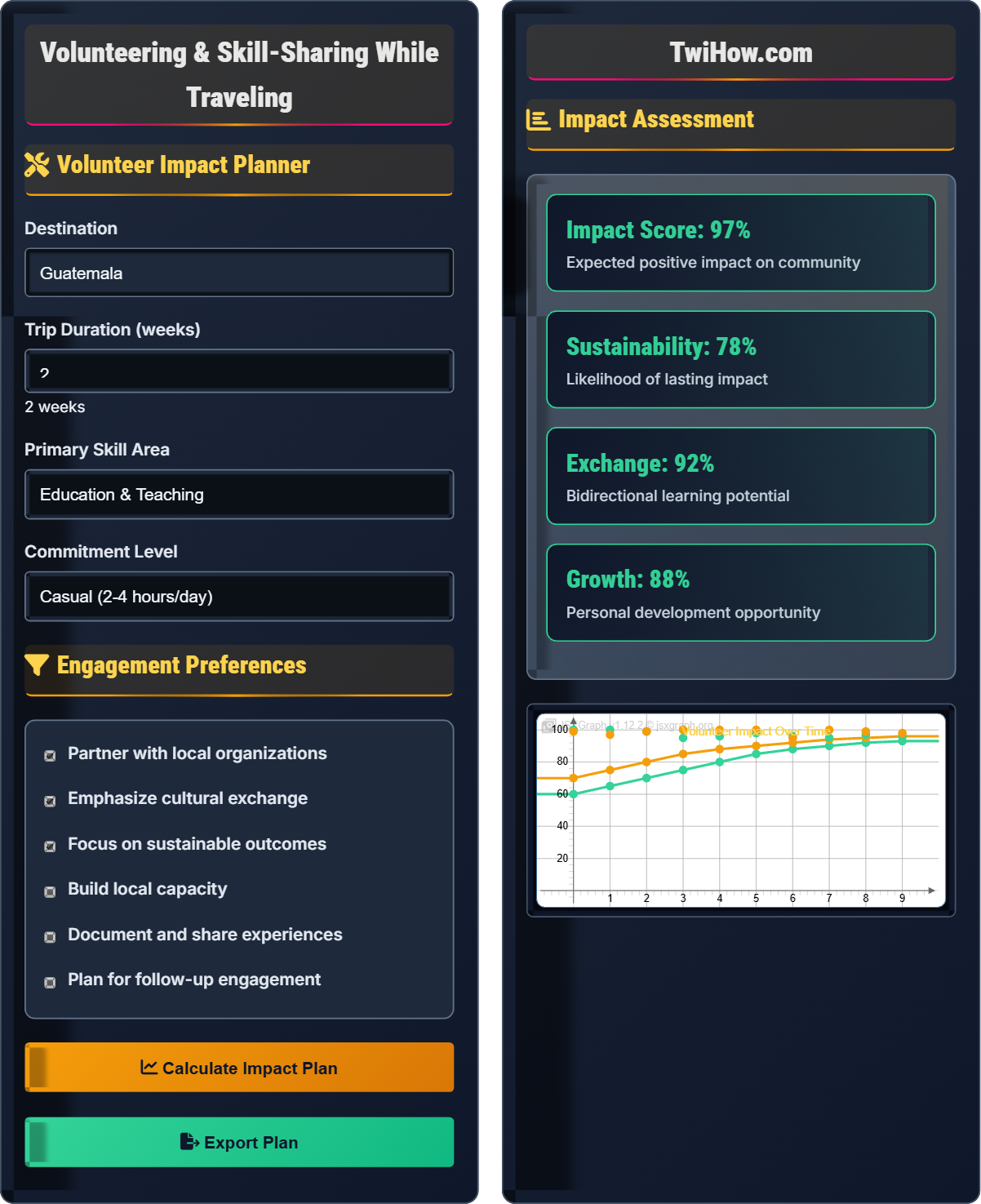
Volunteer Impact Planner
Engagement Preferences
Impact Assessment
| Activity | Time Commitment | Impact Level | Priority |
|---|---|---|---|
| Teaching Skills | 4 hours/day | High | High |
| Community Projects | 3 hours/day | Medium | High |
| Cultural Exchange | Ongoing | High | Medium |
| Documentation | 1 hour/day | Low | Low |
| Capacity Building | 2 hours/day | Very High | High |
Community Benefits
Skills Transfer: Direct knowledge sharing to local participants
Infrastructure: Tangible improvements to local facilities
Empowerment: Building local capacity for continued development
Personal Benefits
Cultural Understanding: Deep insights into different ways of life
Personal Growth: Increased empathy and global awareness
Professional Skills: Leadership and cross-cultural communication
How to Prepare for Volunteering and Skill-Sharing While Traveling
Volunteering and skill-sharing while traveling represents a meaningful approach to exploration that benefits both travelers and host communities. This form of travel emphasizes contribution over consumption, creating lasting impact through meaningful engagement. Success requires preparation, cultural sensitivity, and genuine commitment to community needs rather than personal fulfillment.
The volunteer impact score can be calculated as:
Where:
- Relevance: How well skills match community needs
- Sustainability: Likelihood of lasting positive outcomes
- Cultural Sensitivity: Respect for local customs and practices
- Resource Consumption: Environmental and social impact of participation
Address actual local needs and priorities
Create lasting positive change
Respect local customs and practices
Ensure mutual learning and benefit
- Humility: Approach with learning mindset, not teaching attitude
- Respect: Honor local customs, traditions, and leadership
- Collaboration: Work alongside community members as partners
- Responsibility: Consider long-term consequences of actions
- Transparency: Share resources and knowledge openly
- Continuity: Plan for ongoing support beyond visit
Volunteer Strategy
Volunteer travel, skill-sharing, community service, cultural exchange, sustainable impact, responsible tourism.
Impact Score = (Relevance × Sustainability × Cultural Sensitivity) / Resource Consumption × 100%
Where higher scores indicate more effective volunteer engagement.
- Address actual community needs
- Ensure sustainable outcomes
- Respect local customs and practices
Practical Applications
Teaching, healthcare support, construction projects, environmental conservation, cultural preservation, community development.
- Research destination community needs
- Assess personal skills and interests
- Connect with local organizations
- Prepare culturally and practically
- Engage respectfully and learn continuously
- Ensure ethical and responsible engagement
- Focus on capacity building over service
- Plan for long-term impact
- Respect local leadership and decisions
Volunteer Travel Quiz
What is the most important principle for ethical volunteer travel?
Effective volunteer travel requires understanding and respecting community priorities. Ethical engagement begins with listening to local leaders and community members to identify genuine needs. This approach ensures that volunteer efforts align with community goals rather than external assumptions. Partnership and collaboration are essential for sustainable, respectful impact.
The answer is B) Listening to community needs and partnering with local leaders.
Volunteer travel ethics emphasize the importance of community-centered approaches over externally-driven solutions. This principle ensures that interventions are culturally appropriate, sustainable, and genuinely beneficial to local communities. Understanding community priorities prevents well-intentioned efforts from creating dependency or cultural disruption.
Community-Centered: Approaches that prioritize local needs and leadership
Cultural Appropriateness: Actions that respect local customs and values
Sustainable Impact: Changes that continue after volunteers leave
• Listen before acting
• Partner with local organizations
• Respect local leadership
• Research local customs before arrival
• Ask community members about their priorities
• Observe before intervening
• Assuming you know what's best
• Not researching local context
• Working without local partnerships
Explain how to identify and prepare for skill-based volunteer opportunities while traveling.
Skill Identification:
• Assess your professional and personal skills objectively
• Consider transferable abilities (teaching, project management, communication)
• Identify skills that are in demand in your destination
Opportunity Research:
• Contact local NGOs, schools, and community organizations
• Use platforms like VolunteerMatch, GoAbroad, or Idealist
• Connect with local universities or professional associations
Preparation Strategies:
• Learn relevant local languages or phrases
• Understand cultural communication styles
• Prepare materials or resources in advance
• Verify credential requirements and certifications
Engagement Approach:
• Start with observation and learning
• Collaborate with local professionals
• Focus on knowledge transfer rather than replacement
• Plan for ongoing support after departure
Successful skill-based volunteering requires matching expertise with genuine community needs.
Skill-based volunteering maximizes impact by leveraging professional expertise for community benefit. This approach requires careful alignment between volunteer capabilities and community needs. Preparation includes both technical readiness and cultural competency to ensure effective knowledge transfer.
Skill-Based Volunteering: Using professional expertise for community benefit
Knowledge Transfer: Sharing expertise and capabilities
Capacity Building: Enhancing local abilities and resources
• Verify skill relevance to community needs
• Respect local expertise and practices
• Focus on building local capacity
• Document your skills and experiences
• Connect with local professionals before arrival
• Prepare for cultural differences in work styles
• Assuming all skills are universally applicable
• Not researching local work practices
• Working without local partnerships
You're considering a 2-week volunteer project building a school. How can you ensure the project creates sustainable impact beyond your involvement?
Pre-Project Planning:
• Verify community ownership and long-term commitment to the project
• Ensure local workers are hired and trained during construction
• Confirm funding exists for ongoing maintenance and operations
• Establish partnerships with local contractors and suppliers
During Project:
• Focus on training local workers in construction techniques
• Document construction process for future reference
• Engage community members in decision-making
• Build relationships with local educators and administrators
Post-Project:
• Create maintenance plans with local community
• Establish connections for ongoing support
• Document lessons learned for future projects
• Facilitate connections between local and international supporters
Long-Term Strategy:
• Plan for return visits or remote support
• Connect with other volunteers for ongoing involvement
• Advocate for the project in your home community
• Share best practices with other volunteer organizations
Sustainable impact requires building local capacity rather than providing temporary assistance.
Sustainable development requires focusing on capacity building rather than direct service. The goal is to empower communities to continue and expand upon volunteer contributions after departure. This approach creates lasting change that extends beyond the volunteer's temporary presence.
Capacity Building: Enhancing local abilities and resources
Community Ownership: Local community taking responsibility for projects
Sustainable Development: Creating lasting positive change
• Focus on training over doing
• Ensure local ownership of projects
• Plan for long-term sustainability
• Involve local workers in all phases
• Document processes and techniques
• Establish ongoing support networks
• Completing projects without local involvement
• Not planning for ongoing maintenance
• Assuming projects will continue without support
While volunteering in a rural community, you notice that your suggestions for improving efficiency are being politely ignored. How should you respond to ensure cultural sensitivity while still contributing meaningfully?
Immediate Response:
• Pause and observe local work practices without judgment
• Ask questions about current methods and their rationale
• Acknowledge the value of existing approaches
• Express genuine interest in learning from local expertise
Understanding Context:
• Recognize that efficiency may not be the primary value
• Consider cultural factors like social relationships, traditions, or resource constraints
• Understand that change may need to happen gradually
• Respect that locals may have valid reasons for current practices
Adaptive Approach:
• Focus on learning and observation rather than changing
• Share your ideas as suggestions rather than improvements
• Ask if there are specific challenges where help is wanted
• Emphasize collaboration over correction
Meaningful Contribution:
• Offer to learn local methods thoroughly
• Help with tasks that locals identify as needing support
• Share experiences that might be relevant when invited
• Focus on relationship building and cultural exchange
Long-Term Impact:
• Build trust through respectful engagement
• Wait for opportunities to contribute meaningfully
• Learn from local wisdom and practices
• Share your skills when there is genuine interest
Cultural sensitivity requires humility, respect, and patience in all interactions.
Cultural sensitivity in volunteer work requires recognizing that different approaches may be equally valid. What appears inefficient from one perspective may serve important social, cultural, or economic functions. Effective volunteer work involves understanding and respecting these contexts rather than imposing external solutions.
Cultural Sensitivity: Respectful awareness of cultural differences
Local Wisdom: Indigenous knowledge and practices
Collaborative Approach: Working together as equals
• Listen more than you speak
• Ask before suggesting
• Respect existing practices
• Observe before offering suggestions
• Ask about the reasons behind practices
• Share experiences when invited
• Assuming your way is better
• Not understanding cultural context
• Imposing external solutions
Which metric best measures the success of a volunteer travel experience?
True success in volunteer travel is measured by lasting positive change in the community. This requires focusing on capacity building, knowledge transfer, and sustainable practices that continue after the volunteer departs. The ultimate measure is whether the community is better equipped to address its challenges independently.
The answer is B) Positive changes in the community after the volunteer leaves.
Sustainable impact requires creating lasting change rather than temporary assistance. Effective volunteer work builds local capacity, transfers knowledge, and empowers communities to continue progress independently. This approach creates meaningful, measurable change that extends beyond the volunteer's presence.
Sustainable Impact: Lasting positive change that continues after departure
Capacity Building: Enhancing local abilities and resourcesCommunity Empowerment: Strengthening local self-sufficiency
• Focus on building local capacity
• Measure impact over time
• Prioritize community-defined success
• Establish baseline measurements
• Plan for follow-up assessment
• Connect with community for ongoing updates
• Measuring success by activity volume
• Not establishing baseline metrics
• Focusing on personal achievements over community outcomes
FAQ
Q: I'm a teacher interested in volunteering abroad. How do I ensure my teaching methods are appropriate for the local context?
A: Adapting teaching methods for different cultural contexts requires sensitivity and flexibility:
Pre-Arrival Preparation:
• Research local educational philosophies and classroom structures
• Learn about cultural attitudes toward authority and student participation
• Understand local curriculum and learning objectives
• Connect with local teachers for insights and guidance
Classroom Approach:
• Observe current teaching methods before introducing changes
• Collaborate with local teachers as partners
• Adapt activities to local resources and cultural norms
• Focus on supplementing rather than replacing existing methods
Cultural Sensitivity:
• Respect traditional teaching and learning approaches
• Be aware of gender roles and interaction norms
• Understand different communication styles and expectations
• Recognize that direct eye contact may be culturally inappropriate
Knowledge Sharing:
• Offer techniques as options rather than improvements
• Provide resources that can be adapted locally
• Document successful methods for local teacher training
• Create materials that reflect local culture and context
Long-Term Impact:
• Train local teachers in new methods
• Develop sustainable lesson plans
• Create resources that can be used independently
• Establish connections for ongoing support
Remember: The goal is to enhance local education, not replace it.
Q: I'm a college student planning my first volunteer trip. What should I expect and how can I maximize my contribution?
A: First-time volunteer experiences can be transformative with proper preparation:
Realistic Expectations:
• You'll likely do more learning than teaching initially
• Cultural adjustment takes time and patience
• Impact may be smaller than you expect in a short timeframe
• Flexibility and adaptability are essential skills
Maximizing Contribution:
• Focus on observation and relationship building
• Offer to assist with ongoing projects
• Share enthusiasm and positive energy
• Be willing to help with basic tasks that need doing
Personal Preparation:
• Learn basic phrases in the local language
• Research cultural norms and etiquette
• Prepare for different living conditions
• Pack items that could be useful for the community
Learning Opportunities:
• Ask questions about local customs and practices
• Learn from community members and local staff
• Document your experiences for reflection
• Build relationships that can continue after your return
Post-Trip Engagement:
• Share your experiences to raise awareness
• Fundraise for the organization if appropriate
• Consider returning for longer-term involvement
• Apply lessons learned to future endeavors
Remember: Your most important contribution may be your willingness to learn and grow.