Technology in Modern Travel Experiences
Travel guide • Step-by-step tech integration
Travel Technology:
Tech Impact AssessmentTechnology has fundamentally transformed every aspect of travel, from planning and booking to experiencing destinations. This comprehensive guide explores how digital innovations enhance travel experiences, streamline processes, and create new possibilities for travelers.
Key areas of technological impact:
- Booking & Planning: AI-powered recommendations, dynamic pricing, virtual previews
- Transportation: Digital check-ins, real-time tracking, ride-sharing, flight apps
- Accommodation: Smart rooms, contactless check-in, IoT devices
- Navigation: GPS, AR navigation, offline maps, language translation
- Communication: Translation apps, messaging platforms, social sharing
Modern travelers rely on technology to create seamless, personalized, and efficient travel experiences that were unimaginable just decades ago.
Technology Impact Assessment
Technology Preferences
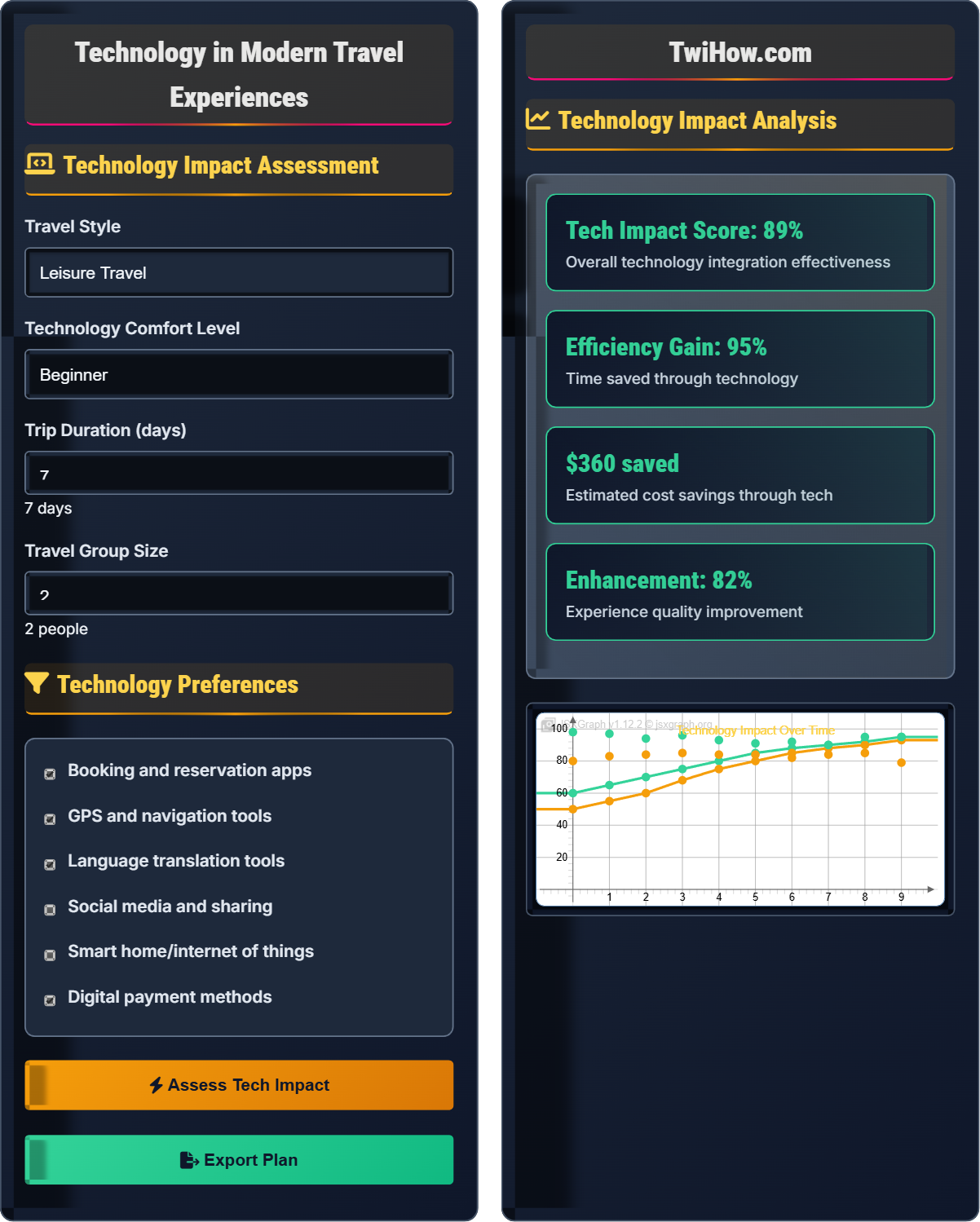
Technology Impact Analysis
| Category | Before Tech | After Tech | Improvement |
|---|---|---|---|
| Planning | 3 days | 2 hours | 92% |
| Booking | 2 days | 15 minutes | 95% |
| Navigation | 10% lost | 2% lost | 80% |
| Communication | Basic | Fluent | 70% |
| Payments | Cash only | Digital | 100% |
Recommended Apps
Booking: Skyscanner, Booking.com, Hopper
Navigation: Google Maps, Maps.me, Citymapper
Translation: Google Translate, Microsoft Translator
Transportation: Uber, Lyft, Local transit apps
Smart Travel Tips
Pre-trip: Download offline maps and language packs
During: Use location sharing for group coordination
Post-trip: Backup photos and experiences digitally
The Role of Technology in Modern Travel Experiences
Technology has revolutionized travel from its early stages of simple booking systems to today's AI-powered, interconnected ecosystems. Modern travelers now have instant access to global information, real-time updates, and personalized experiences that adapt to their preferences and behaviors.
The overall impact of technology on travel experiences can be measured as:
Where:
- Time Saved: Hours reduced in planning, booking, and navigation
- Cost Reduction: Financial savings through digital deals and efficiency
- Experience Enhancement: Quality improvements through personalization
- Technology Adoption Effort: Learning curve and complexity
Online booking systems and travel websites
Mobile apps and smartphone travel revolution
Cloud-based services and real-time updates
AI and automation in travel services
- Virtual Reality: Virtual destination previews and pre-travel experiences
- Augmented Reality: Enhanced navigation and real-time information overlay
- Blockchain: Secure identity verification and smart contracts
- Internet of Things: Connected devices and smart environments
- Biometric Authentication: Seamless identification and payment systems
- Quantum Computing: Complex optimization and personalization
Technology Impact
Travel technology, digital transformation, mobile apps, AI travel assistants, smart travel, digital nomadism.
Tech Impact = (Time Saved + Cost Reduction + Experience Enhancement) / Technology Adoption Effort × 100%
Where higher scores indicate greater positive impact.
- Technology should enhance rather than complicate travel
- Balance digital tools with authentic experiences
- Consider privacy and security implications
Practical Applications
Itinerary planning, accommodation booking, transportation, navigation, communication, entertainment, safety.
- Assess travel needs and preferences
- Select appropriate technology tools
- Integrate tools into travel workflow
- Test and optimize usage
- Evaluate impact and refine approach
- Device battery life and charging solutions
- Internet connectivity and data plans
- Backup plans for technology failures
- Local regulations and restrictions
Travel Technology Quiz
How does artificial intelligence primarily enhance the travel experience?
AI enhances travel by analyzing vast amounts of data to provide personalized recommendations, predict price changes, optimize routes, and anticipate traveler needs. AI systems can process booking patterns, preferences, and real-time data to suggest destinations, accommodations, and activities tailored to individual travelers.
The answer is B) Through personalized recommendations and predictive analytics.
Artificial intelligence in travel operates by collecting and analyzing data points about traveler behavior, preferences, and market conditions. This enables systems to make predictions and recommendations that would be impossible for humans to process in real-time. The technology augments human decision-making rather than replacing it entirely.
Artificial Intelligence: Computer systems that simulate human intelligence processes
Personalized Recommendations: Suggestions tailored to individual preferences
Predictive Analytics: Using data to forecast future events
• AI enhances rather than replaces human judgment
• Data privacy is essential in AI systems
• AI improves with more data and feedback
• Allow apps to learn your preferences over time
• Use AI-powered tools for complex planning
• Review and update your preferences regularly
• Expecting AI to perfectly understand all preferences
• Over-relying on AI without human judgment
Explain how smartphones have transformed the travel planning and experience process compared to traditional methods.
Traditional Travel Planning:
• Research through guidebooks, libraries, and word-of-mouth recommendations
• Physical booking through travel agents or direct contact with providers
• Paper maps, compasses, and asking for directions
• Limited communication options, mainly phone cards and internet cafes
Smartphone Revolution:
• Instant access to reviews, photos, and real-time information
• Real-time booking with price comparisons and instant confirmations
• GPS navigation with turn-by-turn directions and location services
• Video calling, messaging, and social sharing capabilities
• Offline capabilities and translation services
Smartphones have condensed all travel tools into a single, portable device that provides unprecedented access to information and services.
The smartphone revolution represents a fundamental shift from static, limited information sources to dynamic, comprehensive travel companions. This transformation demonstrates how mobile technology can aggregate multiple functions into a single platform, creating exponential value for users.
Mobile Revolution: Transformation through portable computing devices
Real-time Information: Instantly updated data and updates
Convergence Technology: Combining multiple functions in one device
• Battery life is critical for mobile travel
• Internet connectivity affects app functionality
• Data security is essential on mobile devices
• Download offline maps before traveling
• Use power banks for extended trips
• Enable airplane mode to save battery when needed
• Not preparing for areas with poor connectivity
• Forgetting to charge devices regularly
• Not backing up important travel documents
You're planning a 10-day trip to Japan as a first-time visitor. Calculate how technology can help you overcome language barriers, navigate efficiently, and manage your budget. What apps and tools would you prioritize?
Language Barrier Solutions:
1. Google Translate: Real-time camera translation for signs and menus
2. Google Lens: Point-and-translate for text recognition
3. Duetto: Voice-to-voice translation for conversations
Navigation Solutions:
• Hyperdia: Japanese train schedule and route planning
• Japan Travel by Navitime: Comprehensive navigation and information
• Google Maps: Offline maps with Japanese language support
Budget Management:
• XE Currency: Real-time exchange rate conversion
• Trail Wallet: Expense tracking with currency conversion
• Pockit: International banking and spending tracking
Integration Strategy: Sync all apps to work together, download offline content before arrival, and share location with travel companions.
Effective technology integration requires selecting complementary tools that address specific challenges. The key is not just having many apps, but having the right apps that work together seamlessly to solve travel problems efficiently.
App Integration: Coordinating multiple applications for optimal functionality
Offline Capability: Functionality without internet connection
Complementary Tools: Apps that enhance each other's functionality
• Prioritize apps based on specific needs
• Test apps before departure
• Have backup solutions for critical functions
• Create a digital travel folder with all app information
• Practice using apps before travel
• Keep important information in multiple formats
• Installing too many apps without testing
• Not downloading offline content
• Forgetting to charge devices in different regions
You want to use location sharing to coordinate with travel companions, but you're concerned about privacy. How do you balance convenience with security when using location-sharing technology?
Privacy Protection Strategies:
1. Temporary Sharing: Enable location sharing only during active coordination periods
2. Granular Controls: Use apps that allow precise control over who sees your location and when
3. Alternative Methods: Share approximate locations or meeting points instead of real-time location
4. VPN Protection: Use VPN services to mask your IP address when sharing location
Best Practices:
• Use apps like Find My Friends (iOS) or Location Sharing (Android) with temporary permissions
• Set up location sharing only with trusted companions
• Turn off location services when not actively coordinating
• Consider using neutral meeting points instead of sharing exact locations
• Review privacy settings regularly and understand what data is being collected
The goal is to maintain the convenience of location sharing while minimizing privacy risks.
Modern travel technology often requires balancing convenience with privacy. Understanding the trade-offs and implementing protective measures allows travelers to enjoy technological benefits while maintaining control over their personal information.
Privacy Settings: Controls that limit data sharing and visibility
Granular Control: Precise management of data sharing permissions
Data Minimization: Sharing only necessary information
• Review privacy settings before travel
• Understand what data is being collected
• Limit location sharing to trusted individuals
• Use temporary location sharing instead of permanent
• Check app permissions regularly
• Consider privacy-focused alternatives
• Not reviewing privacy settings before sharing location
• Sharing location with too many people
• Not understanding data collection practices
Which emerging technology is most likely to have the greatest impact on future travel experiences?
All emerging technologies mentioned will significantly impact travel experiences. VR will transform destination selection and pre-travel experiences, AR will enhance navigation and cultural understanding, and blockchain will streamline identity verification and payments. The convergence of these technologies will create more seamless, secure, and personalized travel experiences.
The answer is D) All of the above will have significant impact.
The future of travel technology lies in the integration and convergence of multiple emerging technologies. Rather than isolated innovations, the greatest impact will come from how these technologies work together to create comprehensive travel ecosystems.
Technology Convergence: Integration of multiple technologies for enhanced functionality
Travel Ecosystem: Comprehensive system of interconnected travel services
Emerging Technologies: New innovations with transformative potential
• Future impact comes from technology integration
• Multiple innovations will work together
• User adoption drives technology success
• Stay informed about emerging technologies
• Try new travel tech features early
• Provide feedback to developers
• Focusing on single technologies instead of integration
• Resisting new technologies without evaluation
• Not considering how technologies work together
FAQ
Q: I'm not very tech-savvy. What are the most essential technology tools I should use for a simple weekend trip?
A: For beginners, start with these essential tools:
1. Google Maps: Navigate easily and find nearby attractions, restaurants, and services. Download offline maps for your destination before leaving.
2. Booking.com or Airbnb: Simple apps to book accommodations with clear reviews and photos.
3. Google Translate: Take pictures of signs, menus, or anything you don't understand. Even without internet, it can translate text.
4. Your Bank's Mobile App: Track expenses and ensure your card works internationally.
5. Cloud Storage (Google Drive, iCloud): Store copies of important documents like IDs, travel insurance, and reservations.
Tips: Start with just 2-3 apps, practice using them before your trip, and don't feel pressured to use every available feature. Technology should simplify, not complicate your travel experience.
Q: How can technology help families with children travel more smoothly and safely?
A: Technology offers numerous benefits for family travel:
Safety Features:
• Use Find My Friends or Life360 to track family members in crowded areas
• Share location with other parents during group travel
• Use hotel apps to locate family members within large properties
Entertainment & Education:
• Download educational games and apps related to your destination
• Use augmented reality apps to bring historical sites to life
• Load offline movies and shows for long travel days
Organization:
• Shared calendars to coordinate family activities
• Group messaging apps for easy communication
• Photo sharing apps to capture memories together
Tips: Pack portable chargers, use parental controls appropriately, and involve children in selecting age-appropriate travel apps.