Energy Efficiency of Digital Technologies in Manufacturing
Complete Energy Efficiency Guide • Step-by-step explanations
Energy Efficiency Fundamentals:
Show Energy AnalysisEnergy efficiency in digital manufacturing involves optimizing the power consumption of smart technologies while maximizing their operational benefits. This includes managing the energy demands of IoT sensors, data centers, edge computing devices, and AI systems that power Industry 4.0 initiatives.
Manufacturers face the challenge of balancing the energy consumption of digital infrastructure with the operational efficiencies gained through smart manufacturing. Effective strategies include intelligent power management, renewable energy integration, and optimized system architectures.
Key approaches include:
- Intelligent Power Management: Dynamic adjustment of system power based on demand
- Renewable Energy Integration: Solar, wind, and other sustainable sources for digital infrastructure
- System Optimization: Efficient algorithms and hardware configurations
- Smart Grid Integration: Coordinated energy management across facilities
Success requires a holistic approach that considers both direct energy consumption and indirect benefits like reduced waste and improved process efficiency.
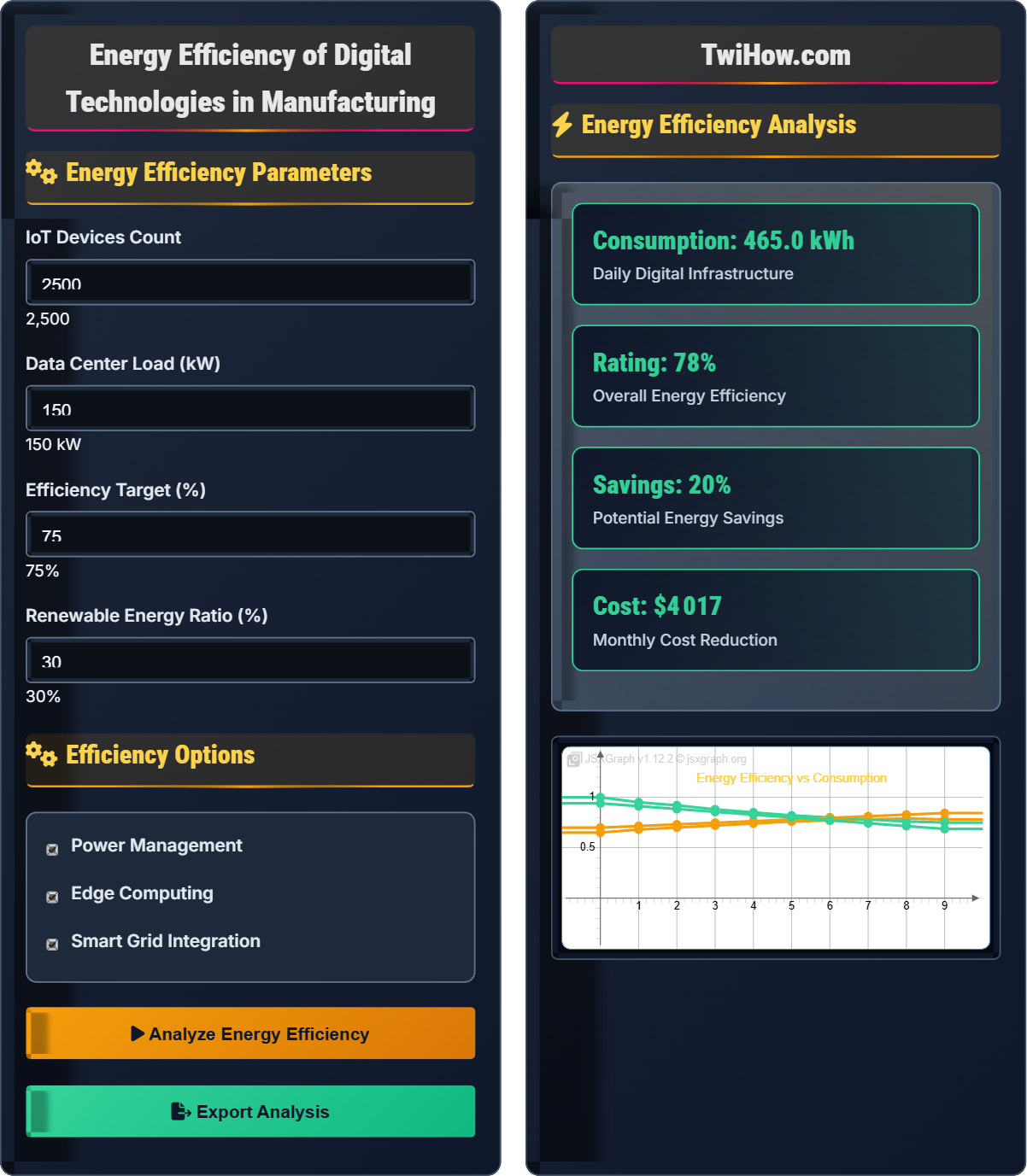
Energy Efficiency Parameters
Efficiency Options
Energy Efficiency Analysis
| System | Power (kW) | % of Total | Efficiency |
|---|---|---|---|
| IoT Sensors | 15 | 25% | 85% |
| Data Centers | 25 | 42% | 75% |
| Edge Computing | 10 | 17% | 90% |
| Networking | 10 | 17% | 80% |
Energy Efficiency of Digital Technologies Explained
Digital energy efficiency in manufacturing refers to the optimization of power consumption by smart technologies used in Industry 4.0 operations. This includes IoT sensors, data centers, edge computing devices, AI systems, and networking equipment that support digital manufacturing processes. The goal is to minimize energy consumption while maximizing the operational benefits provided by these technologies.
The overall energy efficiency of digital systems can be measured using:
For a more comprehensive view, the Energy Efficiency Index (EEI) incorporates multiple factors:
Where:
- Operational Benefit: Productivity gains from digital systems
- Reliability Factor: Consistency of system performance
- Energy Consumption: Total power usage of digital infrastructure
- Environmental Impact: Carbon footprint and sustainability metrics
Essential strategies for improving energy efficiency of digital technologies:
- Power Management: Dynamic voltage and frequency scaling for processors
- Edge Computing: Processing data closer to source to reduce transmission energy
- Virtualization: Consolidating servers to improve utilization rates
- Smart Scheduling: Running intensive tasks during off-peak hours
- Hardware Optimization: Using energy-efficient components and architectures
- Renewable Integration: Powering digital infrastructure with clean energy
- Cost Reduction: Lower electricity bills and operational expenses
- Sustainability: Reduced carbon footprint and environmental impact
- Compliance: Meeting energy regulations and standards
- Performance: Better system reliability and uptime
- Competitive Advantage: Demonstrating corporate responsibility
- Future-Proofing: Adapting to rising energy costs and regulations
Energy Efficiency Fundamentals
Energy efficiency, digital infrastructure, power management, renewable energy, Industry 4.0, sustainability.
EEI = (Operational Benefit × Reliability Factor) / (Energy Consumption × Environmental Impact)
Where EEI = Energy Efficiency Index measuring digital system efficiency.
- Efficiency gains must not compromise operational performance
- Measure both direct and indirect energy impacts
- Consider total cost of ownership including energy
Applications
Smart factories, data centers, IoT networks, edge computing, predictive maintenance systems.
- Automotive manufacturing
- Electronics production
- Chemical processing
- Food and beverage
- Initial investment vs. long-term savings
- System compatibility requirements
- Security implications of power management
- Performance impact of efficiency measures
Energy Efficiency Learning Quiz
Which of the following is NOT a recommended strategy for improving energy efficiency of digital technologies in manufacturing?
Increasing computational redundancy is not a recommended strategy for energy efficiency. Redundancy typically increases energy consumption by duplicating systems. While redundancy is important for reliability and fault tolerance, it inherently consumes more power. The other options (edge computing, server virtualization, and dynamic power management) are all proven strategies for improving energy efficiency in digital systems.
The answer is C) Increasing computational redundancy.
There's often a tension between energy efficiency and system reliability in digital infrastructure. While efficiency measures aim to reduce power consumption, reliability measures often require additional resources. The key is finding the right balance where systems remain reliable while consuming minimum necessary power. This requires careful design and strategic implementation of efficiency measures that don't compromise operational integrity.
Edge Computing: Processing data near its source to reduce transmission energy
Server Virtualization: Running multiple virtual servers on one physical server
Dynamic Power Management: Adjusting power consumption based on demand
• Efficiency measures must not compromise reliability
• Balance cost savings with performance requirements
• Consider total cost of ownership
• Start with energy audit to identify major consumers
• Implement monitoring before optimization
• Focus on high-impact, low-cost improvements first
• Sacrificing reliability for efficiency gains
• Not measuring baseline consumption
• Implementing solutions without proper planning
Describe the process of optimizing energy efficiency in digital manufacturing infrastructure. What are the key steps, technologies, and expected outcomes?
Optimization Process: Begin with comprehensive energy audit of all digital systems, followed by baseline establishment and identification of inefficiencies. Implement power management, consolidate servers, optimize cooling, and integrate renewable energy sources.
Key Technologies: Smart power strips, virtualization software, energy-efficient processors, DC power systems, renewable energy integration, and intelligent monitoring platforms.
Expected Outcomes: 20-40% reduction in digital infrastructure energy consumption, improved system reliability, reduced operational costs, and enhanced sustainability profile.
Energy efficiency optimization is a systematic process that requires understanding the entire digital infrastructure ecosystem. Success depends on having accurate baseline measurements, implementing solutions in the right sequence, and continuously monitoring results. The process should be viewed as ongoing rather than a one-time project, as new technologies and opportunities emerge regularly.
Energy Audit: Systematic assessment of energy consumption patterns
Virtualization: Creating virtual versions of physical resources
Power Usage Effectiveness (PUE): Metric for data center efficiency
• Always measure before implementing changes
• Prioritize solutions based on ROI
• Maintain system performance during upgrades
• Focus on idle power consumption first
• Implement smart scheduling for intensive tasks
• Consider shared infrastructure with other facilities
• Implementing solutions without proper analysis
• Not considering system compatibility
• Failing to maintain monitoring after implementation
A manufacturing facility operates 5,000 IoT sensors consuming 2W each, a data center with 200 kW load, and networking equipment using 50 kW. The facility implements edge computing that reduces data center load by 30% and networking by 25%. Calculate the new total consumption and energy savings if they also implement power management reducing sensor consumption by 15%.
Original Consumption: IoT sensors: 5,000 × 2W = 10 kW, Data center: 200 kW, Networking: 50 kW. Total: 260 kW.
After Improvements: IoT sensors: 10 kW × 85% = 8.5 kW, Data center: 200 kW × 70% = 140 kW, Networking: 50 kW × 75% = 37.5 kW.
New Total: 8.5 + 140 + 37.5 = 186 kW
Energy Savings: (260 - 186) / 260 × 100% = 28.5% reduction
This example demonstrates the cumulative effect of multiple efficiency measures. Each improvement contributes to the overall reduction, showing how a comprehensive approach yields better results than individual measures. Edge computing significantly reduces data center load by processing data locally, while power management optimizes consumption across all system components.
Edge Computing: Processing data near its source rather than in central data center
Power Management: Techniques to reduce energy consumption based on demand
Energy Intensity: Energy consumed per unit of output
• Calculate total system consumption
• Verify that improvements don't compromise functionality
• Address the largest consumers first
• Look for synergies between different measures
• Calculate payback periods for each improvement
• Focusing only on one system component
• Not considering system-wide impacts
• Ignoring operational requirements in pursuit of savings
A facility with 300 kW digital infrastructure wants to integrate solar panels to improve energy efficiency. The solar system costs $600/kW and provides 80% of peak demand. Propose a strategy for integrating renewable energy while maintaining system reliability and calculate the break-even period assuming $0.12/kWh electricity costs and 20% annual usage growth.
Strategy: Install 240 kW solar system (80% of 300 kW) with battery backup for reliability. Implement smart grid integration to optimize energy usage and sell excess power back to grid.
Investment: 240 kW × $600 = $144,000
Annual Savings: 240 kW × 1,500 hours × $0.12 × 80% = $34,560 (first year)
Break-even: $144,000 ÷ $34,560 = 4.17 years
This approach balances renewable integration with system reliability through hybrid power management.
Renewable energy integration requires careful balance between environmental benefits and operational reliability. Digital systems have strict power quality requirements, so renewable integration must include appropriate buffering and backup systems. The economic analysis shows that renewable investments can have attractive returns while providing long-term energy security and sustainability benefits.
Power Quality: Stability and purity of electrical power supply
Grid Integration: Connecting renewable systems to electrical grid
Net Metering: Selling excess renewable energy back to utility
• Maintain power quality for sensitive equipment
• Include backup systems for reliability
• Consider local utility regulations
• Size renewable systems to match actual usage patterns
• Include battery storage for consistent supply
• Take advantage of tax incentives and rebates
• Oversizing renewable systems beyond actual needs
• Not considering power quality requirements
• Ignoring backup power needs during outages
Which factor has the greatest impact on the return on investment (ROI) of energy efficiency improvements in digital manufacturing systems?
Baseline energy consumption has the greatest impact on ROI because the potential savings depend entirely on the starting point. Higher baseline consumption means greater potential for savings, leading to better ROI. Without accurate baseline measurements, it's impossible to calculate true savings or payback periods. The magnitude of consumption determines whether efficiency improvements make economic sense.
The answer is C) Baseline energy consumption.
Energy efficiency ROI calculations are fundamentally dependent on the starting point. A facility consuming 1,000 kW will realize much greater dollar savings from the same percentage improvement than one consuming 100 kW. This is why energy efficiency projects typically focus on the largest consumers first. Understanding baseline consumption patterns is essential for prioritizing improvements and calculating realistic returns.
Return on Investment (ROI): Financial benefit relative to investment cost
Baseline Measurement: Starting point for improvement calculations
Energy Intensity: Energy consumed per unit of activity
• Always measure baseline before implementation
• Focus on largest consumers first
• Verify savings through ongoing monitoring
• Conduct detailed energy audit before projects
• Install monitoring systems during implementation
• Calculate ROI for each component separately
• Not establishing accurate baseline measurements
• Implementing solutions without economic analysis
• Failing to verify actual savings achieved
FAQ
Q: How much can we expect to save on energy costs with efficiency improvements?
A: Typical energy efficiency improvements in digital manufacturing can yield 20-40% reductions in digital infrastructure energy consumption. For a facility spending $100,000 annually on digital system electricity, this translates to $20,000-$40,000 in annual savings. The exact amount depends on baseline efficiency, implemented measures, and operational patterns. Simple measures like power management and scheduling often provide 10-15% savings with quick payback, while comprehensive upgrades can achieve 30-40% savings.
Q: Will power management affect system performance and reliability?
A: Modern power management technologies are designed to maintain performance while reducing energy consumption. Techniques like dynamic voltage scaling and intelligent scheduling adjust power based on actual demand without compromising critical functions. However, proper implementation requires understanding system requirements and workload patterns. Well-designed power management actually improves reliability by reducing thermal stress on components and extending equipment life. The key is implementing solutions that match actual usage patterns rather than aggressive power-saving measures that could impact performance.