Managing Vacancies & Tenant Turnover Effectively
Complete guide to efficient rental property management • Step-by-step explanations
Vacancy Management:
Show Turnover CalculatorEffective vacancy and tenant turnover management is crucial for maintaining rental income and property value. Minimizing downtime between tenants maximizes returns while proper turnover procedures ensure property quality and legal compliance.
Key management components include:
- Marketing Strategy: Attractive listings, competitive pricing, and multiple channels
- Tenant Screening: Thorough background checks and qualification processes
- Turnover Process: Efficient cleaning, repairs, and inspection procedures
- Legal Compliance: Proper notice procedures and security deposit handling
- Retention Strategies: Keeping good tenants and reducing turnover frequency
Successful property management balances quick re-occupancy with quality tenant selection to maximize long-term returns.
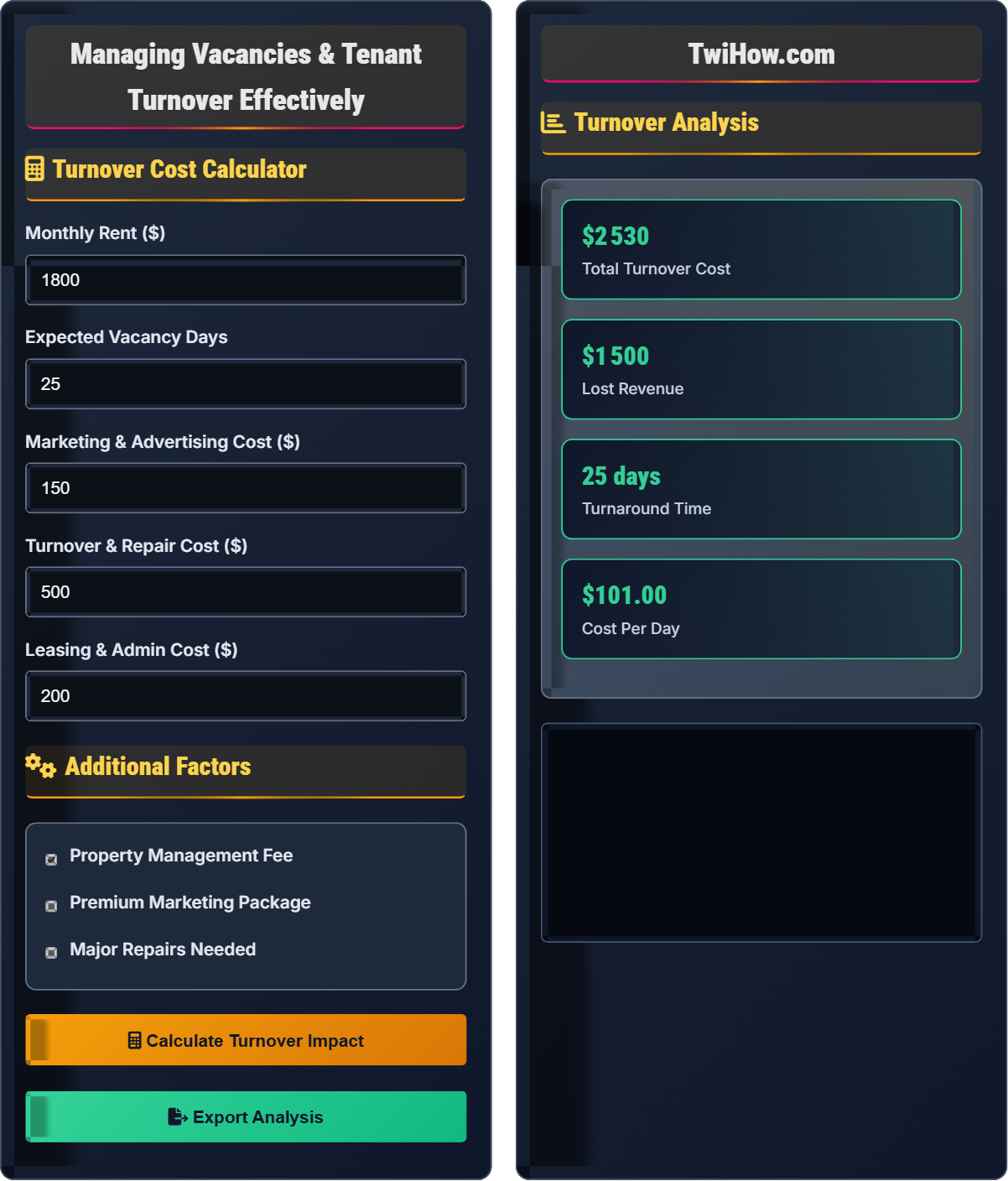
Turnover Cost Calculator
Additional Factors
Turnover Analysis
| Category | Amount | Impact |
|---|---|---|
| Vacancy Loss | $1,500 | Significant |
| Marketing Cost | $150 | Moderate |
| Turnover Repairs | $500 | Significant |
| Administrative | $200 | Low |
Efficiency Strategies
- Streamline screening process
- Use professional photography
- Offer virtual tours
- Maintain competitive pricing
- Keep property in move-in condition
Understanding Vacancy Management
Vacancy management encompasses all activities and strategies aimed at minimizing the time properties spend without tenants while maximizing rental income. Effective vacancy management balances speed of re-occupation with quality tenant selection.
Key components include:
- Marketing: Promoting properties through various channels
- Screening: Evaluating potential tenants efficiently
- Pricing: Setting competitive rental rates
- Turnover: Preparing properties between tenants
- Retention: Keeping good tenants long-term
Proper turnover procedures ensure property quality and legal compliance:
Common challenges in vacancy management:
- Seasonal Fluctuations: Rental demand varies by time of year
- Market Competition: Competing with other rental properties
- Repair Delays: Construction and maintenance scheduling
- Tenant Screening: Balancing speed with thoroughness
- Pricing Pressure: Setting competitive yet profitable rates
Effective vacancy management strategies:
- Maintain properties in rent-ready condition
- Use multiple marketing channels
- Set competitive pricing based on market analysis
- Develop efficient screening procedures
- Implement tenant retention programs
- Track and analyze vacancy metrics
Turnover Strategies
Marketing, screening, pricing, preparation, retention, documentation.
Efficiency = (Monthly Rent × Days Saved) / (Turnover Cost + Lost Revenue)
Where higher values indicate better turnover efficiency.
- Minimize vacancy days
- Maintain quality standards
- Track all costs accurately
Retention Strategies
Responsive maintenance, competitive pricing, lease renewal incentives, tenant communication.
- Provide excellent service and communication
- Address maintenance issues promptly
- Offer renewal incentives when appropriate
- Keep rent increases reasonable
- Build positive relationships
- Retaining good tenants is often cheaper than turnover
- Communication is key to tenant satisfaction
- Proactive maintenance prevents problems
- Regular property updates improve retention
Vacancy Management Quiz
What is the most effective marketing strategy for quickly filling a rental property vacancy?
Using multiple marketing platforms with professional photos reaches the largest pool of potential tenants and creates the most appealing listing. Professional photography significantly increases click-through rates and inquiries, while multiple platforms ensure maximum visibility.
The answer is B) List on multiple platforms with professional photos.
Marketing effectiveness in real estate is directly correlated with visibility and presentation quality. Professional photos and multiple listing platforms create the best combination of reach and appeal to potential tenants.
Click-Through Rate: Percentage of viewers who click on listing
Market Penetration: Reach of marketing efforts
Professional Photography: High-quality listing images
• Invest in professional photography
• Use multiple listing platforms
• Present property in best light
• Stage property for photos
• Highlight key features
• Include virtual tours
• Using poor quality photos
• Limited marketing reach
• Inadequate property presentation
Explain the optimal balance between speed and thoroughness in tenant screening during high-demand rental markets.
Speed-Thoroughness Balance: In high-demand markets, the optimal approach combines:
Pre-Qualification: Use online applications with automated credit and background checks to quickly filter applicants.
Priority Ranking: Develop a scoring system to rank applicants based on key criteria (income, credit, rental history).
Streamlined Process: Conduct phone interviews first, then in-person meetings for top candidates.
Efficient Documentation: Have all necessary forms ready and use digital signatures.
Communication: Keep all applicants informed about status to prevent loss of good candidates.
Decision Framework: Establish clear criteria for acceptance/rejection to avoid delays in decision-making.
The goal is to make informed decisions quickly without compromising quality standards.
High-demand markets require efficient processes because good tenants are quickly selected by other landlords. Speed in screening is essential, but not at the expense of due diligence.
Pre-Qualification: Initial screening before full application
Scoring System: Method for ranking applicants objectively
Due Diligence: Thorough verification of applicant information
• Don't sacrifice quality for speed
• Automate where possible
• Maintain consistent criteria
• Use online screening services
• Create standardized evaluation criteria
• Maintain backup candidate list
• Rushing screening process
• Not using consistent criteria
• Failing to communicate with candidates
You manage a 3-bedroom rental that rents for $2,200/month. The current tenant is moving out in 2 weeks. The property needs $800 in repairs, professional cleaning ($200), and marketing ($300). You expect to find a new tenant in 18 days. Calculate the total cost of turnover and analyze the financial impact.
Calculations:
Lost Rent: $2,200/month × (18/30) = $1,320
Repair Costs: $800
Cleaning Costs: $200
Marketing Costs: $300
Total Turnover Cost: $1,320 + $800 + $200 + $300 = $2,620
Cost Per Day: $2,620 ÷ 18 days = $145.56/day
Analysis: The turnover cost represents 119% of one month's rent, highlighting the importance of minimizing vacancy time. Investing in marketing and preparation can reduce the overall cost by decreasing the time to rent.
This example demonstrates how quickly turnover costs accumulate. The lost rent alone nearly equals one month's rent, emphasizing why minimizing vacancy time is crucial for profitability.
Turnover Cost: Total expenses to re-rent a property
Vacancy Period: Time between tenants
Cost Per Day: Daily expense of having vacant property
• Track all turnover costs
• Minimize vacancy time
• Invest in quality preparation
• Budget for turnover costs
• Plan marketing in advance
• Maintain repair fund
• Underestimating turnover costs
• Not budgeting for repairs
• Poor marketing preparation
Your tenant has been in place for 2 years with no issues. The lease expires in 3 months, and market rent has increased by 15%. The tenant has expressed interest in renewing but is concerned about the rent increase. Develop a retention strategy that benefits both parties.
Retention Strategy:
Graduated Increase: Propose a 7-10% increase now with a 3-year lease, avoiding another increase for 2 years.
Renewal Incentives: Offer to cover minor improvements (new carpet, paint) in exchange for longer lease.
Early Renewal Discount: Provide a 5% discount for signing 60 days before lease expires.
Value-Added Services: Include utilities or parking for slightly higher rent.
Flexibility: Offer options like month-to-month after initial 2-year term.
Benefits: Retains reliable tenant while securing long-term income. Avoids turnover costs and maintains occupancy.
Good tenant retention often costs less than turnover. The key is finding mutually beneficial arrangements that acknowledge market realities while preserving valuable relationships.
Tenant Retention: Keeping existing tenants for longer periods
Market Rent: Current rental rates for comparable properties
Value Exchange: Benefits provided in return for tenant commitment
• Consider retention before turnover
• Find win-win solutions
• Value good tenants
• Discuss renewal early
• Offer reasonable accommodations
• Provide incentives for loyalty
• Applying maximum rent increase
• Not considering retention options
• Forgetting to value loyal tenants
When is the best time to prepare a property for rental to minimize vacancy time?
Preparing 30-45 days before the anticipated move-out date allows for proactive marketing and tenant screening before the property becomes vacant. This approach minimizes the time the property sits empty and helps ensure continuity of rental income.
The answer is B) 30-45 days before anticipated move-out date.
Proactive preparation allows for marketing and tenant screening while the current tenant is still in place. This reduces the actual vacancy period and ensures smoother transitions.
Proactive Preparation: Getting property ready before it becomes vacant
Market Timing: Understanding seasonal rental patterns
Vacancy Minimization: Reducing time between tenants
• Prepare in advance
• Monitor tenant satisfaction
• Track market patterns
• Ask tenants about renewal plans early
• Prepare marketing materials in advance
• Schedule repairs during tenancy
• Waiting until after move-out
• Not planning for repairs
• Ignoring seasonal patterns
Frequently Asked Questions
Q: How much should I budget for turnover costs?
A: A good rule of thumb is to budget 15-25% of one year's rent for turnover costs. For a $2,000/month property ($24,000 annually), budget $3,600-$6,000 per turnover.
This typically includes:
• Lost rent during vacancy (50-60% of total)
• Cleaning and maintenance (25-30%)
• Marketing and advertising (10-15%)
• Administrative costs (5-10%)
Keep a separate turnover fund for each property to ensure you're prepared for these costs when they arise.
Q: What are the legal requirements for handling security deposits during turnover?
A: Security deposit requirements vary by state, but common requirements include:
Timely Return: Most states require return within 14-30 days after move-out
Itemized Deductions: Detailed list of any charges against deposit
Move-Out Inspection: Opportunity for tenant to be presentReceipt Documentation: Keep receipts for all repair costs
Proper Notice: Notify tenant of any intended deductions
Always check your state's specific requirements, as penalties for non-compliance can be severe.
Q: How can I reduce vacancy time without lowering rent?
A: Several strategies can reduce vacancy time without rent concessions:
Enhanced Marketing: Professional photos, virtual tours, and premium listings
Flexible Showing: Offer evening and weekend viewings
Move-In Incentives: Offer to pay first month's utilities or security deposit
Streamlined Process: Faster application and approval procedures
Property Condition: Keep property in move-in ready condition
Online Applications: Allow digital submissions and references
Focus on presentation and convenience rather than price reductions.