Market Trends Impact on Rental Prices & Availability
Complete guide to rental market analysis • Step-by-step explanations
Rental Market Analysis:
Show Market CalculatorUnderstanding market trends is crucial for renters to make informed decisions about when and where to rent. Economic indicators, seasonal patterns, and regional factors all influence rental prices and availability.
Key market factors:
- Economic Indicators: Employment rates, GDP growth, inflation, and interest rates
- Supply and Demand: New construction, vacancy rates, and population shifts
- Seasonal Patterns: Peak and off-season rental cycles
- Regional Variations: Local market conditions and regulations
- Future Projections: Anticipated changes and investment trends
By analyzing these factors, renters can identify optimal timing for lease negotiations and budget planning.
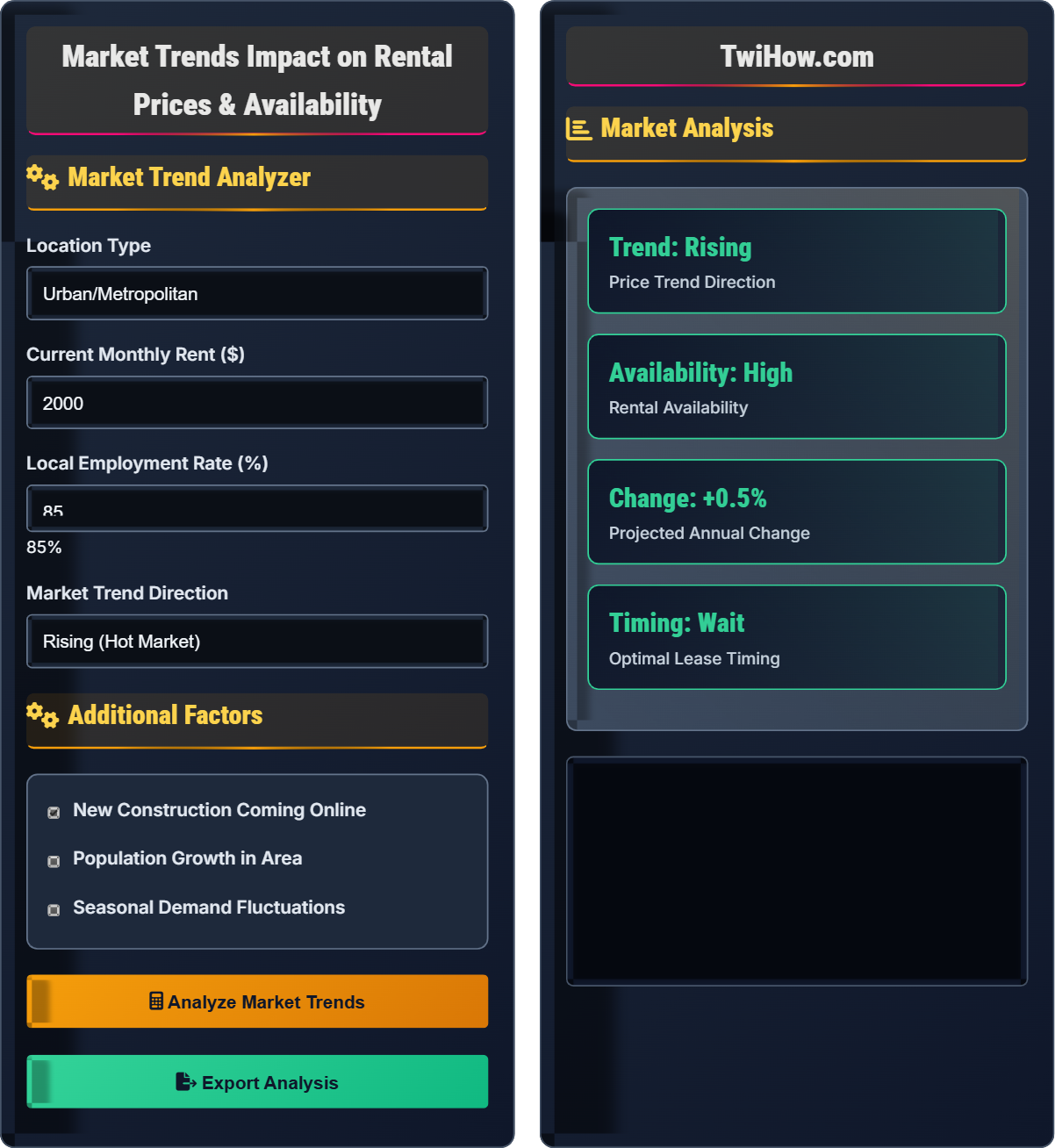
Market Trend Analyzer
Additional Factors
Market Analysis
| Factor | Assessment | Impact |
|---|---|---|
| Employment Rate | 85% | Positive |
| Supply/Demand | Low Supply | Moderate |
| Seasonal Factors | Peak Season | Moderate |
| Construction Pipeline | Increasing Supply | Positive |
Recommended Strategies
- Consider longer-term lease for stability
- Look for properties with rent control provisions
- Monitor new construction for increased competition
- Plan lease renewal timing carefully
Understanding Rental Market Trends
Rental market trends are patterns and movements in rental prices and availability that occur over time. These trends are influenced by various economic, social, and demographic factors that affect supply and demand dynamics.
Key components include:
- Price Movements: Changes in average rental rates over time
- Availability Levels: Number of vacant units in the market
- Lease Competition: Number of applicants per rental unit
- Market Timing: Seasonal and cyclical patterns affecting rentals
Rental markets are significantly influenced by economic factors:
Rental markets exhibit predictable seasonal variations:
- Peak Season (May-August): Highest demand, rising prices
- Off-Season (November-February): Lower demand, potential discounts
- Back-to-School (August-September): Increased demand in college towns
- New Year (January): Fresh start demand in urban areas
Understanding market trends enables strategic rental decisions:
- Timing lease renewals during softer market periods
- Identifying emerging neighborhoods before price increases
- Planning moves around seasonal market patterns
- Preparing budgets for anticipated price changes
- Comparing multiple market areas for optimal value
Market Analysis Factors
Employment rate, vacancy rate, median rent, population growth, new construction, seasonality.
Rental Pressure = (Demand Factors × Market Tightness) / (Supply Factors × Seasonal Adjustment)
Where higher values indicate upward pressure on prices.
- Lower unemployment = higher rental demand
- Vacancy rates below 5% = rising prices
- New construction increases supply over time
Strategic Timing
Seasonal patterns, lease expiration cycles, economic forecasts, local events.
- Research historical market patterns in your area
- Monitor current economic indicators
- Compare seasonal trends with your timeline
- Consider local factors (events, development)
- Plan flexibility around market conditions
- Local markets may differ from national trends
- Neighborhood-level variations exist
- Unexpected events can shift patterns
- Long-term trends are more reliable than short-term
Rental Market Trends Knowledge Quiz
Which economic indicator would most likely cause rental prices to decrease in a given market?
A rising unemployment rate would most likely cause rental prices to decrease. When unemployment rises, fewer people have stable income to afford rent, leading to decreased demand for rental properties. This creates downward pressure on rental prices as landlords compete for tenants. Conversely, increasing population growth, growing household income, and decreasing interest rates all tend to increase rental demand and prices.
The answer is A) Rising unemployment rate.
Economic indicators affect rental markets through supply and demand dynamics. Unemployment directly impacts demand by reducing the number of people who can afford to rent. When fewer people can afford rent, landlords must lower prices or offer incentives to attract tenants.
Demand: Number of people seeking to rent properties
Supply: Number of available rental properties
Rental Pressure: Force driving prices up or down
• Unemployment reduces rental demand
• Population growth increases demand
• Income affects affordability
• Monitor local employment statistics
• Track population trends in your area
• Compare local vs. national indicators
• Assuming national trends apply locally
• Not considering neighborhood differences
• Ignoring employment patterns
Explain the typical seasonal rental patterns and why they occur. How can renters use this knowledge strategically?
Typical Seasonal Patterns:
Peak Season (May-August): Highest rental activity due to summer moves, school breaks, and job relocations. Prices typically rise due to high competition.
Off-Season (November-February): Lowest rental activity. Fewer people move during winter, creating more options and potentially lower prices.
Back-to-School Season (August-September): High demand in college towns as students return.
New Year Period (January): Fresh start demand in urban areas as people make resolutions to move.
Strategic Use: Renters can time their searches around these patterns. Looking for rentals in November-February may yield better deals and more options. Those with flexibility should avoid peak season if possible. College students should expect high competition during back-to-school periods.
Seasonal patterns reflect predictable human behaviors related to work, school, and weather. Understanding these patterns allows renters to plan moves around optimal market conditions, potentially saving money and having more choices.
Peak Season: Time of highest rental demand and activity
Off-Season: Time of lowest rental demand
Seasonal Discount: Price reductions during slow periods
• Plan moves around seasonal patterns
• Start search 2-3 months before desired move date
• Be flexible with move dates for better deals
• Research local seasonal patterns
• Moving during peak season unnecessarily
• Not accounting for seasonal patterns
• Starting search too late
Emma is planning to move to a city where she's found a rental listing for $2,200/month. The city has experienced 3% unemployment, 12% population growth over the past year, and a 15% increase in rental prices. There are 3 new apartment complexes opening soon. Emma needs to sign a lease in 2 months. Analyze the market conditions and advise on her strategy.
Market Analysis: Emma faces a tight rental market with several concerning factors:
High Demand Indicators: Low unemployment (3%) indicates strong job market; 12% population growth shows rapid expansion; 15% rental price increase confirms high demand.
Supply Response: 3 new complexes coming online will eventually increase supply, but likely won't affect the market for 6-12 months.
Strategy Recommendations:
1. Act Quickly: Prices may continue rising, so don't delay.
2. Negotiate Now: Try to lock in current rate for a longer lease.
3. Consider Longer Lease: Protect against future increases.
4. Prepare Budget: Expect continued increases in coming months.
Given the strong market fundamentals, Emma should consider securing the property now rather than waiting.
This scenario demonstrates how multiple market factors interact. Low unemployment and high population growth create strong demand, while new supply takes time to impact the market. The timing of when supply comes online affects strategy.
Market Fundamentals: Basic economic factors affecting demand and supply
Supply Lag: Time between decision and implementation of new supplyRental Pressure: Forces driving price changes
• Consider multiple indicators together
• Account for timing of supply changes
• Plan for continued trends
• Look at 6-12 month projections
• Consider longer-term lease options
• Prepare for price increases
• Waiting in a hot market
• Not considering supply timing
• Underestimating trend continuation
Historically low interest rates have led to increased home purchases, reducing rental inventory. Now, interest rates are rising, making home buying less affordable. How will this affect rental prices and availability in the next 6-12 months? What should renters consider?
Interest Rate Impact Analysis:
Home Buying Impact: Rising rates make mortgages more expensive, reducing the number of people who can buy homes.
Rental Demand Increase: Former homebuyers remain in rental market, increasing rental demand.
Price Pressure: Higher demand with existing supply creates upward pressure on rental prices.
Timeline Considerations: Market adjustments typically take 6-12 months to fully materialize.
Renter Considerations:
1. Budget Planning: Prepare for potential rent increases.
2. Lease Negotiation: Consider locking in current rates with longer leases.
3. Timing: Expect more competition for rentals.
4. Location Strategy: Look for areas with new construction.
Rising interest rates generally lead to increased rental demand and prices.
Interest rates affect both homeownership and rental markets through the substitution effect. When home buying becomes less attractive, demand shifts to renting, affecting rental market dynamics. This demonstrates interconnectedness of housing markets.
Substitution Effect: Shift from one housing option to another
Rental Market Spillover: Demand shifting from ownership to renting
Market Lag: Time for market changes to take effect
• Rising rates increase rental demand
• Market changes take time to manifest
• Plan ahead for predictable shifts
• Monitor Federal Reserve announcements
• Track mortgage rate trends
• Plan lease renewals during shifts
• Not anticipating spillover effects
• Ignoring interest rate trends
• Failing to plan for market shifts
Which factor would most strongly suggest that now is a good time to sign a 2-year lease to lock in rental rates?
Option B (local employment declining and rent prices falling) would most strongly suggest a good time to lock in rates. When employment is declining, rental demand decreases, and falling rent prices indicate downward market pressure. This creates an opportunity to secure favorable rates before the market potentially recovers. In contrast, low and falling vacancy rates (A) indicate a hot market where rates are likely to rise.
The answer is B) Local employment is declining and rent prices are falling.
Lease timing should consider market direction. Locking in rates makes sense when the market is trending downward. When demand is falling and prices are dropping, longer-term leases provide protection against future increases when the market recovers.
Lease Lock-in: Securing current rates for future periods
Market Direction: Trend of rising or falling prices
Opportunity Timing: Strategic moment for favorable terms
• Lock in during declining markets
• Avoid long leases in rising markets
• Consider market direction before commitment
• Monitor market trends before lease renewal
• Consider shorter leases in volatile markets
• Negotiate renewal terms based on market conditions
• Signing long leases in rising markets
• Not considering market direction
• Failing to negotiate during soft markets
Frequently Asked Questions
Q: How can I track rental market trends in my area?
A: You can track rental market trends through several sources:
1. Online Platforms: Zillow, Rent.com, and Apartments.com show rental listings and price trends.
2. Local Reports: Real estate companies often publish quarterly market reports.
3. Government Data: Bureau of Labor Statistics for employment data, Census for population trends.
4. Local News: Business sections often cover real estate trends.
5. Property Managers: Direct conversations with local property management companies.
Focus on tracking vacancy rates, average rental prices, and new construction in your specific area.
Q: Should I try to negotiate rent during different market conditions?
A: Yes, market conditions significantly affect negotiation power:
In Soft Markets (High Vacancy): Landlords have more incentive to negotiate. You can request rent reductions, waived fees, or included utilities.
In Hot Markets (Low Vacancy):strong> Negotiation power shifts to landlords, but you can still negotiate for longer lease terms or upgrades.
Timing Matters: Negotiate before signing the lease when landlords are motivated to fill units.
Professional Approach: Always negotiate professionally and be prepared with market research to support your requests.
Understanding market conditions helps you approach negotiations with realistic expectations.
Q: How do I budget for potential rent increases?
A: To budget for rent increases:
1. Research Historical Trends: Look at average annual rent increases in your area (often 2-5%).
2. Create Buffer Space: Budget 10-15% more than current rent for unexpected increases.
3. Track Inflation: Rent increases often correlate with local inflation rates.
4. Plan Lease Renewals: Begin budgeting discussions 3-6 months before renewal.
5. Consider Long-Term Leases: Fixed-rate leases protect against increases for the lease term.
6. Build Emergency Fund: Maintain savings for unexpected housing cost changes.
Proactive budgeting helps manage rent increase impacts on your financial stability.