Landlord Foreclosure Rights: Tenant Protection Guide
Complete guide • Legal rights, notice requirements, relocation
Tenant Foreclosure Protection:
Show Rights CalculatorWhen your landlord faces foreclosure, federal and state laws provide specific protections for tenants. The Protecting Tenants at Foreclosure Act (PTFA) offers nationwide safeguards, while individual states may provide additional protections. Understanding your rights helps ensure you receive proper notice and time to relocate.
Key protections include:
- Notice Requirements: Minimum 90-day notice before eviction
- Lease Continuation: Right to remain until lease expires
- Month-to-Month Tenancy: Extended protections for month-to-month tenants
- Relocation Assistance: Potential compensation in some cases
Knowing these rights helps tenants navigate the foreclosure process while maintaining their housing stability.
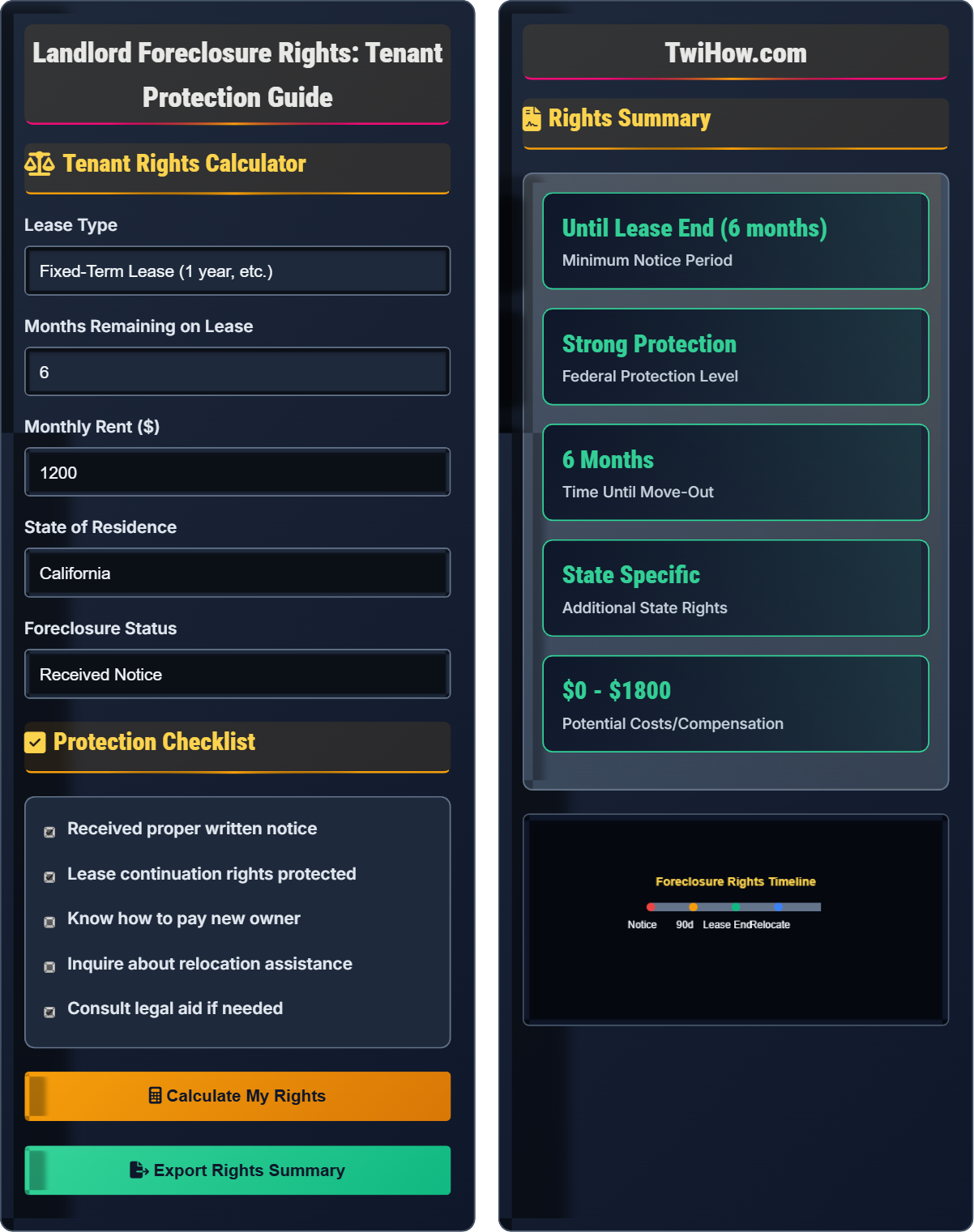
Tenant Rights Calculator
Protection Checklist
Rights Summary
Your Legal Protections
- Right to 90-day notice before eviction
- Right to remain until lease expiration
- Protection against immediate eviction
- Right to continue lease with new owner
- Right to proper notice procedures
Timeline of Events
- Day 0: Foreclosure notice received
- Day 90: Earliest possible eviction date
- Until Lease End: Right to remain (if lease exists)
- Relocation Period: Time to find new housing
Tenant Rights During Landlord Foreclosure
The Protecting Tenants at Foreclosure Act (PTFA) provides nationwide protections:
Key provisions include:
- 90-Day Notice Requirement: Minimum 90 days before eviction
- Lease Continuation: Fixed-term leases survive foreclosure
- Month-to-Month Protection: 90-day notice for month-to-month tenants
- HUD-Insured Properties: Additional protections
- Good Faith Purchasers: Some exceptions apply
Different lease types receive varying levels of protection:
Protection by lease type:
- Fixed-Term Leases: Full protection until lease expiration
- Month-to-Month: 90-day notice period minimum
- Without Lease: 90-day notice period minimum
- Family Members: May have different protections
States may provide additional protections beyond federal law:
- Extended Notice Periods: Some states require longer notice than 90 days
- Relocation Assistance: Financial help for moving expenses
- Eviction Restrictions: Additional barriers to eviction
- Rent Escrow: Options to place rent in escrow during foreclosure
- Legal Representation: Right to appointed counsel in some cases
- Do Not Ignore Notices: Respond to all foreclosure-related communications
- Continue Paying Rent: Maintain rent payments until instructed otherwise
- Know Your Rights: Understand that you cannot be immediately evicted
- Seek Help Early: Contact legal aid before deadlines expire
- Prepare for Relocation: Begin searching for new housing immediately
Federal Protection Standards
PTFA, lease continuation, good faith purchaser, 90-day notice, constructive eviction.
Protection Level = (Lease Type × Federal Safeguards) ÷ State Variations
Where Lease Type determines federal protection level.
- 90-day notice is the federal minimum
- Fixed-term leases survive foreclosure
- Month-to-month tenants get 90-day notice
- State laws may provide additional protections
Relocation Strategy
Notice period, housing search, financial planning, documentation, transition.
- Verify foreclosure notice legitimacy
- Assess your protection level
- Contact tenant rights organizations
- Begin housing search immediately
- Document all communications
- Plan financial transition
- Start housing search immediately
- Don't stop paying rent without legal advice
- Keep records of all notices
- Seek legal help if needed
Foreclosure Rights Knowledge Quiz
According to the Protecting Tenants at Foreclosure Act (PTFA), what is the minimum notice period a tenant must receive before eviction due to foreclosure?
The Protecting Tenants at Foreclosure Act (PTFA) requires a minimum 90-day notice period before eviction due to foreclosure. This gives tenants adequate time to find alternative housing. The 90-day minimum applies to all tenants, whether they have fixed-term leases or month-to-month arrangements.
The answer is C) 90 days.
The 90-day notice requirement is a crucial federal protection that ensures tenants have sufficient time to relocate. This standardization prevents landlords from providing arbitrarily short notice periods during foreclosure. Even if state laws provide shorter notice periods, the federal 90-day minimum still applies.
Protecting Tenants at Foreclosure Act (PTFA): Federal law protecting tenants during foreclosure
Notice Period: Required time between notice and required move-out
Foreclosure: Lender's repossession of property due to mortgage default
• Federal 90-day minimum always applies
• Fixed-term leases survive foreclosure
• State laws may provide additional protections
• Don't ignore any foreclosure notices
• Verify notice legitimacy
• Contact legal aid if questions arise
• Believing immediate eviction is required
• Stopping rent payments prematurely
• Not seeking legal help when needed
Explain how fixed-term leases are affected by landlord foreclosure and what rights tenants have regarding lease continuation.
Lease Continuation Rights: Under the PTFA, tenants with fixed-term leases have the right to remain in the property until their lease expires. The new owner (typically the bank or mortgage lender) must honor the existing lease terms, including rent amount and duration.
Key Protections:
1. Lease Survival: The lease remains valid and enforceable against the new owner
2. Same Terms: Original rent amount and lease conditions continue
3. Payment Transition: New owner must provide written notice of where to send rent
4. Standard Rights: All other tenant rights continue under the lease
Exceptions: If the new owner intends to occupy the property as their primary residence, they may terminate the lease with 90-day notice, but this is the only exception for fixed-term leases.
Fixed-term lease protection is one of the strongest tenant rights during foreclosure. This provision recognizes that tenants should not lose their homes due to their landlord's financial difficulties. The lease survives the foreclosure because it was created before the mortgage default, giving it priority in some respects over the foreclosure process.
Lease Survival: Lease remains valid despite property ownership change
Privity of Estate: Legal relationship between tenant and property owner
Successor in Interest: New owner who takes property after foreclosure
• Fixed-term leases survive foreclosure
• New owner must honor original terms
• Only exception is owner-occupancy
• Keep a copy of your lease handy
• Request payment instructions from new owner
• Document all communications
• Moving out before lease end without cause
• Not continuing rent payments
• Assuming lease is void after foreclosure
You have a fixed-term lease ending in 8 months, and your landlord just received a foreclosure notice. The new owner (bank) plans to sell the property to an investor who wants to convert it to condos. According to federal law, how long can you remain in the property, and what are your rights during this period?
Lease Duration Rights:
• Your 8-month lease continues despite foreclosure
• You have the right to remain until lease expiration
• The bank (new owner) must honor original lease terms
During Lease Term:
1. Rent Payments: Continue paying rent until bank provides new payment instructions
2. Maintenance: Bank becomes responsible for repairs
3. Notice: Bank must provide written notice of ownership change
4. Eviction: Cannot evict until lease ends (unless they intend to occupy)
After Lease Ends:
• If new buyer wants to occupy, they must give 90-day notice
• If converting to condos, they must follow standard eviction procedures
• You have the full 8 months plus any additional notice period
Under federal law, your lease survives the foreclosure, so you can remain for the full 8 months unless the new owner plans to live in the property (which requires 90-day notice).
This scenario illustrates the strength of fixed-term lease protections during foreclosure. The tenant's rights are preserved because the lease existed before the foreclosure. The new owner cannot simply evict tenants to fulfill their investment plans. This protection maintains housing stability for tenants during a disruptive time.
Lease Priority: Lease rights established before foreclosure take precedence
Notice to Quit: Formal demand for tenant to vacate
Condo Conversion: Changing rental property to condominiums
• Fixed-term leases survive foreclosure
• New owner must honor lease terms
• Only exception is owner-occupancy
• Don't panic - your lease is protected
• Get written instructions for rent payments
• Document all changes in ownership
• Moving out early without legal cause
• Assuming lease is void after foreclosure
• Not continuing rent payments to new owner
You are a month-to-month tenant in a property that has been foreclosed. The new owner (bank) sent you a notice stating you must vacate in 30 days. Based on federal and state laws, what are your rights, and what should you do?
Federal Rights Violation: The 30-day notice violates federal law. Under the PTFA, month-to-month tenants are entitled to a minimum 90-day notice period before eviction due to foreclosure.
Immediate Actions:
1. Do Not Move: You are not required to leave in 30 days
2. Document Violation: Keep the notice as evidence of inadequate notice period
3. Contact New Owner: Request proper 90-day notice in writing
4. Seek Legal Help: Contact tenant rights organization or attorney
5. Continue Rent: Keep paying rent until proper notice and procedures are followed
Legal Protections: The bank cannot evict you based on the 30-day notice. They must provide a new notice giving at least 90 days. If they attempt to evict you based on the insufficient notice, you have grounds to contest the eviction in court.
This scenario highlights how federal protections ensure tenants have adequate time to relocate. The 90-day minimum prevents hasty evictions that could leave tenants homeless. Month-to-month tenants have fewer protections than those with fixed-term leases, but they still receive the baseline 90-day protection under federal law.
Month-to-Month Tenancy: Rental arrangement without fixed term
Notice Deficiency: Insufficient notice period provided
Eviction Contest: Legal challenge to improper eviction proceedings
• Month-to-month tenants get 90-day minimum
• Insufficient notice is not valid
• Continue rent payments during process
• Don't panic if given short notice
• Verify notice meets legal requirements
• Seek legal help for violations
• Moving out based on insufficient notice
• Stopping rent payments immediately
• Not seeking legal help for violations
Under the PTFA, which scenario allows a new owner to evict a tenant with a fixed-term lease before the lease expires?
The only exception to lease continuation under the PTFA is when the new owner (purchaser) intends to occupy the property as their primary residence. In this case, they may terminate the lease with 90 days' written notice, but this is the only circumstance where a fixed-term lease can be terminated early due to foreclosure.
The answer is B) New owner plans to live in the property as primary residence.
This exception balances tenant protection with the new owner's right to occupy their own property. The law recognizes that people purchasing a home to live in should not be forced to rent it out to tenants. However, this exception has strict requirements - the owner must genuinely intend to live there as their primary residence, not just temporarily.
Good Faith Purchaser: Buyer who purchases property in good faith
Primary Residence: Main home where person lives most of the time
Lease Termination: Ending lease before agreed expiration date
• Only owner-occupancy allows early termination
• Must provide 90-day notice
• Intent must be genuine
• Verify owner's intent to occupy
• Request written notice of termination
• Document any suspicious circumstances
• Accepting termination for business reasons
• Not questioning owner's stated intent
• Moving out without proper notice
FAQ
Q: Can my landlord raise my rent after receiving a foreclosure notice?
A: Generally, landlords cannot raise rent specifically because of foreclosure. However, the rules depend on your lease type and local laws:
Fixed-Term Lease: Rent cannot increase during the lease term unless the lease specifically allows it.
Month-to-Month Tenancy: Standard rent increase rules apply, but increases must follow proper notice procedures and cannot be retaliatory or discriminatory.
After Foreclosure: The new owner (usually a bank) becomes your landlord. They must follow the same rent increase rules as any other landlord in your area. Any rent increase must comply with local rent control laws and proper notice requirements.
Importantly, rent increases cannot be used as a method to force tenants out during foreclosure.
Q: What are my responsibilities as a new owner after purchasing a foreclosed property with tenants?
A: As a new owner after foreclosure, you have specific legal obligations:
For Fixed-Term Leases: Honor the existing lease terms until expiration, unless you plan to occupy the property as your primary residence (requires 90-day notice).
For Month-to-Month Tenants: Provide 90-day notice before eviction, or honor the month-to-month arrangement.
General Responsibilities:
1. Provide Payment Instructions: Tell tenants where to send rent payments
2. Maintain Property: Meet habitability standards
3. Follow Eviction Procedures: Use proper legal channels if terminating tenancy
4. Respect Tenant Rights: Do not interfere with tenant's right to quiet enjoyment
5. Comply with PTFA: Follow federal tenant protection requirements
Failure to follow these requirements can result in legal liability and tenant claims for damages.