Landlord Repair Rights & Remedies
Complete tenant rights guide • Repair procedures
Landlord Repair Rights:
Show Repair Action PlannerWhen landlords fail to make essential repairs, tenants have legal rights and remedies to ensure habitable living conditions. Key rights include habitability requirements, notice procedures, and legal remedies like rent withholding or repair and deduct. Understanding these rights helps tenants take appropriate action while protecting themselves legally.
Essential rights:
- Habitability: Right to safe, functional living space
- Notice: Proper notification procedures to landlord
- Remedies: Legal options when repairs aren't made
- Documentation: Recording problems and communications
Modern tenant protection laws provide various remedies for non-compliant landlords, though procedures and effectiveness vary by jurisdiction. Proper documentation and following legal procedures are crucial for success.
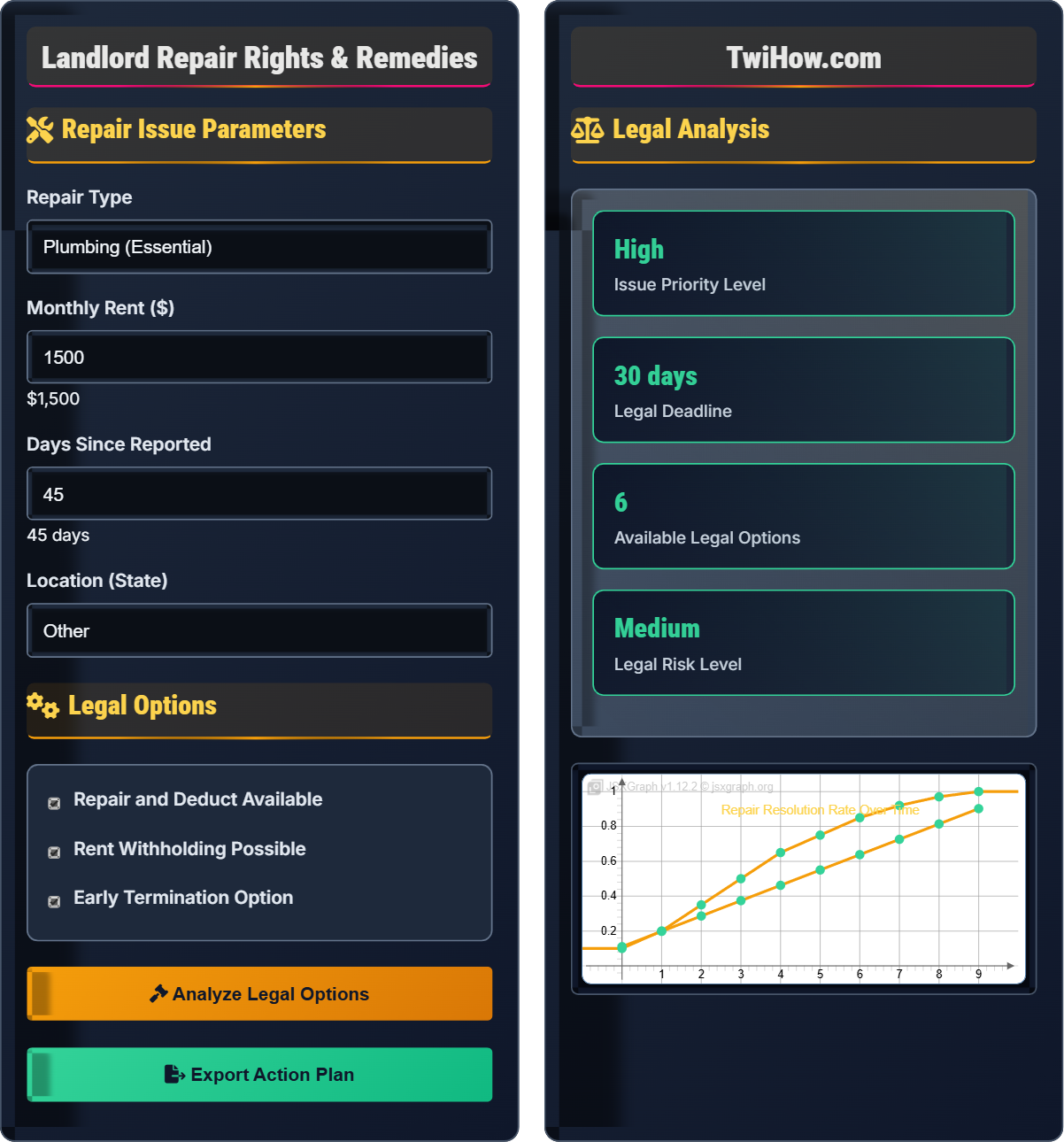
Repair Issue Parameters
Legal Options
Legal Analysis
| Option | Availability | Effectiveness | Complexity |
|---|---|---|---|
| Formal Written Notice | High | High | Low |
| Repair and Deduct | Medium | Medium | Medium |
| Rent Withholding | Low | High | High |
| Contact Housing Authority | High | High | Medium |
Landlord Repair Rights & Remedies
Tenants have the right to live in a habitable property that meets basic health and safety standards. Landlords are legally obligated to maintain essential services like heating, plumbing, electricity, and structural integrity. When landlords fail to make necessary repairs, tenants have various legal remedies available.
Remedy Appropriateness = (Issue Severity × Legal Precedent × Location Laws) / Risk Factor
Success Probability = (Documentation Quality × Notice Compliance × Legal Support) / 100
Where:
- Issue Severity: How critical the repair is
- Legal Precedent: Previous successful cases
- Location Laws: Strength of tenant protections
- Risk Factor: Potential legal consequences
Common legal remedies when landlords won't fix essential repairs:
- Repair and Deduct: Make repairs yourself and deduct from rent
- Rent Withholding: Withhold rent until repairs are made
- Move-Out: Break lease due to uninhabitable conditions
- Legal Action: Sue for damages or habitability violations
- Code Violations: Report to housing authorities
- Mediation: Use third-party to resolve dispute
- Document Everything: Keep records of all communications and conditions
- Follow Procedures: Adhere to legal requirements for each remedy
- Know Your Rights: Research local and state tenant protection laws
- Seek Help: Contact tenant unions or legal aid organizations
- Be Reasonable: Give landlords appropriate time to respond
Repair Rights Fundamentals
Habitability, essential repairs, landlord duties, tenant remedies, repair and deduct, rent withholding.
Remedy Appropriateness = (Issue Severity × Legal Precedent × Location Laws) / Risk Factor
Where Remedy Appropriateness = suitability of legal action, Issue Severity = critical nature of repair, Location Laws = strength of tenant protections.
- Landlords must maintain habitable conditions
- Tenants have right to essential services
- Proper notice is required before action
Legal Options
Repair and deduct, rent withholding, early termination, legal action, housing authority complaints.
- Document the problem thoroughly
- Give written notice to landlord
- Wait for reasonable response time
- Choose appropriate legal remedy
- Follow legal procedures precisely
- Legal requirements vary by state
- Proper procedures must be followed
- Documentation is crucial
- Legal action can have consequences
Landlord Repair Rights Quiz
What is typically the first legal requirement before taking action against a landlord for non-repairs?
Before taking legal action or exercising remedies like repair and deduct, tenants must typically provide written notice to the landlord specifying the problem and allowing a reasonable time for repairs. This gives the landlord an opportunity to fulfill their legal obligation before tenants take further action.
The answer is B) Give written notice to landlord.
The notice requirement serves as a prerequisite to most legal remedies, giving landlords a chance to comply with their obligations before tenants take more drastic measures. Courts typically expect tenants to have made a good-faith effort to work with landlords before pursuing legal remedies.
Written Notice: Formal notification to landlord of repair needs
Reasonable Time: Appropriate period for repairs based on severity
Prerequisite: Requirement before taking further action
• Written notice is typically required first
• Allow reasonable time for repairs
• Document all communications
• Send notice via certified mail
• Specify reasonable deadline
• Keep copies of all notices
• Not providing proper notice
• Taking action too quickly
• Failing to document attempts
Explain how the "repair and deduct" remedy works and what requirements must be met to use it legally.
How It Works: Tenants pay for necessary repairs themselves and deduct the cost from their rent. The landlord is then responsible for reimbursing the tenant.
Requirements: 1) Essential repair that affects habitability, 2) Proper written notice given to landlord, 3) Reasonable time allowed for landlord to respond, 4) Cost is reasonable and documented, 5) Proper legal procedures followed, 6) Not used for routine maintenance or cosmetic issues.
Limitations: Amount typically limited by state law, cannot be used for non-essential repairs, and may require legal action to recover costs from landlord.
Repair and deduct is a powerful remedy that allows tenants to solve urgent problems themselves while holding landlords financially responsible. However, strict requirements exist to prevent abuse and ensure the remedy is used appropriately for genuine emergencies rather than convenience.
Repair and Deduct: Pay for repairs, deduct from rent
Habitability: Basic livable conditions required by law
Essential Repair: Critical maintenance affecting safety/health
• Must be essential repair
• Get multiple quotes
• Keep all receipts
• Research state limits
• Using for non-essential repairs
• Not following proper procedures
• Deducting excessive amounts
You've been without hot water for 3 weeks. You've given written notice twice and called the landlord multiple times. Your state allows rent withholding after 14 days of essential service disruption. The landlord has not responded. What should you do to protect yourself legally while addressing the issue?
Immediate Actions: 1) Continue documenting the problem with photos and dates, 2) Send another formal written notice citing specific legal requirements for hot water, 3) Inform landlord that you're aware of rent withholding rights.
Next Steps: If landlord still doesn't respond, you may legally withhold rent following your state's specific procedures. Deposit withheld rent in a separate account, continue paying future rent, and be prepared to use it as evidence in legal proceedings.
Alternative: Contact your local housing authority or tenant union for additional guidance and support.
This scenario demonstrates the importance of following legal procedures precisely. Rent withholding is a powerful remedy but carries risks. Proper documentation and adherence to state requirements are essential to avoid eviction or legal consequences. The key is balancing tenant rights with legal compliance.
Rent Withholding: Refusing to pay rent due to habitability issues
Essential Service: Critical utilities required by law
Separate Account: Keeping withheld rent apart from regular payments
• Follow state-specific procedures
• Document everything
• Keep withheld rent separate
• Research state requirements
• Keep detailed records
• Consult legal aid if needed
• Withholding rent without legal basis
• Not following procedures exactly
• Mixing withheld with regular rent
You've reported a broken heating system to your landlord 30 days ago. The temperature inside stays below 60°F, making the apartment barely livable. You've sent three written notices but received no response. What documentation strategy should you use to strengthen your legal position?
Documentation Strategy: 1) Daily temperature readings with timestamp and photos, 2) Copies of all written notices sent with delivery confirmations, 3) Log of phone calls with dates and content, 4) Photos of the broken heating system, 5) Records of any alternative heating methods used, 6) Medical documentation if the cold affects health.
Additional Evidence: Witness statements from neighbors experiencing similar issues, utility bills showing normal usage but inadequate heating, and expert opinions on the system's condition.
Organization: Create a chronological file with all evidence clearly labeled and dated.
Strong documentation is crucial for proving habitability violations in legal proceedings. The more detailed and comprehensive your evidence, the stronger your case. Temperature readings provide objective evidence of the problem's severity, while communication logs demonstrate your efforts to work with the landlord.
Habitability Violation: Conditions making property unsafe/unlivable
Objective Evidence: Measurable facts proving the issue
Chronological File: Evidence organized by date
• Document everything
• Keep evidence organized
• Use objective measurements
• Take photos regularly
• Record temperatures daily
• Get delivery confirmations
• Inconsistent documentation
• Poor record organization
• Missing important details
Which of the following repairs would NOT be considered essential for habitability?
While a broken heating system, leaking roof, and non-functioning smoke detector all affect habitability and safety, a broken dishwasher is typically considered a convenience amenity rather than an essential service. Landlords are generally not required to maintain dishwashers for habitability, though lease terms may specify otherwise.
The answer is C) Broken dishwasher.
Understanding the difference between essential and non-essential repairs is crucial for determining which legal remedies apply. Essential repairs affect basic habitability, health, and safety, while non-essential repairs involve amenities that don't impact livability. This distinction affects the urgency and legal requirements for repairs.
Essential Repair: Critical for health, safety, or basic living
Non-Essential: Convenience amenity, not required for habitability
Habitability: Basic livable conditions required by law
• Essential repairs require immediate attention
• Non-essential repairs have different requirements
• Lease terms may specify additional obligations
• Research local habitability codes
• Check lease for additional requirements
• Focus on essential repairs first
• Confusing amenities with essentials
• Not understanding habitability standards
• Misapplying legal remedies
FAQ
Q: Can my landlord evict me for reporting repair problems to housing authorities?
A: No, in most states, landlords cannot evict tenants for exercising their legal rights, including reporting habitability issues. This is called "retaliation" and is prohibited by law in most jurisdictions.
Protected Activities: Filing complaints with housing authorities, requesting repairs, joining tenant organizations, and asserting tenant rights.
Retaliation Period: Most states provide protection for 6 months to 1 year after protected activity.
Documentation: If you receive an eviction notice shortly after reporting issues, document the timeline and contact a tenant rights organization immediately.
Q: What's the difference between "repair and deduct" and "rent withholding"?
A: The key differences are:
Repair and Deduct: Tenant pays for repairs and deducts the cost from rent. Requires essential repair, proper notice to landlord, and reasonable costs.
Rent Withholding: Tenant refuses to pay rent due to habitability issues. Requires ongoing serious problems, proper notice, and often court approval.
Legal Requirements: Both require following specific procedures outlined in state law. "Repair and deduct" is typically for immediate problems, while "rent withholding" addresses ongoing habitability issues.
Risks: Both carry potential legal risks if not done properly, so research your state's specific requirements.