What to Look for When Touring a Potential Rental Property
Real estate guide • Step-by-step explanations
Rental Property Tour Guide:
Show Tour ChecklistTouring rental properties is a critical step in the housing search process. A thorough inspection helps you identify potential issues, assess the property's condition, and determine if it meets your needs and budget. Successful touring requires preparation, attention to detail, and awareness of both visible and hidden factors that affect livability.
Key areas to examine during rental tours include:
- Physical Condition: Walls, floors, fixtures, appliances, and maintenance
- Utilities & Infrastructure: Water pressure, electrical, heating/cooling, internet
- Safety Features: Locks, smoke detectors, carbon monoxide detectors
- Neighborhood Environment: Noise levels, traffic, parking, security
- Legal Compliance: Habitable conditions, safety codes, lease terms
- Future Considerations: Renovation plans, rent increases, neighborhood changes
Proper evaluation during tours can prevent costly surprises and ensure a satisfactory living arrangement.
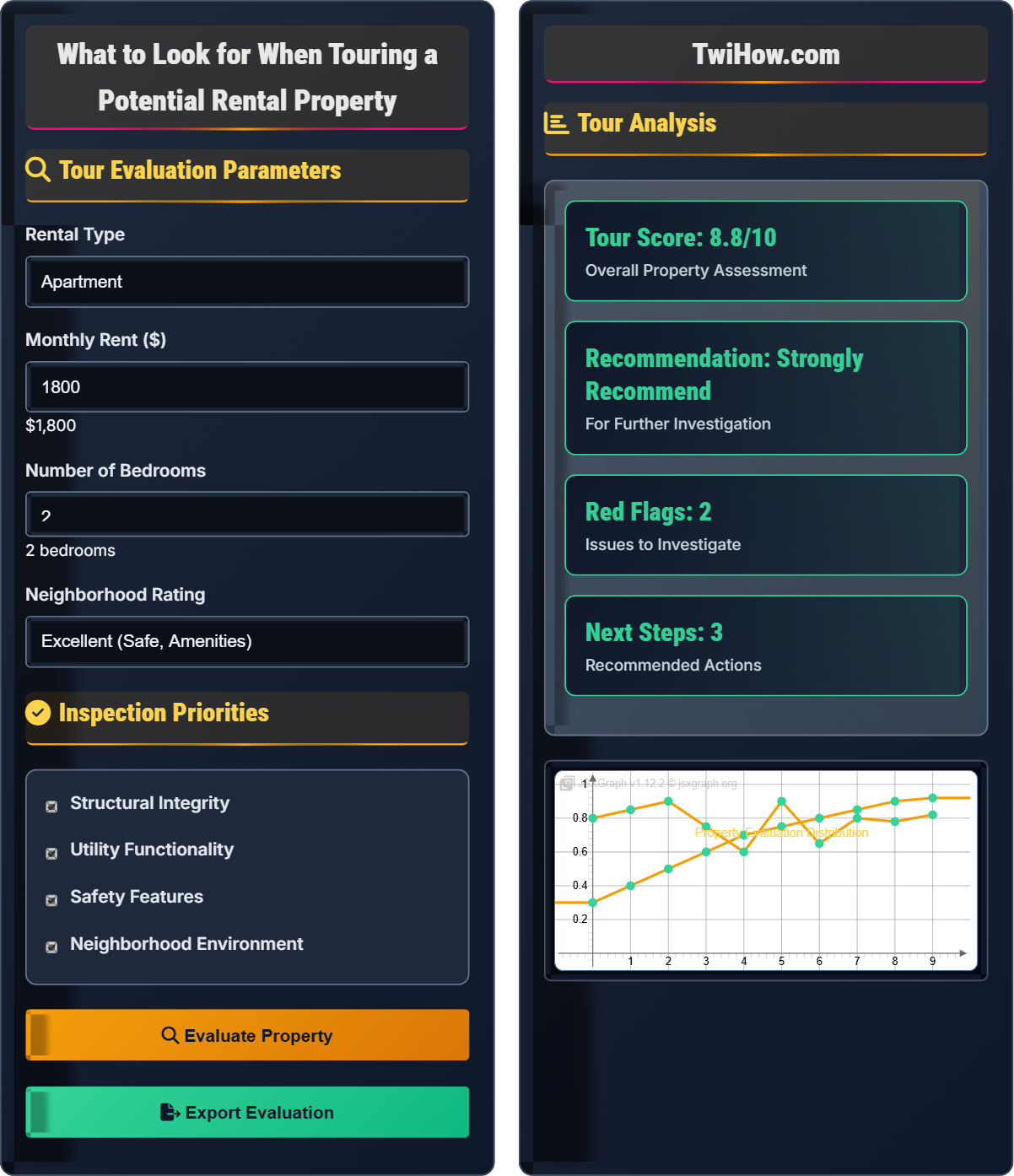
Tour Evaluation Parameters
Inspection Priorities
Tour Analysis
| Category | Assessment | Status | Notes |
|---|---|---|---|
| Structural | Wall integrity, foundation | Good | No cracks or damage |
| Plumbing | Water pressure, drainage | Acceptable | Minor issues noted |
| Electrical | Outlets, lighting, GFCI | Good | All outlets functional |
| Appliances | Functionality, age | Fair | Old but operational |
Understanding Property Inspection Essentials
A rental property inspection is a systematic examination of a potential rental to assess its condition, safety, and suitability. It involves checking the physical structure, utilities, appliances, and surrounding environment. The purpose is to identify potential issues, verify that the property meets safety standards, and ensure it matches the advertised description.
During a rental tour, focus on these critical areas:
- Structural Elements: Walls, ceilings, floors, foundation, windows, doors
- Plumbing: Water pressure, drainage, leaks, fixtures, hot water
- Electrical: Outlets, switches, lighting, circuit breaker, GFCI
- Heating/Cooling: HVAC functionality, temperature control, air quality
- Safety Features: Smoke detectors, locks, security, lighting
- Appliances: Functionality, age, energy efficiency
This formula helps prioritize inspection areas based on their importance. Safety factors carry the highest weight because they affect health and well-being. Functionality is crucial for daily living, while durability relates to long-term maintenance costs. Cost implications consider potential expenses for repairs or inefficiencies.
Before touring a rental property, prepare these items:
- Questions List: Prepare specific questions about utilities, maintenance, lease terms
- Measurement Tools: Tape measure, camera, flashlight
- Comparison Notes: Bring notes from previous tours for comparison
- Neighborhood Research: Check crime statistics, schools, transportation
- Financial Limits: Know your budget including utilities and deposits
- Timeline: Understand move-in requirements and flexibility
Touring Best Practices
Property inspection, safety assessment, utility functionality, neighborhood evaluation, lease compliance, documentation.
- Begin with exterior inspection (yard, parking, building condition)
- Check all interior spaces systematically
- Test all utilities and appliances
- Assess safety features and compliance
- Document findings with photos
- Compare to similar properties
- Never rush the inspection process
- Always document issues with photos
- Ask about maintenance responsibilities
- Verify utilities and costs
Red Flag Indicators
Water stains, mold, electrical issues, broken fixtures, pest problems, poor maintenance, unsafe neighborhoods.
- Look for water damage around sinks, tubs, and windows
- Smell for mustiness indicating mold or dampness
- Test all outlets and switches for proper function
- Check for signs of pests in kitchen and bathroom
- Examine overall maintenance condition of building
- Research neighborhood crime statistics
- Any safety hazards (broken locks, exposed wiring)
- Significant water damage or mold
- Non-functional essential appliances
- Unsafe neighborhood conditions
Post-Tour Actions
Documentation, comparison, reference checks, lease review, financial verification, application preparation.
- Organize photos and notes from tour
- Compare property to other options
- Research landlord reputation and reviews
- Request lease terms and conditions
- Verify utility costs and providers
- Prepare application materials
- Submit application promptly if interested
- Provide complete and accurate information
- Follow up on application status
- Read lease carefully before signing
Rental Touring Quiz
When touring a rental property, which area should receive the highest priority during inspection?
Structural integrity and safety features should receive the highest priority during rental property inspections. These factors directly impact habitability, health, and safety. Structural issues like foundation problems, wall cracks, or unsafe electrical systems can be costly to repair and pose risks to occupants. Safety features like smoke detectors, proper locks, and adequate lighting are essential for security and compliance with housing codes.
The answer is B) Structural integrity and safety features.
This question emphasizes the hierarchy of importance during property inspections. While aesthetics and amenities are nice to have, they pale in comparison to fundamental safety and structural soundness. A beautiful kitchen with unsafe electrical wiring poses more risk than a functional kitchen with outdated appliances. Prioritizing safety elements helps identify properties that meet basic livability standards before considering comfort or convenience features.
Structural Integrity: Soundness of building foundation and framework
Safety Features: Elements that protect occupants from harm
Habitability: Condition suitable for human occupancy
• Safety and structural elements come first
• Aesthetics are secondary considerations
• Verify functionality over appearance
• Check for water stains indicating leaks
• Test all electrical outlets
• Verify lock functionality on all doors
• Focusing on cosmetic issues over safety
• Not testing appliances and utilities
• Overlooking neighborhood safety factors
Identify and explain five common red flags to watch for during rental property tours and why they matter.
1. Water Damage Signs: Look for water stains on ceilings, walls, or around fixtures. These indicate potential plumbing issues, roof leaks, or drainage problems that could lead to mold, structural damage, or ongoing maintenance needs.
2. Electrical Issues: Flickering lights, warm outlets, or outdated electrical panels suggest safety hazards and potential fire risks. Proper electrical systems are essential for modern living and safety.
3. Mold or Mildew: Musty odors or visible black spots indicate moisture problems that can cause health issues and structural damage. Mold remediation can be expensive and time-consuming.
4. Broken Fixtures: Non-functioning locks, windows, or appliances may indicate poor maintenance practices by the landlord or signs of neglect that could affect other property components.
5. Neighborhood Safety Concerns: Poor lighting, damaged property, excessive litter, or signs of crime can affect your safety and property value. These factors may also indicate broader community issues.
Recognizing red flags during property tours is crucial for avoiding future problems. These warning signs often indicate underlying issues that could become costly or dangerous after moving in. Landlords may try to distract from these problems with cosmetic improvements, but structural and safety issues typically persist. Identifying red flags early helps make better housing decisions and avoid problematic properties.
Red Flag: Warning sign indicating potential problems
Structural Issues: Problems with building foundation or framework
Code Violations: Property not meeting safety standards
• Don't ignore obvious problems
• Verify all safety systems function
• Research neighborhood conditions
• Take photos of any issues
• Ask about maintenance history
• Visit at different times of day
• Assuming cosmetic fixes solve underlying issues
• Not checking all rooms and fixtures
• Failing to research neighborhood
During a rental tour, you notice that the bathroom has a persistent odor, the water pressure is low, and there's a small crack in the ceiling corner. The kitchen has an old refrigerator that makes loud noises. The property manager says these are minor issues that will be fixed soon. How should you evaluate these problems and what questions should you ask?
Odor Assessment: A persistent bathroom odor likely indicates a sewer gas leak or drainage problem. This is a health hazard that needs immediate attention. Ask for documentation of recent plumbing work.
Water Pressure: Low water pressure affects daily living and may indicate pipe problems. Ask about the age of the plumbing system and whether it's been recently serviced.
Ceiling Crack: Cracks can indicate structural settling or water damage. Ask about the age of the crack and whether it's been monitored for changes.
Refrigerator: Old, noisy appliances may fail soon. Ask about the age of the appliance and whether the landlord will replace it.
Key Questions: When were these issues discovered? What steps have been taken to address them? Who is responsible for repairs? How long will fixes take?
This scenario demonstrates how seemingly minor issues can indicate larger problems. The combination of multiple issues suggests potential maintenance problems with the property. Landlords who promise future fixes without providing specific timelines or evidence of action may be trying to downplay significant issues. Understanding the root causes of these problems helps assess the property's overall condition and the landlord's maintenance practices.
Plumbing Issues: Problems with water supply or drainage
Structural Assessment: Evaluation of building integrity
Maintenance History: Record of property repairs
• Don't accept vague promises
• Request documentation of repairs
• Verify landlord's maintenance track record
• Take photos of all issues
• Ask for maintenance records
• Visit again after claimed repairs
• Accepting verbal assurances without documentation
• Not following up on promised repairs
• Assuming all issues will be fixed promptly
What safety features should you verify during a rental property tour and why are they important?
Smoke Detectors: Check that they are installed in each bedroom and common areas. Test functionality if possible. These are required by law and essential for fire safety.
Carbon Monoxide Detectors: Verify presence near sleeping areas, especially in homes with gas appliances or attached garages. CO is odorless and deadly.
Locks and Security: Test all door locks and check for security features like peepholes or deadbolts. Verify that windows lock properly.
Lighting: Check that exterior lighting illuminates entrances and walkways. Good lighting deters crime and improves safety.
Emergency Exits: Ensure all exits are accessible and unobstructed. Verify escape routes in case of fire or other emergencies.
Safety features are often taken for granted but are critical for habitability and legal compliance. Landlords are typically required by law to maintain these systems, but they may not always function properly. Verifying safety features during tours protects your well-being and ensures the property meets basic habitability standards. These systems are often overlooked until they're needed, making pre-move-in verification essential.
Habitability: Property suitable for human occupancy
Life Safety Systems: Equipment that protects human life
Legal Compliance: Meeting required safety standards
• Verify safety systems function properly
• Check that systems are up to code
• Understand who maintains safety features
• Ask about detector battery replacement schedule
• Check for fire extinguisher if required
• Verify emergency contact information
• Not testing safety systems during tour
• Assuming all required systems are present
• Not understanding maintenance responsibilities
Why is it important to document issues found during rental property tours?
Documenting issues during rental tours provides crucial evidence if disputes arise later. Photos and notes from the tour establish the property's condition at move-in, which is essential for security deposit returns and damage claims. Documentation also helps remember details between tours and can be used to verify that promised repairs were completed.
The answer is B) To provide evidence if disputes arise later.
Documentation serves as objective evidence of property conditions, which can be invaluable in resolving disputes with landlords. Without documentation, disputes often become "he said, she said" situations where the landlord's word may be favored. Comprehensive documentation protects tenants' rights and provides a clear record of the property's condition. This practice is essential for security deposit protection and establishing accountability for maintenance issues.
Documentation: Recording property conditions with evidence
Security Deposit: Money held for damages and cleaning
Move-in Condition: Property state at beginning of lease
• Document everything before moving in
• Take photos from multiple angles
• Take before and after photos if repairs are promised
• Document both problems and positive features
• Keep copies in multiple locations
• Not taking enough photos
• Failing to document minor issues
• Not keeping records organized
FAQ
Q: Should I bring someone with me when touring rental properties?
A: Yes, bringing a second person to rental tours is highly recommended. A second set of eyes can spot things you might miss and provide an independent perspective on the property. They can also serve as a witness to the property's condition at move-in. Additionally, if you're moving with a partner or family, having them present during the tour ensures everyone sees the property and can provide input on its suitability for your needs.
Q: How long should I spend touring a rental property?
A: A thorough rental property tour should take 30-60 minutes for an apartment and 45-90 minutes for a house. This allows time to inspect all rooms, test utilities, check safety features, and examine the exterior and neighborhood. Don't rush the process - a proper inspection helps identify potential issues and ensures the property meets your needs. If the landlord pressures you to rush or limits your time, this may be a red flag about their management practices.