What Are the Ethical Considerations of Genetic Engineering?
Complete bioethics guide • Step-by-step explanations
Genetic Engineering Ethics:
Show Ethics SimulatorGenetic engineering raises complex ethical questions about the manipulation of life at its most fundamental level. These considerations involve balancing potential benefits against risks, ensuring equitable access, and respecting human dignity and autonomy.
Key ethical considerations:
- Beneficence: Maximizing benefits while minimizing harm
- Justice: Ensuring fair access and distribution of benefits
- Autonomy: Respecting individual choice and informed consent
- Non-maleficence: Avoiding harm and unintended consequences
These ethical frameworks guide policy decisions and research practices in genetic engineering.
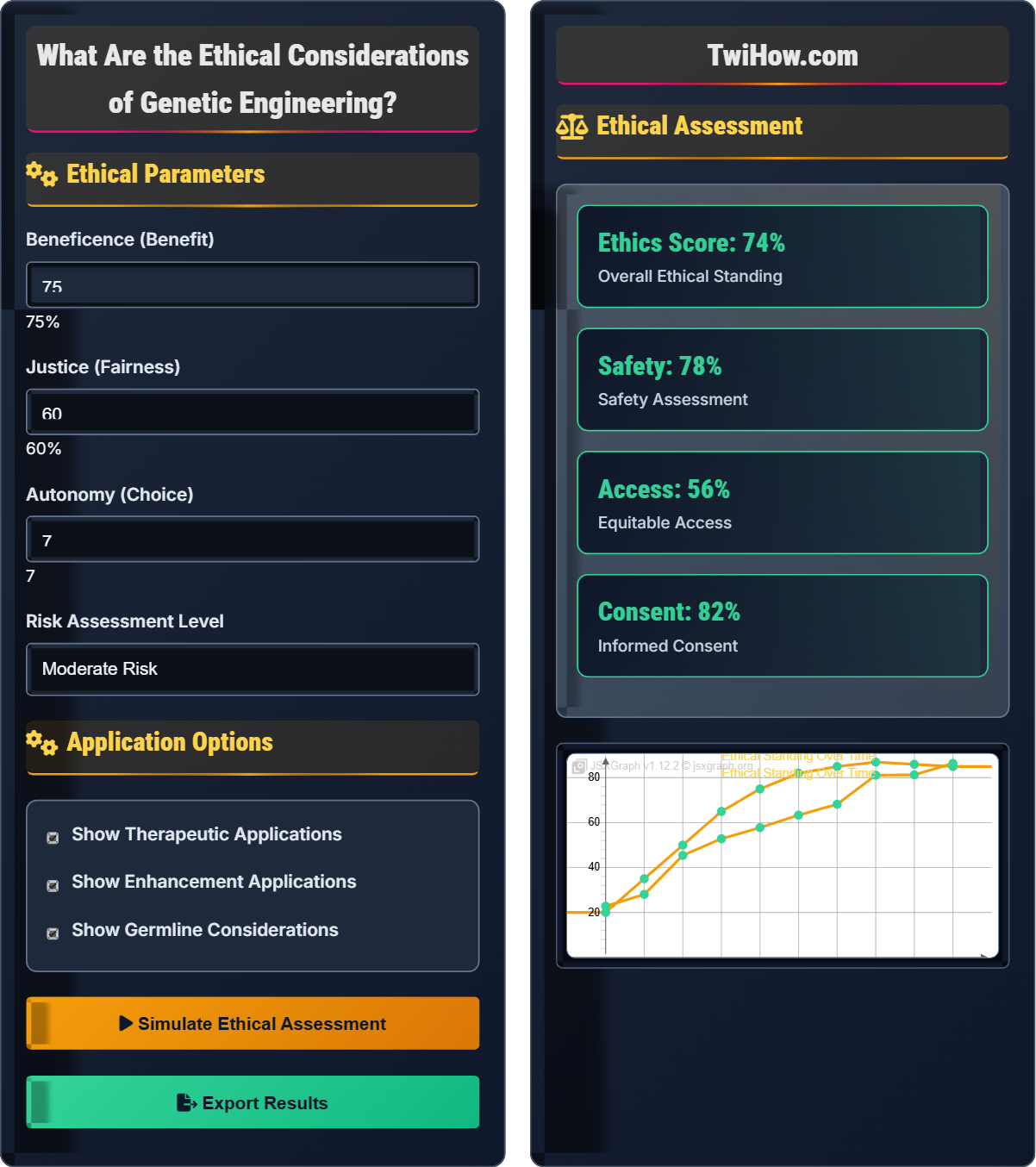
Ethical Parameters
Application Options
Ethical Assessment
| Consideration | Score | Impact | Acceptance |
|---|---|---|---|
| Beneficence | 75% | High | 70% |
| Justice | 60% | Medium | 55% |
| Autonomy | 70% | Medium | 65% |
| Non-maleficence | 65% | High | 60% |
| Respect for Persons | 72% | Medium | 68% |
Public Engagement: Involving communities in ethical discussions about genetic engineering.
Risk-Benefit Analysis: Weighing potential benefits against possible harms.
Genetic Engineering Ethics Explained
Genetic engineering ethics encompasses the moral principles and values that guide the development, application, and regulation of genetic modification technologies. It involves careful consideration of the potential benefits and risks, respect for human dignity, and fair distribution of both benefits and burdens.
Genetic engineering ethics is grounded in several fundamental principles:
Where:
- Beneficence: Obligation to promote well-being and maximize benefits
- Justice: Fair distribution of benefits and burdens
- Autonomy: Respect for individual choice and self-determination
- Non-maleficence: Duty to avoid harm
Major ethical concerns in genetic engineering include:
- Equity and Access: Ensuring fair distribution of genetic therapies
- Consent and Autonomy: Obtaining meaningful consent, especially for germline editing
- Safety and Risk: Managing potential unintended consequences
- Natural vs. Artificial: Questions about human nature and identity
- Commercialization: Profit motives versus public health needs
- Regulation: Balancing innovation with safety oversight
- Therapeutic Gene Editing: Treating genetic diseases safely and ethically
- Agricultural Applications: Food security versus environmental concerns
- Human Enhancement: Distinguishing therapy from enhancement
- Germline Editing: Permanent changes to the human gene pool
- Animal Welfare: Ethical considerations in animal genetic engineering
- Environmental Impact: Ecological consequences of genetic modifications
Ethical Frameworks
Beneficence, justice, autonomy, non-maleficence, respect for persons.
Ethical Standing = f(Benefits, Risks, Justice, Consent, Safety)
Where Standing = overall ethical evaluation score.
- Balance benefits against risks
- Ensure equitable access
- Respect individual autonomy
Contemporary Issues
Germline editing, human enhancement, genetic equity, commercialization.
- Identify stakeholders and interests
- Assess risks and benefits
- Apply ethical frameworks
- Consider alternatives
- Make informed decision
- Establish oversight mechanisms
- Technology moves faster than regulation
- Global coordination needed
- Public engagement essential
Genetic Engineering Ethics Learning Quiz
Which of the following best describes the principle of beneficence in genetic engineering ethics?
The principle of beneficence requires actively promoting the well-being of patients and maximizing beneficial outcomes. In genetic engineering, this means pursuing applications that can improve health outcomes and alleviate suffering.
Beneficence is distinct from non-maleficence (avoiding harm), autonomy (respecting choice), and justice (fair distribution). While all principles are important, beneficence specifically focuses on positive actions to promote welfare.
The answer is B) Promoting well-being and maximizing benefits.
Students should understand that beneficence is an active obligation to do good, not just avoiding harm. In genetic engineering, this means developing therapies that genuinely improve patient outcomes. This principle drives the development of beneficial applications while being balanced with other ethical considerations.
Beneficence: Obligation to promote well-being and do good
Non-maleficence: Duty to avoid harm ("do no harm")
Autonomy: Respect for individual self-determination
• Beneficence requires positive action
• Must be balanced with other principles
• Focuses on promoting welfare
• Beneficence = "being beneficial"
• Active duty to do good
• Promotes patient welfare
• Confusing with non-maleficence
• Thinking it's passive
• Not understanding active obligation
Explain the ethical concerns surrounding germline genetic editing and why many scientists and ethicists recommend a cautious approach to its use.
Germline Editing Concerns:
1. Irreversibility: Changes made to germ cells (eggs, sperm, embryos) are passed to all future generations, making any mistakes permanent in the human gene pool.
2.Consent Issues: Future generations cannot consent to genetic modifications made to their ancestors' DNA.
3. Safety Uncertainty: Off-target effects and unintended consequences may not manifest until future generations.
4. Equity Concerns: Could create genetic advantages for those who can afford the technology, exacerbating social inequalities.
5. Identity and Human Nature: Questions about what it means to be human and whether we should alter our fundamental genetic makeup.
6. Slippery Slope: Could lead to genetic enhancement rather than just therapeutic applications.
Recommendations: Most ethicists recommend proceeding only with severe genetic diseases, extensive safety testing, broad societal consensus, and robust regulatory oversight. Many call for temporary moratoriums until ethical and safety issues are resolved.
Germline editing represents one of the most ethically complex applications of genetic engineering. Students should understand that the permanent nature of these changes raises unique ethical challenges that don't apply to somatic cell editing. The issue of consent for future generations is particularly challenging to resolve.
Germline Editing: Genetic changes to reproductive cells passed to offspring
Somatic Cell Editing: Changes to non-reproductive cells
Off-target Effects: Unintended genetic modifications
• Germline changes are irreversible
• Future generations cannot consent
• Extensive safety testing required
• Think of germline as "forever changes"
• No consent from future people
• Safety testing is critical
• Not understanding permanence
• Overlooking consent issues
• Underestimating safety concerns
A biotechnology company has developed a genetic therapy that can cure sickle cell disease by correcting the mutated gene. They want to expand the technology to enhance athletic performance by modifying genes related to muscle development. Discuss the ethical differences between therapeutic and enhancement applications of genetic engineering.
Therapeutic Applications:
• Purpose: Treat or prevent disease, restore normal function
• Justification: Addresses medical need, alleviates suffering
• Consent: Informed consent from affected individuals
• Regulation: Subject to rigorous safety and efficacy testing
• Public Acceptance: Generally higher acceptance
Enhancement Applications:
• Purpose: Improve normal human capabilities beyond baseline
• Justification: Non-medical improvement, competitive advantage
• Equity Concerns: Could create unfair advantages and social stratification
• Definition of Normal: Raises questions about human nature and identity
• Slippery Slope: Could lead to eugenic practices
Ethical Differences:
Therapeutic applications generally have stronger ethical justification as they address genuine medical needs. Enhancement applications raise more complex questions about fairness, human nature, and social justice. The distinction is important for regulatory and ethical decision-making.
This example illustrates the critical distinction between therapy and enhancement in genetic engineering ethics. Students should understand that while therapeutic applications have clearer ethical justification, enhancement applications raise more complex questions about fairness, identity, and the meaning of human nature. This distinction is crucial for policy decisions.
Therapeutic: Treatment of disease or disability
Enhancement: Improvement beyond normal human capabilities
Eugenics: Attempts to improve human genetic composition
• Therapy has stronger ethical justification
• Enhancement raises equity concerns
• Distinction is crucial for regulation
• Therapy = fixing what's broken
• Enhancement = making better than normal
• Consider fairness implications
• Not distinguishing therapy from enhancement
• Underestimating equity concerns
• Overlooking social implications
Genetic therapies are expensive and may only be available in wealthy countries initially. Explain the ethical concerns about global equity in genetic engineering and propose solutions to address these disparities.
Ethical Concerns:
1. Justice and Fairness: Genetic therapies could exacerbate global health disparities, creating "genetic haves and have-nots."
2. Human Dignity: Unequal access may undermine equal worth of all humans.
3. Global Solidarity: Wealthy nations have obligations to ensure global access to life-saving technologies.
4. Economic Barriers: Market-driven development may prioritize profitable markets over greatest needs.
Potential Solutions:
• International Collaboration: Global partnerships to fund and distribute genetic therapies
• Subsidized Access: Tiered pricing based on country income levels
• Technology Transfer: Sharing knowledge and manufacturing capabilities
• Public Funding: Government and international funding for global access
• Regulatory Harmonization: Streamlined approval processes for global access
• Capacity Building: Training and infrastructure development in developing countries
Implementation Challenges: Balancing innovation incentives with equitable access, navigating different regulatory systems, and ensuring quality control.
This example highlights how genetic engineering intersects with global justice issues. Students should understand that ethical considerations extend beyond individual patient care to global equity. The challenge is balancing innovation incentives with fair access to life-saving technologies.
Global Equity: Fair distribution of benefits across all populations
Technology Transfer: Sharing of knowledge and capabilities
Tiered Pricing: Different prices based on economic capacity
• Innovation incentives vs. access
• Global responsibilities
• Justice across borders
• Think globally, act ethically
• Balance innovation with access
• Consider global solidarity
• Not considering global implications
• Ignoring economic barriers
• Overlooking justice concerns
Which scenario presents the greatest challenge to obtaining meaningful informed consent for genetic engineering?
Embryo undergoing germline editing presents the greatest challenge because the embryo cannot consent and the genetic changes will affect all future descendants who also cannot consent. This raises fundamental questions about intergenerational justice and the rights of future people.
While other scenarios have consent challenges (children rely on proxy consent, research involves unknown risks), the germline editing case is unique because it affects people who don't exist and never can consent to the modifications made to their genetic heritage.
This challenge is one of the primary reasons why many ethicists recommend extreme caution with germline editing.
The answer is B) Embryo undergoing germline editing.
Students must understand that informed consent is particularly challenging when the person affected cannot consent and the effects extend to future generations. This raises profound questions about rights, justice, and the moral status of future people that are central to genetic engineering ethics.
Informed Consent: Voluntary agreement based on adequate information
Proxy Consent: Consent given by someone else on behalf of patient
Future People: Descendants affected by genetic modifications
• Cannot consent for future generations
• Germline changes are permanent
• Intergenerational justice concerns
• Who can consent for future people?
• Permanent changes affect everyone
• Greatest ethical challenge
• Not understanding intergenerational issues
• Thinking proxy consent solves all problems
• Underestimating permanence
FAQ
Q: How do I know if genetic therapy is ethical?
A: Ethical genetic therapy should meet several criteria:
Regulatory Approval: Approved by appropriate regulatory bodies (FDA, etc.) after rigorous review.
IRB Oversight: Reviewed by Institutional Review Boards for research studies.
Meaningful Consent: Clear, understandable information provided to you about risks and benefits.
Proven Benefit: Demonstrated safety and efficacy through clinical trials.
Equitable Access: Not restricted based on inappropriate criteria.
Transparent Research: Results published in peer-reviewed journals.
Ask your healthcare provider about the regulatory status, clinical trial data, and ethical review process for any proposed therapy.
Q: Should we have a moratorium on all genetic engineering?
A: Most ethicists don't support blanket moratoria but recommend nuanced approaches:
Somatic Cell Therapy: Generally supported for serious diseases with appropriate oversight.
Germline Editing: Many recommend moratoria or extremely restrictive approaches until safety and ethical issues are resolved.
Enhancement Applications: Require more extensive ethical evaluation and public discussion.
Key Considerations:
• Distinguish between therapeutic and enhancement applications
• Balance innovation with precaution
• Ensure broad public engagement
• Maintain international coordination
The goal is responsible innovation that maximizes benefits while minimizing risks and addressing ethical concerns.