Handling Disputes with Dealerships & Repair Shops
Complete guide • Step-by-step explanations
Dealership & Repair Shop Disputes:
Show Dispute Resolution SimulatorHandling disputes with dealerships and repair shops requires understanding your consumer rights, knowing the proper procedures, and being prepared with documentation. Effective dispute resolution involves multiple steps from direct negotiation to formal complaint processes, depending on the severity and nature of the issue.
Common dispute categories include:
- Warranty Issues: Disputes over warranty coverage and repairs
- Defective Products: Problems with new or used vehicles
- Repair Quality: Poor workmanship or incomplete repairs
- Billing Disputes: Incorrect charges or unauthorized services
- Service Delays: Extended repair times or missed deadlines
- Misrepresentation: False advertising or undisclosed defects
Successful dispute resolution requires preparation, persistence, and knowledge of legal protections available to consumers.
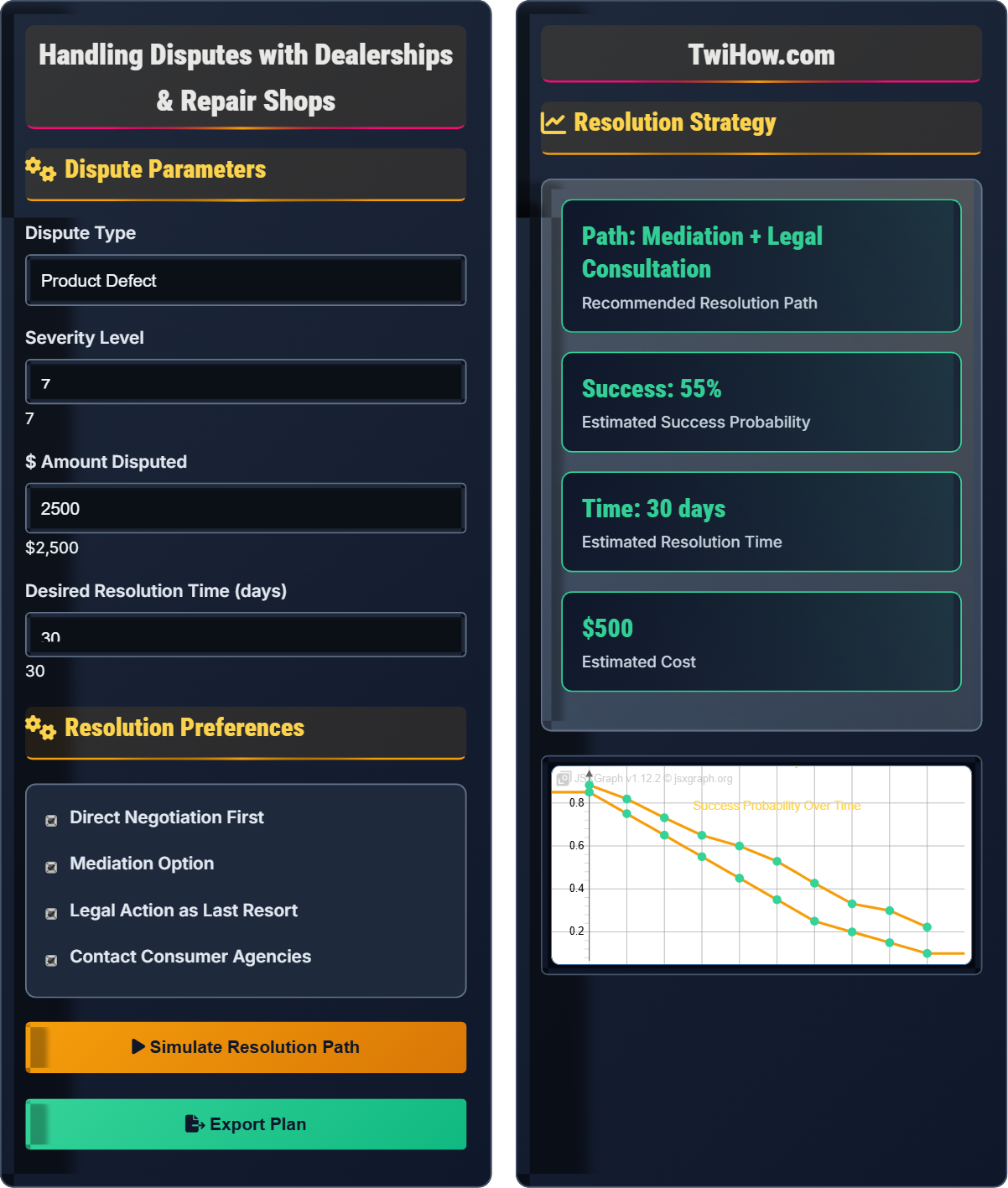
Dispute Parameters
Resolution Preferences
Resolution Strategy
| Phase | Duration | Success Rate | Cost |
|---|---|---|---|
| Direct Negotiation | 5-7 days | 45% | $0 |
| Consumer Agency | 10-14 days | 25% | $0 |
| Mediation | 7-14 days | 20% | $200 |
| Legal Action | 30-90 days | 10% | $1,000+ |
Dispute Resolution with Dealerships & Repair Shops
Dispute resolution in the automotive industry involves formal and informal processes to resolve conflicts between consumers and dealerships or repair shops. These processes range from direct negotiation to formal legal proceedings, depending on the complexity and severity of the issue.
Effective dispute resolution follows a structured approach:
Where:
- Documentation Strength: Quality and completeness of evidence
- Knowledge of Rights: Understanding of consumer protections
- Persistence: Consistency in pursuing resolution
- Complexity Factor: Difficulty of the specific issue
- Strategy Effectiveness: Appropriateness of chosen approach
Key areas where dispute resolution applies:
- Warranty Claims: Ensuring proper coverage for defects
- Defective Vehicles: Leveraging lemon laws and protections
- Service Quality: Addressing poor repair work
- Billing Issues: Correcting unauthorized charges
- Contract Violations: Enforcing agreed terms
- Disclosure Problems: Addressing misrepresentation
- Negotiation: Direct discussion to find mutually acceptable solution
- Mediation: Neutral third party facilitates resolution
- Arbitration: Binding decision by neutral arbitrator
- Small Claims Court: Legal proceeding for monetary disputes
- Consumer Agencies: Government assistance programs
- Industry Associations: Trade organization mediation
Fundamentals of Dispute Resolution
Consumer rights, warranty protection, lemon laws, dispute escalation, documentation, legal remedies.
Success Rate = (Preparation + Persistence + Knowledge) / (Complexity + Opposition)
Where higher values indicate greater likelihood of favorable outcome.
- Always document everything in writing
- Know your legal rights and protections
- Start with direct communication before escalating
Applications
Warranty disputes, lemon law claims, service contract issues, billing errors, defective parts, misrepresentation.
- New car purchases
- Used car transactions
- Repair services
- Warranty claims
- Service contract disputes
- Time limits for filing complaints
- Cost-benefit analysis of pursuit
- Documentation requirements
Dealership Dispute Resolution Quiz
What is the typical timeframe for qualifying for lemon law protection?
Lemon laws typically apply within the first year of ownership or the first 12,000 miles, whichever comes first. This timeframe varies by state but generally covers the period when warranty coverage is in effect and the vehicle is expected to be functioning properly. To qualify, the same defect must persist after a reasonable number of repair attempts (usually 3-4).
The answer is B) Within the first year or 12,000 miles.
Lemon laws provide protection for consumers who purchase defective vehicles. The time limitation exists because manufacturers expect vehicles to be reliable during the initial ownership period. The "reasonable number of attempts" standard prevents consumers from making excessive repair requests while ensuring manufacturers have opportunity to fix issues. Documentation of each repair attempt is crucial for proving lemon law eligibility.
Lemon Law: State protection for consumers with defective vehicles
Reasonable Attempts: Typically 3-4 repair attempts for same issue
Substantial Impairment: Defect affecting safety, value, or use
• Time limits vary by state
• Must allow reasonable repair attempts
• Defect must substantially impair use/value/safety
• Keep detailed repair records
• Understand your state's specific requirements
• Don't delay in documenting problems
• Missing state-specific time limits
• Not allowing sufficient repair attempts
• Failing to document repair history
Explain the importance of documentation in dealership disputes and describe what documents should be kept for potential disputes.
Importance of Documentation: Documentation serves as proof of agreements, problems, and communications. It establishes timelines, supports claims, and can be crucial evidence in legal proceedings. Without proper documentation, consumers may struggle to prove their case.
Essential Documents:
1. Purchase Agreement: All terms, conditions, and promises made
2. Warranty Documents: Coverage details and exclusions
3. Service Records: All repair orders and receipts
4. Correspondence: Emails, letters, and written communications
5. Photographs: Before/after photos of defects or repairs
6. Payment Records: Receipts for all transactions
7. Communication Logs: Dates, times, and details of conversations
Documentation is the foundation of any successful dispute resolution. It provides objective evidence that can override conflicting memories or disputed facts. The principle is "if it's not documented, it didn't happen." Consumers should create a paper trail for every interaction and keep copies of all documents related to their purchase and any issues that arise. Digital records should be backed up regularly.
Documentation: Written evidence of agreements and events
Proof of Claim: Evidence supporting consumer's position
Record Keeping: Systematic maintenance of transaction records
• Keep original documents secure
• Make copies of everything
• Date and organize systematically
• Scan documents for digital backup
• Use a dedicated folder for automotive documents
• Record phone conversations (where legal)
• Discarding documents too soon
• Not keeping copies of correspondence
• Failing to document verbal agreements
You purchased a new car 8 months ago, and it has broken down twice for the same engine issue. The dealership has performed repairs both times, but the problem persists. The car has 11,000 miles on it. You're considering your options. What should you do next and what are your rights under warranty and lemon law?
Current Situation: You're within the typical lemon law timeframe (first year/12,000 miles) and have experienced the same defect twice. Most states require 3-4 repair attempts for the same issue to qualify for lemon law protection.
Next Steps:
1. Document Third Repair: Take the car back for another repair attempt and document everything
2. Request Written Estimate: Ask for a timeline and cost estimate for permanent fix
3. Contact Manufacturer: Call the manufacturer's customer service line
4. Know Your Rights: If the fourth repair fails, you may qualify for a refund or replacement
Legal Rights: Under lemon laws, you may be entitled to a refund of purchase price minus usage allowance, or a replacement vehicle.
This scenario illustrates the importance of allowing manufacturers a reasonable number of repair attempts before invoking lemon law protections. The law balances consumer protection with giving manufacturers opportunity to fix defects. The key is documenting each repair attempt and communicating with both the dealership and manufacturer about the persistent issue. Understanding the specific requirements in your state is crucial for timing and procedure.
Reasonable Repair Attempts: Usually 3-4 attempts for same issue
Usage Allowance: Deduction for miles driven before repossessionRefund/Replacement: Consumer remedy under lemon laws
• Allow reasonable repair attempts first
• Document all repair attempts
• Know your state's specific lemon law requirements
• Contact manufacturer directly, not just dealership
• Keep detailed records of all repair visits
• Understand the difference between federal and state protections
• Giving up after 2 repair attempts instead of 3-4
• Not contacting manufacturer directly
• Failing to document repair history properly
A repair shop performed brake work on your car but the brakes still fail to stop properly. They claim the problem is unrelated to their work and refuse to fix it without charging you. The repair was done 3 weeks ago. What steps should you take to resolve this dispute?
Immediate Actions:
1. Get Second Opinion: Have an independent mechanic inspect the brake system
2. Document Evidence: Take photos and videos of brake components and performance issues
3. Review Receipt: Check warranty terms on the repair
4. Contact Shop Again: Present evidence and request reconsideration
5. File Complaint: Contact Better Business Bureau and state licensing board
6. Small Claims Court: Consider legal action if repair cost exceeds $500
Most states require repair shops to warrant their work for a reasonable period (often 30-90 days).
Repair shop disputes often involve proving causation between the repair and the continuing problem. Independent verification is crucial to support your claim. Many states have specific regulations governing repair shop warranties and dispute resolution. The key is documenting the problem before and after the repair, which is why photos and independent inspections are so important.
Workmanship Warranty: Guarantee on quality of repair work
Independent Inspection: Third-party verification of problems
Small Claims Court: Legal venue for disputes under certain dollar limits
• Most states require 30-day minimum warranty on repairs
• Document problems immediately after repair
• Get independent verification when possible
• Test drive immediately after repair
• Note any changes in performance
• Get written warranty terms
• Not testing repairs immediately
• Waiting too long to report problems
• Not getting independent verification
Which agency is primarily responsible for investigating complaints against car dealerships in most states?
In most states, the Department of Motor Vehicles (DMV) or a similar state motor vehicle division is responsible for licensing dealerships and investigating complaints against them. The DMV has authority to discipline dealerships for violations of state motor vehicle codes and consumer protection laws. Other agencies like the FTC handle broader consumer issues, BBB provides voluntary dispute resolution, and the Attorney General handles legal enforcement.
The answer is B) Department of Motor Vehicles (DMV).
Understanding which agency has jurisdiction over specific types of complaints is crucial for effective dispute resolution. The DMV regulates dealerships and has the authority to investigate complaints and take disciplinary action. The FTC handles broader consumer protection issues, while the BBB provides mediation services. Knowing the right contact ensures your complaint goes to the appropriate authority with the power to address your specific issue.
DMV: Department of Motor Vehicles - licenses dealerships
Consumer Protection: Laws protecting purchasers from unfair practices
Regulatory Authority: Government power to oversee businesses
• File complaints with the appropriate regulatory agency
• DMV typically oversees dealership operations
• Different agencies handle different types of issues
• Find your state's specific motor vehicle department
• Check if your state has additional consumer protection offices
• Use multiple agencies for comprehensive coverage
• Filing with wrong agency
• Not understanding state-specific regulations
• Assuming all states have same oversight structure
FAQ
Q: How long do I have to file a complaint about a dealership or repair shop issue?
A: Time limits vary significantly by state and type of issue:
Lemon Law Claims: Typically within the first year or warranty period
Breach of Contract: 2-6 years depending on state law
Fraud Claims: 3-10 years but may be shorter if discovered quickly
Repair Shop Warranties: Often 30-90 days from completion
DMV Complaints: Generally no strict time limit but act promptly
Always check your state's specific statutes of limitations and act as soon as possible. The sooner you file, the stronger your case and the easier it is to gather evidence.
Q: What should dealerships and repair shops do to prevent disputes?
A: Best practices for dispute prevention include:
Clear Communication: Explain all procedures, costs, and timelines upfront
Written Agreements: Document all terms, conditions, and promised outcomes
Quality Standards: Maintain high workmanship and service standards
Staff Training: Train employees on customer service and conflict resolution
Follow-Up: Check in with customers after service completion
Transparent Pricing: Provide clear, itemized estimates and invoices
Warranty Policies: Clearly communicate warranty terms and coverage
Proactive communication and exceeding expectations are the best ways to prevent disputes before they occur.