How to Handle Vehicle Moving Logistics
Complete transportation guide • Step-by-step planning
Vehicle Moving Fundamentals:
Show Moving PlannerMoving with a vehicle requires careful planning and coordination. Whether you're relocating across state lines or internationally, vehicle logistics involve transportation options, documentation, insurance, timing, and cost considerations.
Key aspects of vehicle moving logistics:
- Transportation Methods: Open vs. enclosed carriers, drive-away services, rail transport
- Documentation: Title, registration, insurance, permits, customs (for international moves)
- Cost Factors: Distance, vehicle size, seasonality, urgency, insurance coverage
- Timing: Lead time, seasonal availability, weather considerations
Successful vehicle relocation balances cost, safety, convenience, and timing while ensuring all legal requirements are met.
Moving Parameters
Additional Services
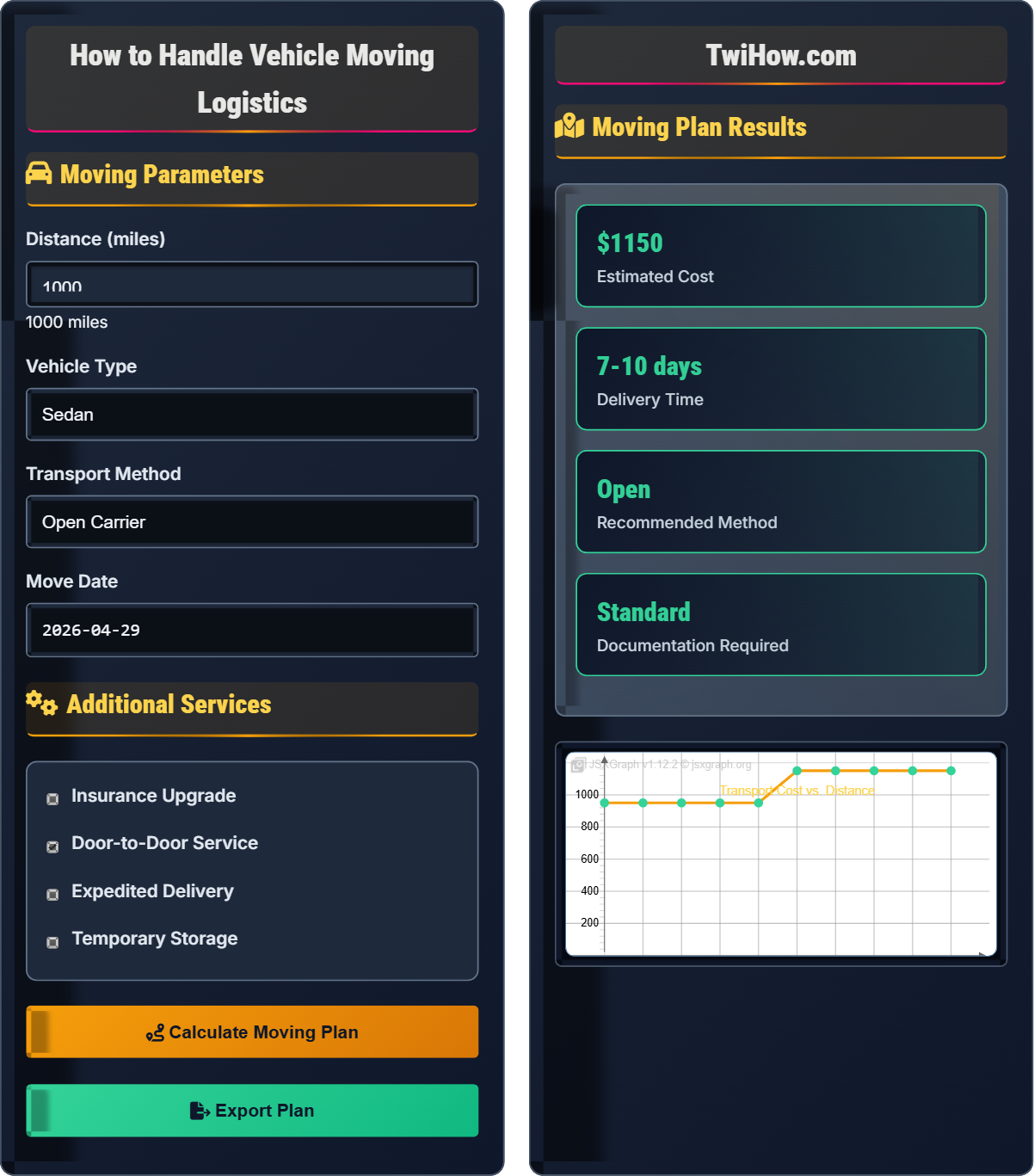
Moving Plan Results
| Service | Cost | Details | Timeline |
|---|---|---|---|
| Base Transport | $1,800 | Open carrier, 1000 miles | 7-10 days |
| Insurance | $150 | Full coverage upgrade | Included |
| Door-to-Door | $200 | Curbside pickup/delivery | Included |
| Expedited | $300 | Priority scheduling | 5-7 days |
| Item | Status | Due Date |
|---|---|---|
| Vehicle inspection | ✓ Complete | Before booking |
| Document preparation | ✓ Complete | Before booking |
| Transport booking | ✓ Complete | 7 days before move |
| Vehicle pickup | Pending | Move day |
| Vehicle delivery | Pending | Move + 7-10 days |
Vehicle Moving Logistics Explained
Vehicle moving logistics involves the comprehensive planning and execution of transporting your vehicle to a new location. This includes selecting appropriate transportation methods, preparing necessary documentation, coordinating schedules, and managing costs while ensuring the safe arrival of your vehicle.
The main components of vehicle moving logistics include:
Where:
- Base Transport: Core transportation fee based on distance and vehicle type
- Additional Services: Door-to-door, expedited delivery, storage
- Insurance: Coverage for damage during transport
- Fees: Administrative and processing fees
Different methods for vehicle transportation:
- Open Carrier: Most economical, exposed to weather and road debris
- Enclosed Carrier: Premium protection, higher cost, suitable for luxury/classic cars
- Drive-Away: Driver transports your vehicle, convenient but limited availability
- Rail Transport: Cost-effective for cross-country moves, longer transit time
- Air Freight: Fastest option, very expensive, primarily for exotic/special vehicles
- Distance: Longer distances typically cost more per mile
- Vehicle Size: Larger vehicles require more space and handling
- Seasonality: Summer months and end-of-month periods cost more
- Urgency: Last-minute bookings command premium pricing
- Route: Popular routes have more competitive pricing
Moving Fundamentals
Transportation methods, documentation requirements, insurance coverage, timing considerations, cost factors.
Total Cost = Base Rate × Distance Factor + Additional Services + Insurance Premium
Where Base Rate depends on vehicle type and transport method.
- Start planning 2-4 weeks before moving date
- Always verify transport company credentials
- Document vehicle condition before transport
Documentation & Requirements
Title, registration, insurance, driver's license, proof of address, customs forms (international).
- Remove personal items from vehicle
- Clean vehicle thoroughly
- Take photos of condition
- Check fuel level (quarter tank recommended)
- Verify insurance coverage
- Vehicles must be operational
- All fluids must be properly contained
- No leaking fluids allowed
- Valid registration required
Vehicle Moving Logistics Quiz
Which transportation method provides the highest level of protection for luxury vehicles during transport?
Enclosed carriers provide maximum protection for luxury vehicles as they completely enclose the vehicle, protecting it from weather, road debris, and environmental hazards. Open carriers expose vehicles to these risks. Drive-away services can work but may not be available for all locations. Rail transport offers good protection but has limited accessibility.
The answer is B) Enclosed Carrier.
Understanding the trade-offs between cost and protection is crucial in vehicle logistics. While open carriers are significantly cheaper, they expose vehicles to potential damage from road debris, weather, and other vehicles. Luxury vehicles often have unique finishes, custom parts, or sentimental value that justify the higher cost of enclosed transport. The choice depends on the vehicle's value, your budget, and risk tolerance.
Open Carrier: Trailer that exposes vehicles to external elements
Enclosed Carrier: Fully covered trailer providing weather and debris protection
Luxury Vehicle: High-end vehicles requiring special handling and protection
• Value of vehicle determines transport method
• Protection level correlates with cost
• Enclosed carriers offer superior protection
• Compare cost difference vs. vehicle value
• Consider insurance coverage for open carriers
• Ask about carrier type when getting quotes
• Choosing cheapest option for valuable vehicles
• Not verifying carrier type before booking
• Underestimating protection needs
What are the essential documents required for vehicle transport and why is each one important?
Essential Documents:
Title: Proves ownership and allows verification of vehicle identity. Required for legal transfer of possession during transport.
Registration: Confirms the vehicle is legally registered and identifies it for authorities during transport.
Insurance: Provides coverage during transport period. May need to extend existing policy or purchase temporary coverage.
Driver's License: Verifies your identity as the owner and provides contact information for transport company.
Proof of Address: Establishes origin and destination addresses for route planning and legal purposes.
Customs Forms: Required for international transport, detailing vehicle specifications and value.
Each document serves as legal verification and protects both parties during the transport process.
Documentation in vehicle transport serves multiple purposes: legal verification of ownership, identification for authorities, insurance claims processing, and route authorization. Missing documents can delay or prevent transport, so preparation is critical. The legal nature of these requirements means that all documents must be current and accurate.
Title: Legal document proving vehicle ownership
Registration: Government record of vehicle licensing
Proof of Address: Document confirming residential location
• All documents must be current
• Copies should be made for records
• Originals may be required for verification
• Scan documents and email to yourself
• Keep copies separate from originals
• Verify requirements with transport company
• Expired registration or insurance
• Missing title or duplicate issues
• Not having required international documents
You need to move your $50,000 luxury SUV from New York to Los Angeles (2,800 miles). You have three options: Open carrier ($2,200), Enclosed carrier ($3,800), or Drive-away service ($1,600). Analyze the costs and benefits of each option considering the vehicle's value and recommend the best choice with justification.
Option Analysis:
Open Carrier ($2,200): Cost-effective but exposes the luxury SUV to road debris, weather, and potential minor damages. Risk: 2-3% chance of minor scratches/cosmetic damage.
Enclosed Carrier ($3,800): Maximum protection for luxury vehicle. Higher cost but preserves value. Risk: Minimal, typically under 0.5% for damage.
Drive-Away ($1,600): Driver handles transport, but availability may be limited for cross-country routes. Risk: Potential wear from driving, driver unfamiliarity with luxury vehicle.
Recommendation: Enclosed carrier despite higher cost. The luxury SUV's value ($50,000) far exceeds the additional cost ($1,600 more than open carrier). Protecting the vehicle's value and condition is paramount for luxury vehicles.
Cost-benefit analysis in vehicle logistics must consider both monetary and non-monetary factors. For high-value vehicles, the cost of potential damage often exceeds the savings from cheaper transport methods. The analysis should factor in the vehicle's value, replacement/repair costs, sentimental value, and the owner's risk tolerance. This demonstrates the importance of matching transport method to vehicle value.
Cost-Benefit Analysis: Evaluation of costs versus benefits of different options
Vehicle Value: Market value and sentimental worth of the vehicle
Risk Assessment: Probability and impact of potential negative outcomes
• Higher vehicle value justifies premium protection
• Cost of damage often exceeds transport savings
• Consider total cost including potential repairs
• Calculate percentage of vehicle value for transport
• Consider depreciation impact of damage
• Factor in peace of mind as intangible benefit
• Choosing transport based on price alone
• Not considering long-term value preservation
• Underestimating repair costs
You're moving from the US to Germany with your classic 1965 Mustang. Describe the special considerations and additional steps required for international vehicle transport compared to domestic moves.
International Transport Considerations:
Documentation: Export certificate, import permits, customs forms, proof of ownership, emissions compliance certificates, homologation documents.
Legal Requirements: Vehicle must meet European safety and emissions standards. May require modifications or exemptions.
Special Handling: Classic vehicles need climate-controlled transport and specialized securing to prevent movement during ocean transit.
Additional Costs: Duties, taxes, customs clearance fees, modification costs, temporary registration in destination country.
Process Timeline: 4-8 weeks minimum for documentation and customs processing, plus transport time.
International moves require significantly more planning and expertise than domestic transport.
International vehicle transport involves navigating multiple jurisdictions with different regulations, standards, and requirements. Each country has specific import rules for vehicles, especially classics that may not meet modern safety or emissions standards. This complexity requires specialized knowledge and often professional assistance. The regulatory burden increases significantly with international moves.
Homologation: Certification that vehicle meets local safety and emissions standards
Export Certificate: Document authorizing vehicle removal from country
Customs Clearance: Process of obtaining permission to import goods
• Research destination country requirements
• Start documentation process early
• Consider professional assistance for complex moves
• Contact destination country embassy for requirements
• Use specialized international transport companies
• Budget extra time for customs processing
• Not researching import requirements
• Underestimating documentation complexity
• Failing to plan for modification requirements
What is the recommended lead time for booking vehicle transport to ensure optimal rates and availability?
The recommended lead time for booking vehicle transport is 2-4 weeks before the move. This timeframe allows for adequate planning, comparison shopping, and scheduling flexibility. Booking too early (months ahead) may result in rate changes, while booking too late (days ahead) limits options and increases costs. The 2-4 week window provides optimal balance of availability, pricing, and planning time.
The answer is B) 2-4 weeks before move.
Timing in vehicle logistics follows supply and demand principles. Peak periods (summer months, month-end, holiday weekends) have higher demand and prices. The 2-4 week window allows for adequate preparation while avoiding last-minute premium pricing. It also provides time to research companies, compare quotes, and handle documentation. This timing strategy maximizes options while controlling costs.
Lead Time: Period between booking and actual service
Peak Season: High-demand periods with increased rates
Scheduling Flexibility: Availability of preferred dates and routes
• Plan 2-4 weeks ahead for optimal results
• Avoid peak moving seasons when possible
• Allow extra time for international moves
• Book during off-peak times for better rates
• Have flexible dates if possible
• Start planning earlier for luxury/classic vehicles
• Booking too late limiting options
• Not accounting for documentation time
• Ignoring seasonal rate variations
FAQ
Q: Should I ship my car or drive it myself when moving long distance?
A: The decision depends on several factors:
Ship if: Distance is over 1,000 miles, vehicle is valuable/classic, you're uncomfortable with long drives, or you're moving with family/pets.
Drive if: Distance is reasonable (under 800 miles), vehicle is reliable, you want to bring personal items in the car, or cost is a major concern.
For distances over 1,500 miles, shipping is typically more cost-effective when factoring in fuel, hotels, meals, and wear on the vehicle. Shipping also reduces driver fatigue and stress during an already stressful move.
Q: What insurance considerations should I keep in mind when shipping my vehicle?
A: Insurance is critical when shipping a vehicle:
Carrier Liability: Most transport companies carry basic cargo insurance, but coverage may be limited (typically $0.50-$1.00 per pound). For a 3,000-pound vehicle, this equals only $1,500-$3,000 coverage.
Comprehensive Coverage: Consider purchasing additional coverage that matches your vehicle's actual cash value.
Your Auto Policy: Many policies don't cover transport damage. Check if your policy extends during shipping.
Documentation: Take detailed photos before shipping and document any pre-existing damage. File claims immediately upon delivery if damage is found.
Always verify the carrier's insurance requirements and consider upgrading coverage for valuable vehicles.