Best Beaches: Complete Guide
Top destinations • Rankings • Travel insights
Beach Travel Overview:
Find Best BeachesThe world's most spectacular beaches offer pristine sands, crystal-clear waters, and breathtaking natural beauty. From secluded tropical paradises to vibrant coastal destinations, beaches provide the perfect combination of relaxation, adventure, and natural splendor. Each beach destination offers unique experiences, from water sports and marine life to cultural attractions and local cuisine.
Key characteristics of world-class beaches include:
- Water Quality: Clean, clear waters suitable for swimming and activities
- Accessibility: Easy to reach and navigate for visitors
- Facilities: Amenities, restaurants, and recreational options
- Safety: Lifeguards, safety measures, and secure environment
- Natural Beauty: Stunning landscapes and scenic views
Choosing the right beach depends on your interests, budget, travel style, and desired activities. This guide helps you discover the world's most remarkable coastal destinations.
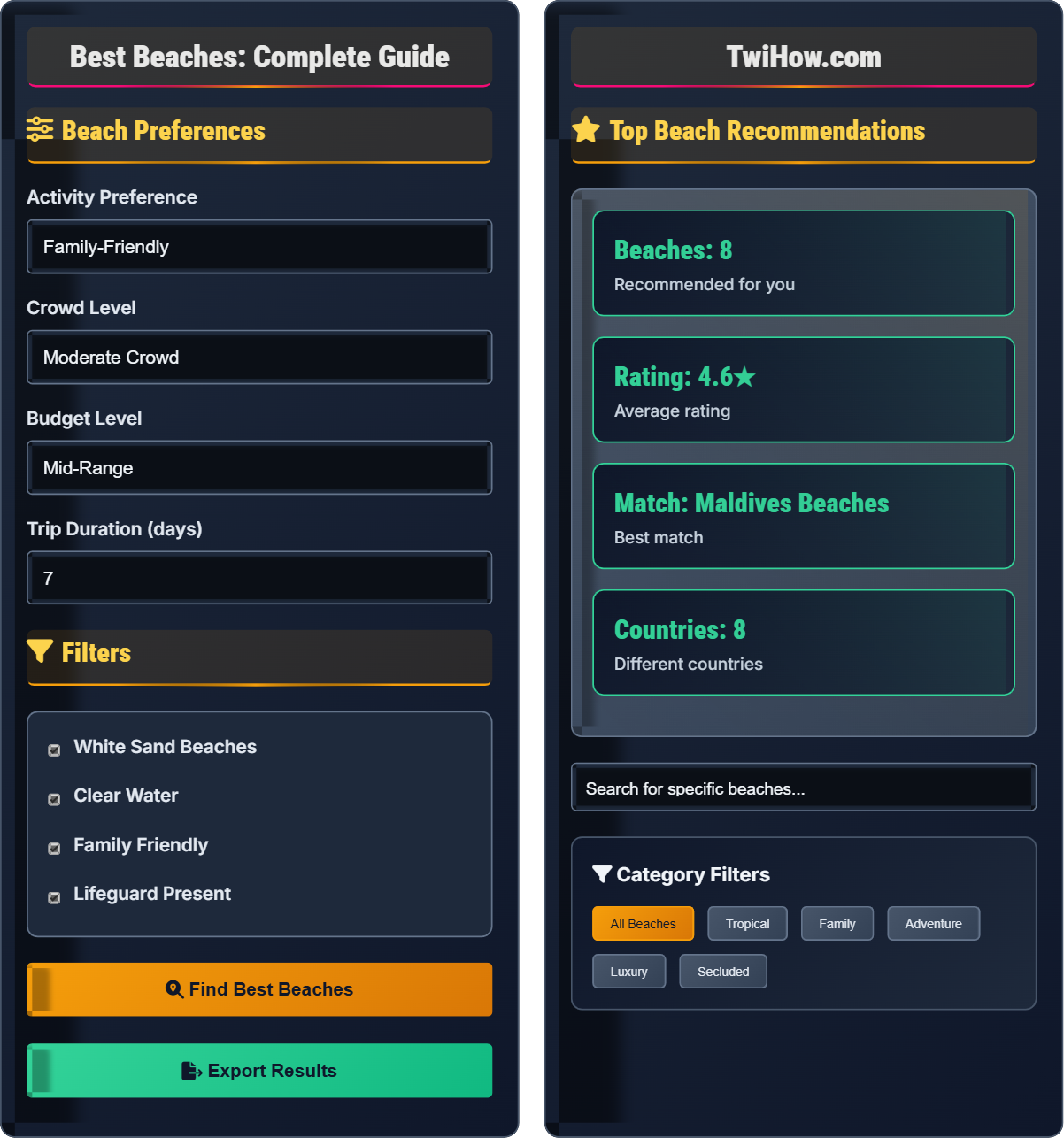
Beach Preferences
Filters
Top Beach Recommendations
Category Filters
| Rank | Beach | Country | Rating | Popularity | Best For |
|---|---|---|---|---|---|
| 1 | Maldives Beaches | Maldives | 4.9★ | 98% | Relaxation, Romance |
| 2 | Whitehaven Beach | Australia | 4.8★ | 95% | Photography, Nature |
| 3 | Baía do Sancho | Brazil | 4.7★ | 92% | Snorkeling, Adventure |
| 4 | Grace Bay Beach | Turks & Caicos | 4.7★ | 90% | Luxury, Water Sports |
| 5 | Anse Source d'Argent | Seychelles | 4.6★ | 88% | Photography, Romance |
Understanding Beach Tourism
The world's best beaches combine multiple factors that create memorable experiences for visitors. These include natural beauty, water quality, accessibility, safety, and overall visitor satisfaction.
Key factors that contribute to a beach's appeal:
- Sand Quality: Soft, clean sand that's comfortable for sunbathing
- Water Clarity: Crystal-clear waters suitable for swimming and snorkeling
- Facilities: Restaurants, restrooms, and recreational equipment
- Safety: Lifeguards, safety equipment, and secure environment
- Accessibility: Easy to reach and navigate for visitors
Different regions offer unique beach experiences based on their geography, climate, and development:
Tropical Beaches: White sand, turquoise waters, palm trees, and year-round warmth.
Temperate Beaches: Rocky shores, cooler waters, seasonal beauty, and coastal towns.
Wilderness Beaches: Pristine nature, wildlife, and minimal development.
Urban Beaches: City access, amenities, and vibrant beach culture.
The best time to visit beaches varies by location and desired experience:
Summer: Peak tourist season, warm weather, maximum activities.
Spring/Fall: Mild weather, fewer crowds, pleasant conditions.
Winter: Off-season discounts, but some activities may be limited.
Shoulder Season: Good balance of weather and crowds.
Beach destinations vary significantly based on location and lifestyle:
Budget-Friendly: Southeast Asia, Central America offer excellent value.
Mid-Range: Caribbean, Mediterranean provide good balance of quality and cost.
Premium: Hawaii, California, Australia offer luxury experiences.
Money-Saving Tips: Off-season travel, local accommodations, and self-catering.
Choose beaches that match your preferred travel style and interests:
Relaxation Seekers: Quiet beaches with lounging opportunities.
Adventure Enthusiasts: Beaches with water sports and activities.
Family Travelers: Safe, shallow waters and family-friendly amenities.
Photography Lovers: Scenic beaches with unique landscapes.
Beach Travel Categories
Tropical paradises, family-friendly beaches, adventure destinations, luxury resorts, and secluded spots.
Water quality, sand condition, safety measures, accessibility, and overall experience quality.
- Check water quality and safety conditions
- Research local weather patterns
- Consider seasonal variations
- Respect local communities and environment
Beach Travel Planning
Research, booking, transportation, accommodation, and activity planning.
- Research destination and beach conditions
- Plan transportation and accommodation
- Create flexible itinerary
- Prepare for water activities
- Allow flexibility in your schedule
- Balance beach time with other activities
- Prepare for sun protection
- Respect local customs and regulations
Beach Travel Essentials
Bacterial Levels: Below EPA safety standards
Chemical Content: Safe pH levels (7.5-8.4)
Temperature: Comfortable range (75-85°F)
Flag System: Red = Dangerous, Yellow = Caution, Green = Safe
Currents: If caught in rip current, swim parallel to shore
Equipment: Use proper flotation devices for water activities
Sample 7-Day Maldives Itinerary
Beach Travel Knowledge Quiz
What is the most important safety practice when swimming at an ocean beach?
Only swimming in guarded areas with lifeguards is the most important safety practice. Professional lifeguards are trained to identify dangerous conditions, monitor swimmers, and respond to emergencies. They can spot rip currents, dangerous waves, and other hazards that inexperienced swimmers might miss. Swimming in unguarded areas significantly increases the risk of accidents and reduces the chances of receiving immediate help in an emergency.
The answer is B) Only swim in guarded areas with lifeguards.
Beach safety relies on professional supervision and awareness of ocean conditions. Lifeguards provide essential services including hazard identification, emergency response, and safety education. Their presence dramatically improves survival rates in water emergencies and helps prevent accidents through active monitoring and warning systems.
Lifeguard: Trained professional who monitors water safety
Rip Current: Strong ocean current pulling swimmers away from shore
Guarded Area: Designated safe swimming zone with supervision
• Always swim in lifeguarded areas
• Obey flag warnings and signs
• Never swim alone
• Look for lifeguard towers
• Check daily safety flags
• Learn to identify rip currents
• Swimming in unguarded areas
• Ignoring warning flags
• Swimming alone
Explain the factors to consider when selecting a beach for different types of travelers (family, solo, couples, adventure seekers) and how these factors influence the beach experience.
Family Travelers: Prioritize shallow, calm waters for children's safety, beach amenities like restrooms and restaurants, lifeguard presence, and family-friendly activities. Look for beaches with gentle slopes and soft sand.
Solo Travelers: Consider beaches with social opportunities, good infrastructure for independent travel, and activities that can be enjoyed alone. Look for beaches with cafes, reading spots, and cultural attractions nearby.
Couples: Seek secluded or romantic beaches with privacy, scenic beauty, and sunset viewing opportunities. Consider beaches with upscale amenities and dining options.
Adventure Seekers: Focus on beaches with water sports opportunities, unique geological features, and challenging conditions for activities like surfing, diving, or rock climbing.
General Factors: Water quality, accessibility, safety measures, facilities, and local regulations all impact the beach experience regardless of travel style.
Beach selection is highly personalized based on travel objectives and safety considerations. Different traveler types have distinct priorities that significantly influence their beach experience. Understanding these preferences helps match travelers with beaches that maximize enjoyment and safety while meeting specific needs.
Travel Style: Individual preferences and approaches to travel
Beach Amenities: Facilities and services available at beach
Shallow Waters: Calm, safe areas suitable for children
• Match beach to travel style
• Prioritize safety considerations
• Consider group needs
• Read reviews from similar travelers
• Check water conditions
• Verify facility availability
• Not considering safety for families
• Ignoring group preferences
• Forgetting amenity needs
Sarah is planning a 10-day beach vacation with her family of 4 (including 2 young children). She wants a family-friendly destination with safe swimming, water activities, and nearby amenities. Recommend a suitable beach destination and create a 3-day beach activity plan that accommodates both children and adults.
Recommended Destination: Waikiki Beach, Hawaii
• Family-friendly with gentle slopes and calm waters
• Excellent facilities and amenities nearby
• Lifeguard presence and safety measures
• Cultural attractions and activities for all ages
3-Day Beach Activity Plan:
Day 1: Beach Exploration
• Morning: Shallow water play and sand castle building
• Afternoon: Beach picnic and rest under umbrellas
• Evening: Sunset walk along shoreline
Day 2: Water Activities
• Morning: Gentle snorkeling in protected areas
• Afternoon: Beach games and volleyball
• Evening: Dinner at beachside restaurant
Day 3: Adventure & Relaxation
• Morning: Surfing lessons for adults, paddleboarding for kids
• Afternoon: Beach relaxation and reading
• Evening: Beach bonfire and stargazing
This plan balances active and passive activities while ensuring safety and enjoyment for all family members.
Family beach planning requires balancing different age groups' needs while maintaining safety and enjoyment. The key is variety in activities, safety prioritization, and flexibility in scheduling. Age-appropriate activities ensure engagement while respecting different energy levels and safety requirements.
Family-Friendly: Suitable for all age groups with safety measures
Age-Appropriate: Activities suitable for specific age ranges
Activity Balance: Mix of active and passive pursuits
• Prioritize child safety
• Plan age-appropriate activities
• Include rest periods
• Pack toys for children
• Schedule rest time
• Bring snacks and drinks
• Planning too many activities
• Not considering nap times
• Ignoring safety needs
You're developing a sustainable beach travel guide. Identify the key environmental considerations for beach visitors and explain how travelers can minimize their impact while enjoying beach destinations.
Key Environmental Considerations:
Marine Life Protection: Avoid touching coral reefs, disturbing sea turtles, or collecting shells that serve as homes for marine creatures.
Water Pollution: Use reef-safe sunscreen to prevent chemical damage to marine ecosystems, avoid littering, and dispose of waste properly.
Coastal Erosion: Stay on designated paths to prevent damage to dune vegetation that protects against erosion.
Wildlife Disturbance: Maintain distance from nesting birds and other wildlife, especially during breeding seasons.
Sustainable Practices:
• Use reusable water bottles and bags
• Choose eco-friendly accommodations
• Participate in beach cleanups
• Support local conservation efforts
• Use biodegradable soaps and shampoos
• Respect protected areas and regulations
Travelers should follow the "Leave No Trace" principle by minimizing impact and preserving natural beauty for future generations.
Sustainable beach travel requires awareness of environmental impacts and responsible behavior. Beach ecosystems are fragile and can be easily damaged by human activities. Travelers have a responsibility to preserve these natural treasures while enjoying them, ensuring future generations can experience the same beauty.
Sustainable Tourism: Travel that minimizes environmental impact
Reef-Safe Sunscreen: Products without harmful chemicals
Leave No Trace: Principle of minimizing environmental impact
• Use reef-safe products
• Don't touch marine life
• Dispose of waste properly
• Pack reusable items
• Participate in conservation
• Choose eco-friendly options
• Using harmful sunscreen
• Disturbing wildlife
• Littering on beaches
Which factor is most important for determining beach water quality and safety?
Bacterial contamination levels are most important for determining beach water quality and safety. High levels of bacteria like E. coli and Enterococcus indicate pollution that can cause serious health issues including gastrointestinal illness, skin infections, and respiratory problems. Water temperature, salt concentration, and wave height are secondary factors that affect comfort and activity suitability but don't directly impact health safety.
The answer is B) Bacterial contamination levels.
Water quality assessment prioritizes health risks over comfort factors. Bacterial contamination indicates the presence of harmful pathogens that can cause immediate health problems. While other factors affect the beach experience, bacterial safety is fundamental to preventing illness and ensuring a safe swimming environment.
Bacterial Contamination: Presence of harmful microorganisms in water
E. coli: Indicator bacteria for water pollutionPathogens: Disease-causing microorganisms
• Check water quality reports
• Look for contamination warnings
• Avoid swimming after heavy rains
• Research local water quality
• Check for recent contamination
• Observe water clarity
• Not checking water quality
• Swimming after storms
• Ignoring contamination warnings
Beach Travel FAQ
Q: What's the difference between various beach types and which would be best for a first-time beach vacation?
A: Beach types vary significantly:
Tropical Beaches: White sand, turquoise water, palm trees, warm climate year-round.
Temperate Beaches: Rocky or pebble shores, cooler waters, seasonal appeal.
Urban Beaches: City access, amenities, but potentially crowded.
Wilderness Beaches: Pristine nature, limited facilities, solitude.
For First-Time Travelers:
• Choose beaches with good facilities and lifeguards
• Select destinations with easy access and clear safety measures
• Consider family-friendly beaches with shallow, calm waters
• Look for beaches with nearby restaurants and amenities
• Avoid remote beaches for first experiences
Popular first-time destinations include Waikiki, Cancun, or Gold Coast beaches.
Q: What beach activities are safe and appropriate for different skill levels, and how can I ensure safety while trying new water sports?
A: Beach activities by skill level:
Beginner:
• Snorkeling in shallow, calm waters
• Body surfing in gentle waves
• Paddleboarding in protected areas
• Kayaking in calm conditions
Intermediate:
• Surfing lessons with instructor
• Scuba diving certification courses
• Jet skiing with proper training
• Windsurfing in moderate conditions
Advanced:
• Deep water diving
• Big wave surfing
• Kiteboarding in strong winds
• Free diving
Safety Tips:
• Always use proper equipment
• Take lessons from certified instructors
• Never try activities alone
• Check weather and water conditions
• Use appropriate safety gear
• Start with professional guidance before advancing
Progress gradually and respect your skill limits.