Best Food Destinations: Complete Guide
Top destinations • Rankings • Travel insights
Food Travel Overview:
Find Best Food DestinationsThe world's best food destinations offer extraordinary culinary experiences that combine local ingredients, traditional techniques, and cultural heritage. From street food to fine dining, these destinations showcase the unique flavors, cooking styles, and food traditions that define each region. Food tourism provides an authentic way to experience different cultures while enjoying memorable meals and discovering new tastes.
Key characteristics of world-class food destinations include:
- Culinary Heritage: Rich traditions and authentic preparation methods
- Ingredient Quality: Fresh, local, and seasonal ingredients
- Accessibility: Well-developed food tourism infrastructure
- Food Safety: Proper hygiene and health standards
- Cost Considerations: Variety of price points and dining options
Choosing the right food destination depends on your taste preferences, budget, cultural interests, and desired dining experiences. This guide helps you discover the world's most remarkable culinary destinations.
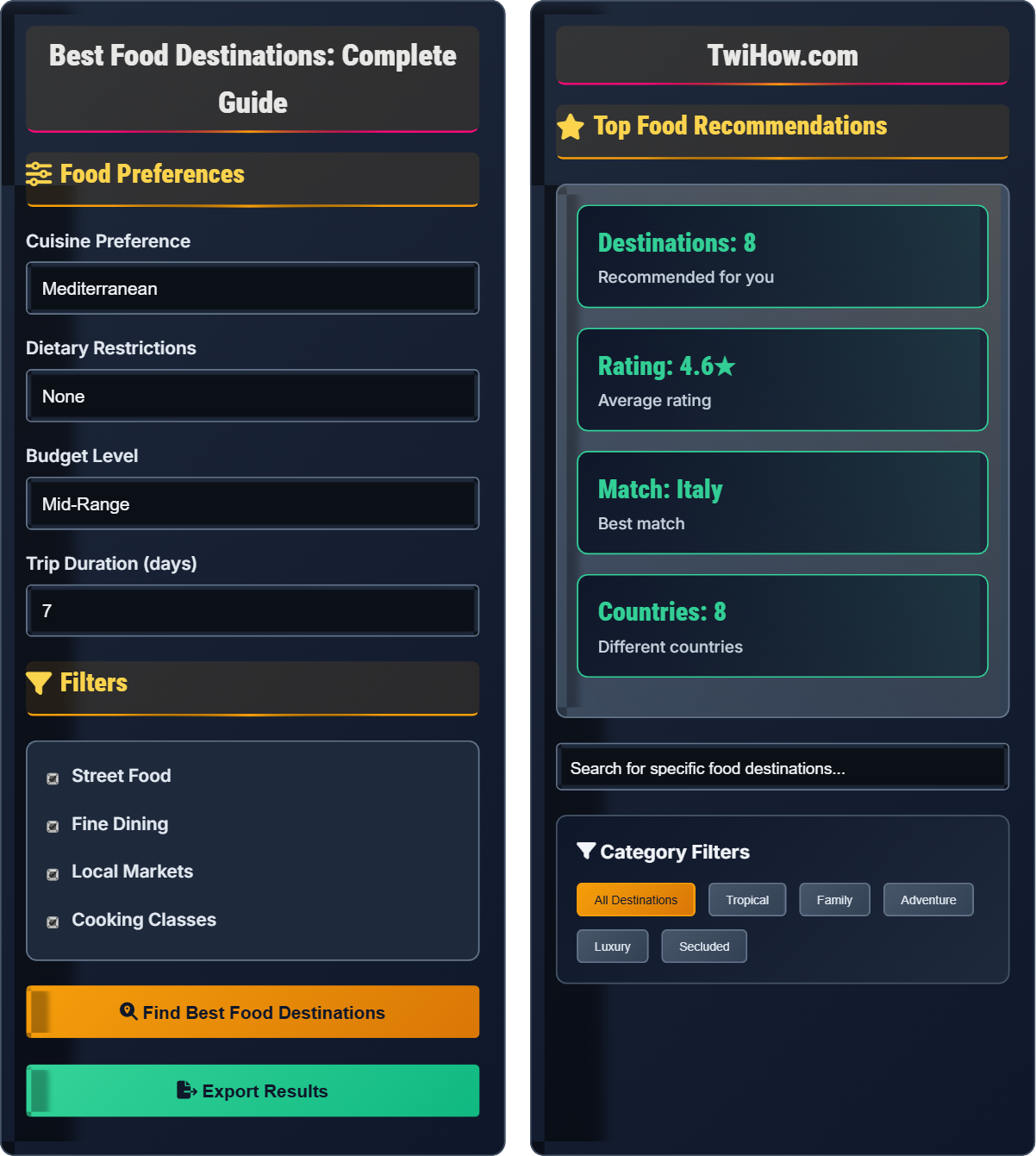
Food Preferences
Filters
Top Food Recommendations
Category Filters
| Rank | Destination | Country | Rating | Popularity | Best For |
|---|---|---|---|---|---|
| 1 | Italy | Italy | 4.8★ | 98% | Pasta, Pizza, Wine |
| 2 | Japan | Japan | 4.7★ | 95% | Sushi, Ramen, Seafood |
| 3 | Thailand | Thailand | 4.7★ | 92% | Street Food, Curries, Spices |
| 4 | France | France | 4.6★ | 90% | Cheese, Wine, Pastries |
| 5 | Mexico | Mexico | 4.5★ | 88% | Tacos, Mole, Mezcal |
Understanding Food Tourism
The world's best food destinations combine multiple factors that create memorable culinary experiences for visitors. These include authentic ingredients, traditional preparation methods, cultural significance, and overall visitor satisfaction.
Key factors that contribute to a food destination's appeal:
- Culinary Heritage: Rich traditions and authentic preparation methods
- Ingredient Quality: Fresh, local, and seasonal ingredients
- Accessibility: Well-developed food tourism infrastructure
- Food Safety: Proper hygiene and health standards
- Cost Considerations: Variety of price points and dining options
Different regions offer unique food experiences based on their geography, climate, and cultural development:
Asian Cuisine: Rich flavors, diverse spices, fresh ingredients, and complex preparation methods.
European Cuisine: Traditional techniques, artisanal products, and wine culture.
American Cuisine: Fusion styles, indigenous ingredients, and innovative approaches.
Mediterranean Cuisine: Healthy ingredients, olive oil, and fresh produce.
The best time to visit food destinations varies by location and desired experience:
Harvest Season: Peak ingredient quality and availability.
Special Events: Food festivals, wine harvests, and cultural celebrations.
Weather Conditions: Comfortable dining and outdoor market conditions.
Price Considerations: Off-season discounts and availability.
Food destinations vary significantly based on location and lifestyle:
Budget-Friendly: Local street food, markets, and casual dining.
Mid-Range: Good restaurants, cooking classes, and food tours.
Premium: Fine dining, wine tastings, and gourmet experiences.
Money-Saving Tips: Lunch specials, local markets, and self-catering.
Choose destinations that match your preferred travel style and interests:
Food Enthusiasts: Destinations with diverse culinary offerings.
Cultural Explorers: Places with rich food traditions and history.
Adventure Seekers: Unique ingredients and exotic flavors.
Family Travelers: Kid-friendly options and familiar flavors.
Food Destination Categories
Street food, fine dining, local markets, cooking classes, food festivals, and cultural experiences.
Culinary heritage, ingredient quality, accessibility, safety, and overall experience quality.
- Try local specialties
- Research food safety standards
- Consider dietary restrictions
- Respect local customs and etiquette
Food Travel Planning
Research, booking, transportation, accommodation, and cultural preparation.
- Research destination and cuisine
- Plan transportation and accommodation
- Create flexible itinerary
- Prepare for cultural differences
- Allow flexibility in your schedule
- Balance expensive and affordable options
- Learn basic local phrases
- Respect local customs and regulations
Food Travel Essentials
Street Food: Select vendors with high turnover and proper food handling
Water: Drink bottled water in most developing countries
Raw Foods: Exercise caution with raw seafood and meats
Local Customs: Follow local food etiquette and recommendations
Sample 7-Day Italian Food Itinerary
Food Travel Knowledge Quiz
What is the most important safety practice when trying street food in a foreign country?
Eating only cooked foods that are served hot is the most important safety practice for street food. Heat kills most harmful bacteria and parasites that can cause foodborne illness. This is particularly important in developing countries where food safety standards may vary. Hot, freshly cooked food reduces the risk of contamination and illness. While price and alcohol consumption are not reliable indicators of food safety, proper cooking and serving temperature are fundamental food safety principles.
The answer is A) Eat only cooked foods that are served hot.
Food safety relies on temperature control to eliminate harmful microorganisms. The "danger zone" for food safety is between 40-140°F (4-60°C) where bacteria multiply rapidly. Cooking food to proper temperatures and serving hot maintains food safety. This principle applies universally regardless of location, making it the most reliable safety measure when consuming street food.
Danger Zone: Temperature range where bacteria multiply rapidly
Food Safety: Practices to prevent foodborne illness
Contamination: Introduction of harmful substances to food
• Eat hot, freshly cooked foods
• Choose vendors with high turnover
• Avoid raw or undercooked items
• Observe food preparation
• Choose busy stalls
• Check for cleanliness
• Eating cold cooked foods
• Not observing preparation
• Ignoring vendor hygiene
Explain the importance of cultural food etiquette when traveling and provide specific examples of how to behave respectfully in different food cultures.
Importance of Cultural Food Etiquette: Food etiquette demonstrates respect for local customs and helps avoid unintentional offense. It enhances the travel experience by facilitating better interactions with locals and deeper cultural understanding.
Examples of Cultural Etiquette:
Japanese: Slurp noodles loudly (shows appreciation), don't stick chopsticks upright in rice, bow when receiving food.
Indian: Eat with hands only on the right side, remove shoes when entering homes, avoid beef in Hindu areas.
French: Don't eat bread directly from the plate, finish everything on your plate, don't start before the host.
Thai: Share dishes family-style, avoid pointing feet at food, don't waste food.
General Tips:
• Observe and follow local behavior
• Learn basic dining phrases
• Respect dietary restrictions
• Appreciate local customs
• Ask when unsure
Understanding and respecting food etiquette shows cultural sensitivity and often leads to warmer welcomes and better experiences.
Food etiquette reflects deep cultural values and social norms. Understanding these customs shows respect and helps travelers integrate more successfully into local communities. The key is observing and mimicking local behavior while showing genuine interest in cultural practices.
Food Etiquette: Cultural rules governing food consumption
Cultural Sensitivity: Awareness and respect for different customs
Social Norms: Accepted behaviors within a culture
• Observe local customs
• Respect dietary laws
• Follow meal timing
• Research before traveling
• Ask for guidance
• Practice basic etiquette
• Assuming universal customs
• Not researching local norms
• Ignoring dietary restrictions
Sarah is planning a 10-day food-focused trip to Thailand with a budget of $1,500. She wants to experience both street food and fine dining, take cooking classes, and visit local markets. Create a daily food budget plan that balances her interests while staying within budget.
Daily Budget Plan:
Street Food & Local Meals: $15/day × 10 days = $150
Fine Dining (2-3 special meals): $40 × 3 = $120
Cooking Class (1-2 sessions): $60 × 2 = $120
Market Shopping & Snacks: $10/day × 10 days = $100
Drinks & Beverages: $5/day × 10 days = $50
Total Estimated: $540
Remaining Budget: $960 for additional experiences, souvenirs, and contingencies.
Weekly Breakdown:
• Week 1: Bangkok markets, street food tours, cooking classes
• Week 2: Chiang Mai food scene, northern specialties, farm visits
This plan provides variety while allowing flexibility for spontaneous experiences and unexpected opportunities.
Food budgeting requires balancing different experience types with cost considerations. The key is allocating funds to high-impact experiences while maintaining flexibility for spontaneous opportunities. Thailand offers excellent value for money, allowing for both affordable street food and quality dining experiences within reasonable budgets.
Food Budgeting: Allocating funds for food experiences
Value for Money: Quality of experience relative to cost
High-Impact Experiences: Memorable and meaningful activities
• Plan for variety of experiences
• Leave contingency funds
• Balance expensive and affordable options
• Research local food costs
• Plan special meals in advance
• Budget for unexpected opportunities
• Overspending on expensive meals
• Not budgeting for cooking classes
• Ignoring beverage costs
You're developing a food travel app that helps travelers with dietary restrictions find suitable restaurants and dishes. Identify the key features needed for different dietary needs and explain how the app should accommodate vegetarians, vegans, gluten-free, and halal requirements.
Key App Features:
Vegetarian/Vegan: Ingredient scanning, plant-based restaurant identification, protein alternatives, and nutritional information.
Gluten-Free: Ingredient analysis, cross-contamination warnings, dedicated gluten-free establishments, and safe ingredient lists.
Halal: Halal certification verification, prayer time notifications, and halal restaurant databases.
Features for All Diets:
• Menu translation with allergen information
• Photo-based ingredient identification
• Restaurant certification verification
• Local language phrase translation
• Emergency medical information
• Community reviews from fellow dietary travelers
• Real-time availability checking
The app should provide comprehensive information about ingredients, preparation methods, and restaurant practices to ensure safe dining experiences.
Food safety for dietary restrictions requires detailed ingredient knowledge and preparation awareness. The app must bridge language barriers and cultural differences in food preparation while providing reliable information about food safety for specific dietary needs. Trust and accuracy are paramount for users with serious dietary restrictions.
Dietary Restrictions: Medical, religious, or lifestyle food limitations
Cross-Contamination: Transfer of restricted ingredients during preparation
Certification: Official verification of dietary compliance
• Verify information accuracy
• Include preparation methods
• Provide emergency information
• Use photo translation
• Connect with local communities
• Verify certifications
• Not verifying preparation methods
• Ignoring cross-contamination
• Assuming all local terms are accurate
Which factor is most important for experiencing authentic local cuisine while traveling?
Dining where locals eat regularly is the most important factor for authentic cuisine experiences. Local restaurants reflect genuine culinary traditions, use authentic ingredients, and prepare dishes as intended by tradition. These establishments often offer better value and more genuine cultural interactions. Tourist-oriented restaurants typically modify dishes for international palates, while local spots maintain traditional flavors and preparation methods.
The answer is B) Dining where locals eat regularly.
Authenticity comes from experiencing food as it's traditionally prepared and consumed by local communities. This requires seeking out establishments that serve local populations rather than tourists. The key is finding restaurants with high local patronage, traditional preparation methods, and authentic ingredients.
Authentic Cuisine: Traditional preparation methods and ingredients
Local Patronage: Regular customers from the local community
Cultural Integration: Understanding food within cultural context
• Seek local recommendations
• Look for high local patronage
• Try traditional preparation methods
• Ask locals for recommendations
• Look for crowded local restaurants
• Try regional specialties
• Only dining in tourist areas
• Avoiding unfamiliar foods
• Not asking for recommendations
Food Travel FAQ
Q: What's the difference between various food destinations and which would be best for a first-time food travel experience?
A: Food destinations vary significantly:
Street Food Destinations: Thailand, Vietnam, Mexico offer affordable, diverse options with rich flavors.
Fine Dining Destinations: France, Italy, Japan provide sophisticated culinary experiences.
Market-Based Destinations: Morocco, Turkey, India offer vibrant food markets and cultural experiences.
Regional Specialties: Peru, Spain, India focus on unique regional dishes and techniques.
For First-Time Travelers:
• Choose destinations with good food safety standards
• Select areas with English-speaking staff
• Look for destinations with diverse options
• Consider places with food tours for beginners
• Avoid destinations with extreme spice levels initially
Popular first-time destinations include Italy, Thailand, or Mexico.
Q: What food experiences are safe and appropriate for adventurous eaters, and how can I try new foods while ensuring safety?
A: Adventurous food experiences by safety level:
Safe Adventures:
• Exotic fruits and vegetables
• Spicy dishes with known ingredients
• Cooked exotic meats and seafood
• Traditional fermented foods
Caution Required:
• Raw seafood in questionable locations
• Street food in areas with poor hygiene
• Unknown plant ingredients
• Unpasteurized dairy products
Safety Tips:
• Ask for recommendations from locals
• Observe food preparation
• Start with small portions
• Choose reputable establishments
• Carry anti-diarrheal medication
• Research local food safety standards
Start with adventurous but safe options before trying more exotic foods.