How to Plan a Trip: Complete Guide
Step-by-step planning • Interactive tools • Travel tips
Trip Planning Overview:
Start PlanningTrip planning is the foundation of successful travel experiences. It involves researching destinations, setting budgets, creating itineraries, and preparing for potential challenges. Effective trip planning reduces stress, maximizes enjoyment, and ensures safety during your journey.
Essential planning steps include:
- Destination Research: Understanding culture, weather, and attractions
- Budget Planning: Estimating and managing travel costs
- Documentation: Passport, visas, insurance, and permits
- Logistics: Transportation, accommodation, and activities
- Preparation: Packing, health considerations, and emergency plans
Modern trip planning combines traditional research with digital tools, apps, and online resources to streamline the process and enhance travel experiences.
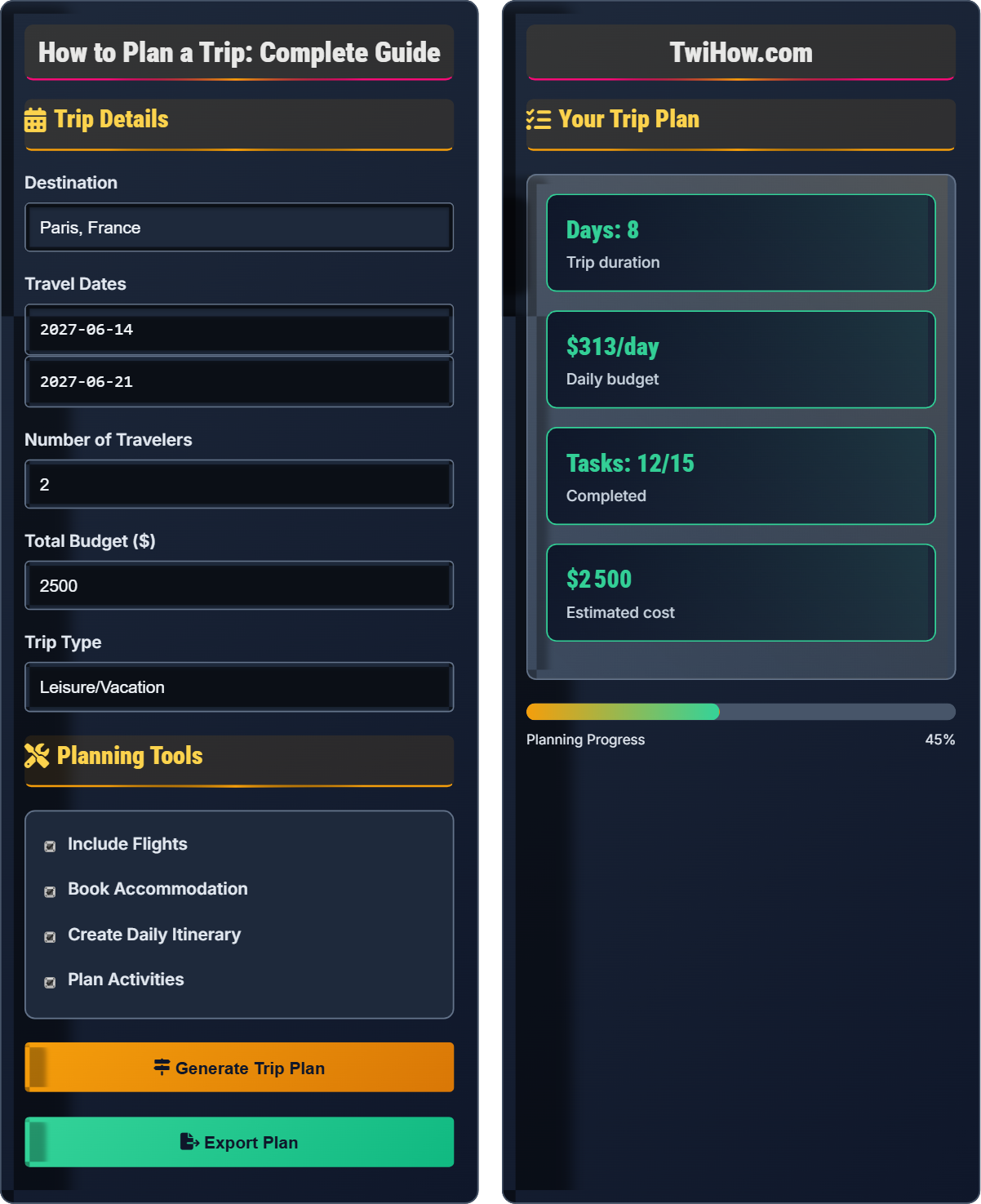
Trip Details
Planning Tools
Your Trip Plan
Pre-Trip Checklist
Risk Assessment
Step-by-Step Trip Planning Process
Research is the foundation of effective trip planning. Start by identifying your interests, budget constraints, and travel goals. Consider factors like climate, culture, safety, and accessibility. Use travel blogs, forums, and official tourism websites to gather information.
Key research areas:
- Climate and weather patterns
- Local customs and etiquette
- Safety and security concerns
- Language barriers and communication
- Transportation options
Create a realistic budget that accounts for all trip expenses. Break down costs into categories and add a contingency fund for unexpected expenses. Consider exchange rates and payment methods available at your destination.
Budget categories to consider:
- Transportation (flights, ground transport)
- Accommodation
- Food and dining
- Activities and attractions
- Travel insurance and emergencies
Ensure all necessary documentation is in order well before departure. This includes passports, visas, travel insurance, and any required vaccinations. Create digital and physical copies of important documents.
Essential documents:
- Valid passport (with 6+ months validity)
- Required visas or entry permits
- Travel insurance policy
- Vaccination certificates
- Emergency contact information
Book flights, accommodation, and essential activities in advance. Consider flexibility for last-minute changes. Research transportation options between destinations and within cities.
Booking priorities:
- Flights (book 3-4 months ahead)
- Accommodation (book 2-3 months ahead)
- Popular attractions and tours
- Car rentals or other transportation
- Restaurant reservations
Complete final preparations including packing, informing banks of travel plans, sharing itineraries with trusted contacts, and preparing for departure day logistics. Test important apps and download offline maps.
Final checks:
- Packing appropriate clothing
- Bank travel notifications
- Sharing itinerary with family
- Downloading offline maps
- Emergency contact information
Trip Planning Essentials
Research, budgeting, documentation, booking, preparation, and contingency planning.
Start planning 3-6 months ahead for international travel, 1-3 months for domestic trips. Critical bookings should be made 2-4 weeks before departure.
- Always have travel insurance
- Keep digital and physical backups
- Research local laws and customs
- Plan for flexibility and changes
Travel Planning Strategies
Use multiple sources including official tourism boards, travel forums, social media, and personal recommendations.
- Estimate total trip cost
- Break down by expense category
- Add 10-20% contingency
- Track spending during trip
- Start planning early
- Research visa requirements
- Check vaccination needs
- Inform financial institutions
Trip Planning Knowledge Quiz
For an international trip to Europe, how far in advance should you ideally start planning and booking your flights?
For international trips, especially to popular destinations like Europe, it's recommended to start planning 3-6 months in advance. This allows time to research destinations, compare prices, book flights at better rates, and ensure availability for popular accommodations and attractions. Booking 3-6 months ahead typically offers the best balance between availability and pricing.
The answer is C) 3-6 months before departure.
Proper timing is crucial for effective trip planning. Starting too late may result in limited options and higher prices, while starting too early might mean missing out on newly released deals or schedule changes. The 3-6 month timeline provides adequate time for research, booking, and preparation while avoiding the stress of last-minute arrangements.
International Travel: Trips that cross national borders requiring passports and potentially visas
Peak Season: Periods when destinations are most popular, often with higher prices
Advance Booking: Reserving travel services before the intended travel date
• Start planning international trips 3-6 months ahead
• Book domestic trips 1-3 months ahead
• Allow extra time for visa applications
• Set calendar reminders for booking deadlines
• Sign up for price alerts on booking sites
• Check airline schedules before booking
• Waiting until the last minute to book
• Not accounting for visa processing time
• Missing peak season pricing increases
Explain the process of creating a comprehensive travel budget, including all essential categories and strategies for managing expenses during the trip. How would you adjust the budget for different types of travel (budget vs. luxury)?
Comprehensive Budget Creation:
Pre-Trip Expenses: Flights, travel insurance, visas, vaccinations, gear purchases
On-Trip Expenses: Accommodation, meals, transportation, activities, shopping, emergencies
Budget Categories:
• Transportation (flights, ground transport, fuel)
• Accommodation (hotels, hostels, vacation rentals)
• Food & Dining (groceries, restaurants, drinks)
• Activities & Entertainment (attractions, tours, shows)
• Shopping & Souvenirs
• Emergency Fund (10-20% of total budget)
Adjustment Strategies: Budget travel focuses on free/low-cost activities, hostels, local food. Luxury travel allocates more to premium accommodations, fine dining, and exclusive experiences.
Budget planning is a critical aspect of trip success. It requires balancing desires with financial realities while accounting for unexpected expenses. The key is categorizing expenses systematically and building in contingency funds. Different travel styles require different budget allocations, with budget travelers prioritizing experiences over comfort and luxury travelers investing in premium services.
Contingency Fund: Reserve money set aside for unexpected expenses
Budget Travel: Style focusing on minimizing costs while maximizing experiences
Luxury Travel: Style emphasizing premium services and experiences
• Include 10-20% contingency in budget
• Research costs in destination currency
• Track expenses during trip
• Use budget tracking apps
• Exchange money in advance
• Set daily spending limits
• Not accounting for hidden fees
• Forgetting to budget for tips
• Ignoring currency conversion fees
Sarah is planning a 10-day trip to Japan visiting Tokyo, Kyoto, and Osaka. She has a budget of $3,500 for two people and wants to experience both modern attractions and traditional culture. Create a planning timeline showing what she should do and when, including research, booking, and preparation phases.
Planning Timeline for Japan Trip:
12-16 Weeks Before: Research destinations, visa requirements, cultural norms, and seasonal activities. Decide on transportation options (JR Pass).
8-12 Weeks Before: Book international flights and apply for visa if required. Research and compare accommodation options in each city.
6-8 Weeks Before: Book accommodations in all three cities. Purchase JR Pass for efficient travel between cities.
4-6 Weeks Before: Book popular attractions and experiences (temples, tea ceremonies, special events). Research local transportation in each city.
2-4 Weeks Before: Finalize daily itineraries, download offline maps, inform banks of travel plans, and purchase travel insurance.
1 Week Before: Pack appropriately for weather and cultural expectations, print important documents, and prepare emergency contacts.
This timeline ensures Sarah has adequate time for Japan's complex planning requirements while securing the best deals and availability.
Multi-city international trips require more complex planning timelines due to additional considerations like intercity transportation, varying accommodation options, and cultural differences between locations. Japan specifically requires advance planning for transportation passes and popular attraction reservations. The timeline must account for visa processing, seasonal considerations, and the complexity of navigating multiple cities efficiently.
JR Pass: Unlimited rail pass for foreign tourists in Japan
Multi-City Trip: Journey visiting multiple destinations within one trip
Timeline Planning: Scheduling travel tasks according to optimal timing
• Start international multi-city planning early
• Use city-specific apps for each destination
• Pack light for easy transportation
• Learn basic phrases in local language
• Not accounting for travel time between cities
• Overloading itinerary with too many stops
• Forgetting to research local customs
You're planning a 3-week backpacking trip through South America with limited connectivity. Identify five critical emergency planning components you should prepare before departure and explain how each component would function in a remote location with poor internet access.
Emergency Planning Components:
1. Physical Emergency Contact Cards: Printed cards with embassy contacts, insurance numbers, and family contacts. Accessible without internet and can be shown to local authorities.
2. Offline Maps and Location Sharing: Download offline maps and pre-share location coordinates with trusted contacts. Allows navigation and location sharing without data connection.
3. Physical Cash Reserves: Hidden cash in multiple locations separate from main wallet. Provides financial access when ATMs or cards don't work.
4. Emergency Medical Information: Printed medical details, allergies, and insurance information in local language. Vital for medical emergencies when communication is difficult.
5. Backup Documentation: Photocopies of passport, visa, and insurance documents stored separately. Replaces lost originals without internet access for digital copies.
These components ensure safety and assistance availability even when technology fails in remote locations.
Emergency planning for remote travel requires thinking beyond standard internet-dependent solutions. The key is redundancy and accessibility without technology. Each component serves as a backup when primary systems fail, ensuring that critical information and resources remain accessible regardless of connectivity or infrastructure limitations in remote areas.
Emergency Planning: Preparing for unexpected situations during travel
Redundancy: Having multiple backup options for critical items
Remote Location: Area with limited infrastructure and connectivity
• Prepare offline alternatives for all critical items
• Share itineraries with trusted contacts
• Carry physical backups of digital documents
• Use waterproof containers for documents
• Inform local contacts of your plans
• Carry satellite communication device if needed
• Relying solely on digital documents
• Not informing anyone of travel plans
• Carrying all documents in one place
Which of the following is the most important travel document to verify before booking an international trip?
Passport validity is the most critical document verification before booking international travel. Most countries require passports to be valid for at least 6 months beyond the planned stay. Without a valid passport, you cannot board international flights or enter foreign countries, making it the foundational requirement for any international trip.
The answer is B) Passport validity.
While all travel documents are important, passport validity is the gateway requirement that enables all other aspects of international travel. It's essential to check expiration dates well in advance, as passport renewal can take several weeks or months. Some countries also require blank pages for entry stamps, so checking passport condition is equally important.
Passport Validity: Requirement that passport remains valid for specified period beyond travel dates
Entry Requirements: Documents needed to legally enter a country
International Travel: Travel between different sovereign nations
• Check passport validity 6+ months ahead
• Verify visa requirements early
• Keep digital and physical copies
• Set passport renewal reminders
• Check visa-free entry requirements
• Verify blank page requirements
• Not checking expiration date in advance
• Assuming visa-free entry applies
• Forgetting about blank page requirements
Trip Planning FAQ
Q: I've never traveled internationally before. What are the first steps I should take to plan my first trip abroad?
A: For your first international trip, start with these essential steps:
1. Check passport validity: Ensure your passport is valid for at least 6 months beyond your travel dates
2. Research visa requirements: Determine if you need a visa for your destination country
3. Choose a beginner-friendly destination: Consider countries with good infrastructure, English-speaking populations, and tourist facilities
4. Get travel insurance: Essential for medical emergencies and trip cancellations
5. Plan a simple itinerary: Don't overpack your schedule; allow flexibility for rest and unexpected discoveries
6. Inform your bank: Notify them of travel plans to avoid card blocks
7. Learn basic phrases: Even simple greetings in the local language can enhance your experience
Starting with a well-developed country for your first trip will help you learn the basics of international travel.
Q: How do you approach planning complex multi-destination trips with multiple activities and tight schedules?
A: Complex multi-destination trips require strategic planning:
Pre-Planning Phase: Research seasonal weather, local holidays, and peak travel periods that might affect availability. Map out transportation connections between destinations.
Booking Strategy: Book accommodations and critical activities first, then fill in with flexible options. Consider buffer time between destinations.
Itinerary Optimization: Group activities by location to minimize travel time. Schedule demanding activities when energy levels are highest.
Backup Plans: Always have alternative options for weather-dependent activities and popular attractions that might be sold out.
Technology Integration: Use apps for real-time transportation updates, weather forecasts, and instant booking modifications.
Documentation: Organize all confirmations, addresses, and contact information in easily accessible formats.
The key is balancing thorough planning with flexibility for spontaneous opportunities.