What Are Travel Tips: Complete Guide
Essential advice • Strategies • Practical tips
Travel Tips Overview:
Explore TipsTravel tips are practical pieces of advice that help travelers prepare for, navigate, and enjoy their journeys more safely and efficiently. These insights come from experienced travelers, locals, and travel professionals who have encountered common challenges and found effective solutions.
Travel tips encompass:
- Safety: Personal security, health precautions, and emergency preparedness
- Preparation: Documentation, packing, and planning strategies
- Navigation: Transportation, communication, and cultural awareness
- Experience: Local insights, authentic experiences, and value optimization
- Problem Solving: Common issues and their solutions
Effective travel tips are practical, actionable, and based on real-world experience. They help travelers avoid common pitfalls while enhancing their overall experience.
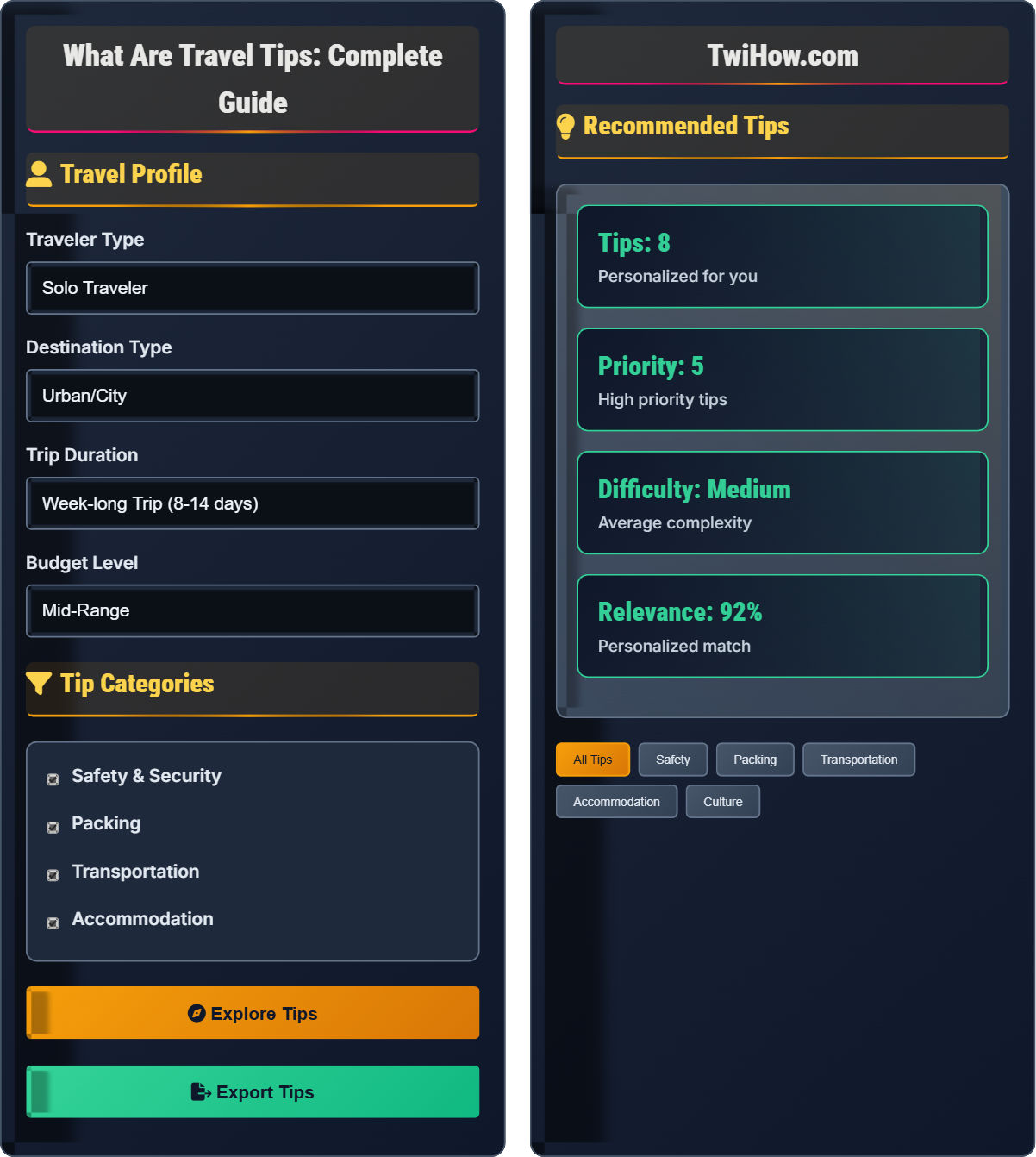
Travel Profile
Tip Categories
Recommended Tips
Understanding Travel Tips
Travel tips are practical, actionable pieces of advice that help travelers navigate the complexities of travel more safely and efficiently. These insights are derived from experience, research, and best practices that have proven effective in real-world situations.
Characteristics of effective travel tips:
- Practical: Can be implemented in real situations
- Actionable: Provide clear steps or guidance
- Based on Experience: Come from real-world encounters
- Context-Specific: Apply to particular situations or destinations
- Beneficial: Improve safety, comfort, or efficiency
Travel tips are typically categorized by the aspect of travel they address:
Safety Tips: Advice for personal security, health precautions, and emergency preparedness.
Packing Tips: Guidance on what to bring, how to pack efficiently, and luggage management.
Transportation Tips: Information about getting around, using public transport, and navigating airports.
Accommodation Tips: Advice on choosing and enjoying different types of lodging.
Cultural Tips: Guidance on local customs, etiquette, and respectful behavior.
Travel tips are often organized by travel phases:
Pre-Travel: Planning, documentation, preparation, and research.
During Travel: Navigation, safety, communication, and daily management.
Post-Travel: Organization, sharing experiences, and planning future trips.
Different traveler types require different types of tips:
First-Time Travelers: Need basic guidance on planning and expectations.
Solo Travelers: Focus on safety and social interaction strategies.
Family Travelers: Emphasize child safety and entertainment.
Business Travelers: Efficiency and professional considerations.
Adventure Travelers: Safety and equipment recommendations.
The effectiveness of travel tips depends on several factors:
Relevance: How applicable the tip is to the specific situation.
Clarity: How clearly the tip is communicated.
Timeliness: When the tip is provided in relation to the need.
Source Credibility: The authority and experience of the tip provider.
Implementation: How easy it is to follow the advice.
Travel Tip Categories
Safety, packing, transportation, accommodation, cultural awareness, and problem-solving.
Organized by phase (before, during, after), type (safety, comfort), and priority level.
- Always prioritize safety
- Research before traveling
- Stay flexible and adaptable
- Respect local customs
Travel Preparation
Research, documentation, planning, and preparation for travel phases.
- Research destination and requirements
- Gather necessary documents
- Plan itinerary and accommodations
- Prepare for safety and emergencies
- Start planning early
- Keep digital and physical backups
- Research local laws and customs
- Plan for flexibility and changes
Travel Tips Categories
Medical Info: Carry medical information and insurance details
Emergency Contacts: Inform family of travel plans and keep contact information accessible
Local Numbers: Research emergency numbers for destination country
Travel Tips Knowledge Quiz
What is the most important safety tip for first-time international travelers?
Keeping copies of important documents separate is the most important safety tip for first-time international travelers. This provides backup access to critical information if originals are lost, stolen, or damaged. Digital copies stored in cloud services and physical copies kept in different locations ensure access to passport, visa, and insurance information when needed.
The answer is B) Keep copies of important documents separate.
Document security is fundamental to travel safety. Losing critical documents can strand travelers in unfamiliar locations. The principle of redundancy (multiple copies in different locations) ensures access to essential information regardless of what happens to the originals. This tip is particularly important for first-time travelers who may not anticipate potential document issues.
Document Security: Measures to protect important travel documents
Redundancy: Having multiple copies to ensure availability
Backup Access: Alternative means of accessing critical information
• Keep digital copies in cloud storage
• Store physical copies separately
• Share copies with trusted contacts
• Use travel apps for document storage
• Take photos of all documents
• Print copies before travel
• Not making backup copies
• Keeping all documents together
• Forgetting to share with contacts
Explain the most effective packing strategy for international travel and why it's important. What are the key considerations when deciding what to pack?
Most Effective Packing Strategy:
1. Plan Around Activities: Identify planned activities and pack appropriate clothing and equipment. Consider weather, cultural expectations, and activity requirements.
2. Layer System: Pack versatile items that can be layered for different weather conditions and occasions.
3. Weight Distribution: Distribute weight evenly across luggage and consider airline weight limits.
4. Essentials First: Pack critical items (medications, documents, valuables) in carry-on luggage.
5. Multi-Purpose Items: Choose items that serve multiple functions to reduce overall quantity.
Key Considerations:
• Weather conditions at destination
• Cultural dress expectations
• Trip duration and activities
• Luggage restrictions and fees
• Local availability of items
This strategy is important because proper packing affects comfort, mobility, and the overall travel experience while ensuring safety and compliance with regulations.
Effective packing is a balance between preparation and practicality. The strategy must account for the specific needs of the trip while respecting physical and regulatory constraints. The key is maximizing utility while minimizing bulk and weight. This requires advance planning and understanding of both destination requirements and personal needs.
Layer System: Clothing strategy using multiple layers for versatility
Multi-Purpose Items: Objects serving multiple functions
Weight Distribution: Balancing load across luggage
• Pack essentials in carry-on
• Respect luggage limits
• Consider local availability
• Roll clothes to save space
• Use packing cubes for organization
• Check weather forecast before packing
• Overpacking unnecessary items
• Forgetting essential medications
• Ignoring cultural dress codes
Sarah is traveling to Japan for the first time and wants to ensure she respects local customs and avoids cultural faux pas. Identify the top 5 cultural tips she should follow and explain why each is important for her trip.
Top 5 Cultural Tips for Japan:
1. Bow Instead of Handshake: Bowing is the traditional greeting in Japan. This shows respect and acknowledges local customs.
2. Remove Shoes Indoors: Always remove shoes when entering homes, temples, and some restaurants. This maintains cleanliness and shows respect for Japanese customs.
3. Silence Phones in Public: Keep phones silent on trains and in public spaces. This respects the cultural emphasis on quiet and consideration for others.
4. Learn Basic Phrases: Learn "arigato" (thank you) and "sumimasen" (excuse me). This shows effort and respect for the local language.
5. Follow Queue Rules: Wait in designated lines and follow proper queue etiquette. This demonstrates respect for Japanese social order and patience.
These tips are important because Japanese culture places high value on respect, politeness, and consideration for others. Following these customs will enhance Sarah's experience and interactions with locals while showing appreciation for Japanese traditions.
Cultural awareness is crucial for respectful travel. Understanding and following local customs demonstrates respect for the destination culture and often enhances the travel experience. In Japan, where social harmony and respect are deeply valued, following these customs helps travelers integrate more smoothly and receive warmer welcomes from locals.
Cultural Faux Pas: Actions that violate cultural norms
Social Harmony: Maintaining peaceful relationships in society
Cultural Respect: Acknowledging and honoring local customs
• Research customs before traveling
• Observe and follow local behavior
• Show respect for cultural differences
• Download cultural etiquette apps
• Watch videos about local customs
• Ask for guidance respectfully
• Assuming all cultures are similar
• Not researching local customs
• Disrespecting cultural practices
You're developing a travel safety app that provides emergency preparedness tips. Identify the three most critical emergency tips that should be highlighted and explain how travelers can prepare for and respond to these situations.
Three Most Critical Emergency Tips:
1. Document Security: Keep digital and physical copies of all important documents (passport, visa, insurance, emergency contacts) in separate locations. Store copies in cloud services and with trusted contacts at home.
2. Emergency Contacts: Research and save local emergency numbers (police, medical, fire) for the destination. Also keep contact information for your country's embassy or consulate.
3. Communication Plan: Establish regular check-in times with family/friends at home and have a backup communication method if cell service fails (satellite phone, internet calling).
Preparation Strategies:
• Register travel with embassy for safety notifications
• Purchase comprehensive travel insurance
• Learn basic phrases for emergency situations
• Identify nearest hospitals and police stations
Response Protocols:
• Stay calm and assess the situation
• Contact local authorities if necessary
• Reach out to embassy for assistance
• Inform family about the situation
Emergency preparedness relies on proactive planning and quick response protocols. The most critical aspects involve documentation (which enables all other assistance), communication (which connects travelers to help), and local resources (which provide immediate support). These fundamentals create a safety net that can be activated in any emergency situation.
Emergency Preparedness: Advance planning for potential crises
Response Protocols: Established procedures for crisis situations
Safety Net: Support system for emergency situations
• Prepare before traveling
• Have multiple backup plans
• Know how to contact help
• Use travel safety apps
• Register with embassy
• Carry emergency cash
• Not preparing emergency plans
• Forgetting to research local numbers
• Not sharing travel plans
Which transportation safety tip is most important for solo travelers in unfamiliar cities?
Using only official transportation services is the most important safety tip for solo travelers in unfamiliar cities. Official services are regulated, safer, and more reliable than unofficial alternatives. This includes licensed taxis, official ride-sharing services, public transportation, and registered tour operators. Unofficial services may pose safety risks, overcharge, or lead to dangerous situations.
The answer is B) Use only official transportation services.
Transportation safety is crucial for solo travelers who lack the protection of group dynamics. Official services provide accountability, regulation, and safety standards. This tip is particularly important for solo travelers who may be more vulnerable to scams or unsafe situations. The principle extends to all aspects of travel - using official, regulated services reduces risk.
Official Services: Licensed and regulated transportation providers
Accountability: Responsibility and oversight mechanisms
Regulation: Government oversight and safety standards
• Use licensed transportation
• Research local options beforehand
• Avoid unofficial services
• Book rides through official apps
• Verify driver identity
• Share trip details with contacts
• Using unofficial transportation
• Not verifying service legitimacy
• Ignoring local recommendations
Travel Tips FAQ
Q: What are the most essential travel tips I should know before my first international trip?
A: Essential tips for first-time international travelers:
Documentation:
• Ensure passport is valid for 6+ months beyond stay
• Check visa requirements and apply early
• Make digital and physical copies of all documents
Safety:
• Research destination safety and local laws
• Share itinerary with trusted contacts
• Purchase comprehensive travel insurance
Communication:
• Learn basic phrases in local language
• Download translation apps
• Research local emergency numbers
Packing:
• Pack light and bring versatile clothing
• Include essential medications
• Bring power adapters for destination
Money:
• Notify bank of travel plans
• Carry multiple payment methods
• Have some local currency on arrival
Focus on these fundamentals before worrying about other details.
Q: What safety tips should solo travelers prioritize, and how can they stay safe while meeting people?
A: Safety priorities for solo travelers:
Preparation:
• Research destination safety thoroughly
• Share detailed itinerary with trusted contacts
• Choose accommodations in safe, well-lit areas
• Inform hotel of travel plans
Personal Safety:
• Stay aware of surroundings constantly
• Trust your instincts and avoid uncomfortable situations
• Keep valuables secure and out of sight
• Avoid walking alone at night
Meeting People Safely:
• Use reputable apps and venues for meeting travelers
• Meet in public places for first encounters
• Tell someone about planned meetups
• Trust but verify new acquaintances
Communication:
• Check in regularly with contacts at home
• Use location-sharing apps
• Have backup communication methods
• Carry whistle or personal alarm
Balance safety with the opportunity to meet people and enjoy experiences.